• Welcome to all New Sikh Philosophy Network Forums!
    Explore Sikh Sikhi Sikhism...
    Sign up Log in

Pakistan on Fire and Its Effects on India

dalvinder45

SPNer
Jul 22, 2023
1,069
44
80
The Jaffar Express, carrying around 400 passengers in nine coaches, was going from Pakistan’s Quetta to Peshawar when Baloch Liberation Army militants derailed it using explosives and hijacked it on Tuesday in the country’s restive Balochistan.

12attack1.jpg


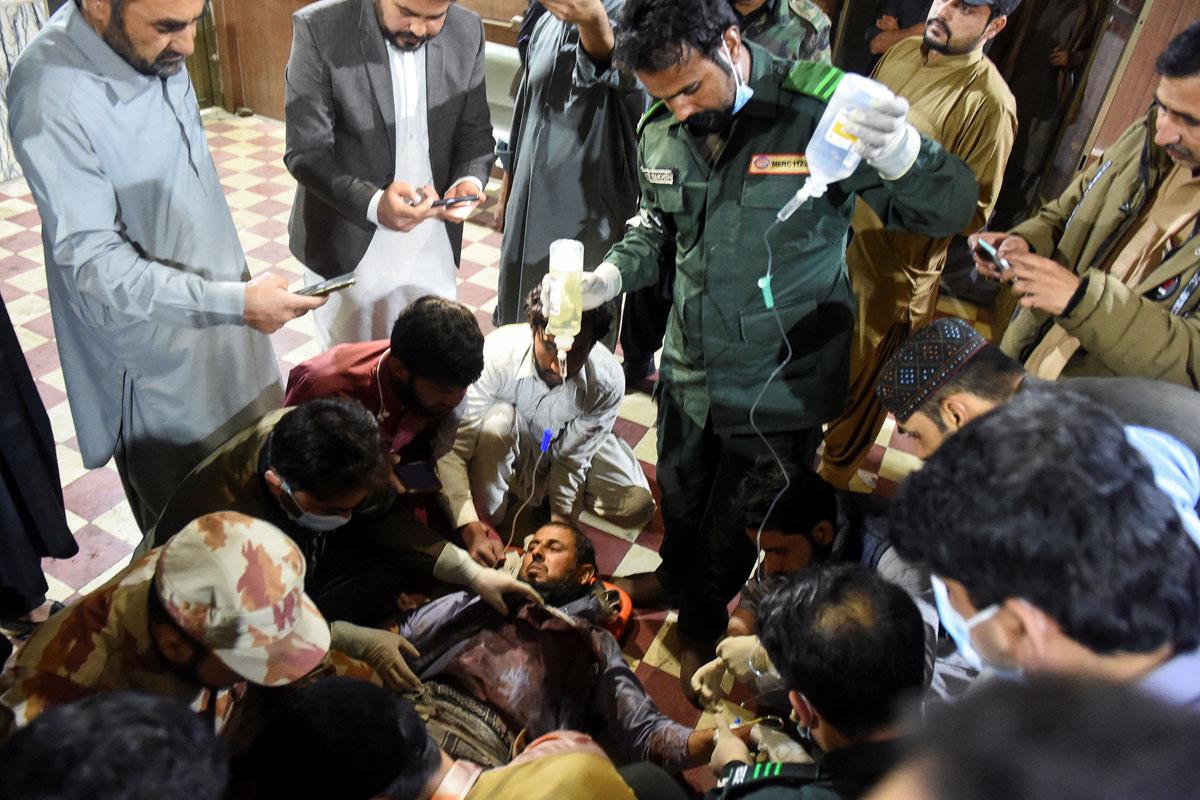
IMAGE: A passenger, who was rescued from a train after it was attacked by terrorists, receives medical aid at the Mach railway station in Mach, Balochistan, Pakistan, March 11, 2025. Photograph: Reuters
Soon after the explosion, the BLA militants started firing at the train indiscriminately.

The security forces so far rescued 190 passengers from the hijacked train and killed 30 Baloch rebels, as they continued to battle heavily-armed insurgents for a second day on Wednesday.
There was a huge explosion and firing, a scene that can never be forgotten, said Mushtaq Muhammad as he recounted the moment when Baloch militants attacked the Jaffar Express.

“After that, the firing started. The firing continued for an hour. It was a scene that can never be forgotten," he said.

Mushtaq said that the firing gradually stopped and the armed men entered the bogies.

“They started checking the identity cards of some people and separated some of them. Three militants were guarding the doors of our coach. They told the people that they would not say anything to civilians, women, old people and Baloch people,” he said.

Mushtaq also said these people (attackers) were talking to each other in Balochi and their leader was repeatedly telling them to keep a special eye on the security personnel and they should not get out of hand. Noor, who was in coach number seven of the same train, was travelling from Quetta to Rawalpindi with his wife and two children.

“The explosion was so intense that the windows and doors of the train shook and one of my children, who was sitting near me, fell down,” he said.

“The firing must have lasted for about fifty minutes... During this time, we were not even breathing, not knowing what would happen,” Noor said.
 

dalvinder45

SPNer
Jul 22, 2023
1,069
44
80
Pakistan’s security forces say they have rescued 190 passengers from a train that was hijacked as it was travelling on Tuesday from Quetta, the provincial capital of the southwestern province of Balochistan, to Peshawar, the capital of the northwestern Khyber Pakhtunkhwa province.

Fighters belonging to the Balochistan Liberation Army (BLA), a separatist group seeking Balochistan’s secession from Pakistan, have claimed responsibility for the attack.
Pakistani officials have described their continuing efforts as a “complex operation” against the group, which targeted the Jaffar Express train as it was passing through tunnels near Sibi city, about 160km (100 miles) from Quetta. Security officials, speaking on condition of anonymity, said they had killed 27 fighters. At least 10 passengers, including the train driver, were also killed, they said. Al Jazeera could not independently verify the casualty count provided by the officials.

BLA fighters released several passengers. Security officials confirmed that a group of passengers made their way safely to a smaller station near the site of the attack, as a military operation to rescue others continued.
 

dalvinder45

SPNer
Jul 22, 2023
1,069
44
80

Pak train hijack: 21 passengers, 4 soldiers killed; all hostages freed​

Twenty-one passengers and four paramilitary soldiers were killed by militants holding hostages after seizing control of a train in Balochistan, a Pakistani army general said on Wednesday.
12attack1.jpg

IMAGE: A passenger, who was rescued from a train after it was attacked by terrorists, receives medical aid at the Mach railway station in Mach, Balochistan, Pakistan, March 11, 2025. Photograph: Reuters
Army spokesman Lt Gen Ahmad Sharif told Dunya News TV that security forces killed all 33 militants present at the scene.
"The armed forces successfully concluded the operation in the (Wednesday) evening by killing all terrorists and rescuing all passengers safely,” Lt Gen Sharif said.
He said that 21 passengers were killed by the terrorists when they attacked the train on Tuesday. He added that four paramilitary Frontier Corps soldiers were also killed in the incident.
"The forces killed all 33 terrorists and secured the release of hostages,” he said.

Citing security sources, state-run Radio Pakistan confirmed that all terrorists present at the scene have been killed in the military operation.
The number of the passengers, who were killed at the beginning of the attack, was being determined, it added.
During the clearance operation, extreme caution and skill were demonstrated to save innocent lives, it said.
Minister of State for Interior Talal Chaudhry told the Geo News that 70-80 militants were involved in the attack on the train. He also warned against the fake news, saying that no mobile internet network was working in the area and all video clips being circulated on the media in Pakistan and elsewhere were fake.
He said that the passengers included civilians, government employees and security personnel.
12attack2.jpg

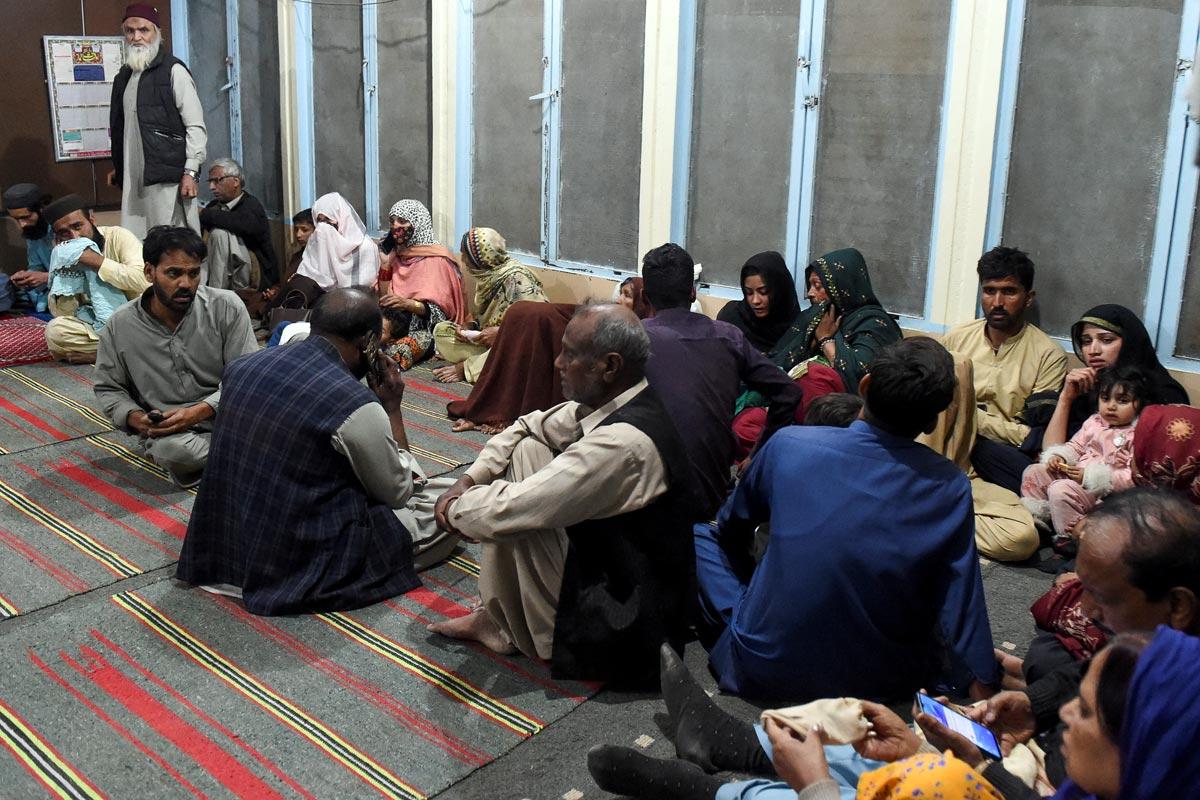
IMAGE: Rescued passengers sit at the Mach railway station. Photograph: Reuters
Earlier in the day, officials said that some of the militants wearing vests loaded with explosives had formed groups of women and children and forced them to sit near them. Due to the presence of women and children with the suicide bombers, the operation was being conducted with utmost caution, they added.
A security source earlier said that around 30 people who sustained injuries had been sent to hospitals. He said two drivers in the main engine and eight security personnel were killed during the operation.
There was a huge explosion and firing, a scene that can never be forgotten, said Mushtaq Muhammad as he recounted the moment when militants attacked the train. Mushtaq was among the passengers rescued from the train, according to BBC Urdu service.
Ishaq Noor, who was travelling with his wife and two children, in coach number seven of the same train, said the explosion was so intense that the windows and doors of the train shook and one of my children, who was sitting near me, fell.
Seeing the firing and bullets hitting the coaches, Ishaq pulled one of his children under him while his wife pulled the other child under her so that "if a bullet hits us, the children will be saved."
"The firing must have lasted for about fifty minutes... During this time, we were not even breathing, not knowing what would happen."
Mushtaq said that the firing gradually stopped and the armed men entered the coaches.
"They started checking the identity cards of some people and separated some of them. Three militants were guarding the doors of our coach. They told the people that they would not say anything to civilians, women, old people and Baloch people," he said.
Ishaq said that in the evening, the attackers told the passengers that they were releasing Baloch, women, children and elderly passengers.
This is the first time the BLA or any insurgent group in the Balochistan province have resorted to hijacking a passenger train, although since last year, they have stepped up their attacks on security forces, installations and foreigners in different parts of the province.
The security source said some of the militants were using satellite phones to remain in touch with their handlers.
The Pakistan Railways have set up an emergency desk at the Peshawar and Quetta Railway stations as frantic relatives and friends try to get some information about their loved ones on the train.
Pakistan Railways had resumed train services to Peshawar from Quetta after a suspension of more than a month and a half.
The US Embassy in Islamabad strongly condemned the attack on the train and the hostage-taking of passengers.
"We extend our deepest sympathies and condolences to the victims, their families, and all those affected by this horrific act. The Pakistani people deserve to live free from violence and fear," it said.
The US will remain a steadfast partner of Pakistan in its efforts to ensure the safety and security of all its citizens, it added. "We stand in solidarity with Pakistan during this difficult time."
"We strongly condemn the terrorist attack in Balochistan on 11 March. Our deepest condolences go the people of Pakistan and families of victims. As the situation is still unfolding, we express our profound concern for the hostages and call for their immediate release," EU Ambassador to Pakistan Riina Kionka said in a post on X.
Balochistan has witnessed an uptick in terrorist attacks over the past year.
In the past, the railway tracks in this area have been attacked by Baloch militants using rockets or remote-controlled bombs, and the BLA claimed responsibility for most of the attacks.
In October last year, Pakistan Railways announced the restoration of train services between Quetta and Peshawar after a suspension of more than a month and a half. A month later, at least 26 people were killed and 62 injured after a suicide blast ripped through a Quetta Railway Station.
Balochistan, bordering Iran and Afghanistan, is home to a long-running violent insurgency. Baloch insurgent groups frequently carry out attacks targeting security personnel, government projects and the USD 60 billion China-Pakistan Economic Corridor (CPEC) projects in the oil and mineral-rich province.
 

dalvinder45

SPNer
Jul 22, 2023
1,069
44
80
Nearly 350 hostages were rescued at the end of a deadly standoff between Pakistan's military and armed militants who hijacked a train in the southwestern Pakistani province of Balochistan. The incident, which began Tuesday, left dozens dead. At least 35 militants were killed in the rescue operation, the security source added.Some eyewitness even state that they have seen over 100 bodies of the hostages. This claim is yet to be verified. The Baloch Liberation Army (BLA), a militant separatist group active in the restive and mineral-rich Balochistan province, claimed responsibility for the attack.
Around 450 passengers were on the Jaffer Express en route from Balochistan’s capital Quetta to Peshawar in the north, when militants opened “intense gunfire” as the train traveled through a tunnel early in its journey, according to officials. Pakistan’s military then launched an operation to confront the attackers who used “women and children as shields,” according to security sources not authorized to speak to CNN.
Passenger Mohammad Ashraf told CNN he saw more than 100 armed individuals on the train and that no harm was inflicted on women and children.
One rescued woman described scenes of chaos following the attack, likening it to the “Day of Judgement.” She told she fled gunfire and walked for two hours to reach safety. Survivor Arslan Yousaf recalled the terrifying moment the hijacking began. “As soon as the explosion happened, armed men stormed the train. They had launchers, guns, and other weapons, and they immediately started firing – shooting directly at people,” he told Reuters. “They kept shouting, ‘We will kill anyone who doesn’t come out.’ Then, things took a darker turn. They began checking everyone’s ID cards - Punjabis, Sindhis, Baloch. They separated us into groups. Sometimes, they took soldiers outside and executed them. Other times, they targeted specific individuals. If they had a grudge against someone, they shot him on the spot.” There were number of soldiers going on transfer or leave in that train who were shot point blank.
Muhammad Tanveer, who was held hostage for two days, told Reuters the hostages didn’t have any food and had to resort to drinking water from the train’s washroom. “Then, last night (Wednesday), our army arrived. By evening, they had cleared everything. They gave us protection, served us food and water, and took care of the situation,” he said.
The security sources accused the militants of being in contact with handlers in Afghanistan. Pakistan’s military and government have long accused Afghanistan of providing sanctuary to militant groups, something its Taliban leaders have denied.

Passengers who were rescued from the train after it was attacked by separatist militants sit at Mach railway station in Balochistan, Pakistan, on Tuesday.

Passengers who were rescued from the train after it was attacked by separatist militants sit at Mach railway station in Balochistan, Pakistan, on Tuesday. (Reuters)
Tuesday’s kidnapping is an audacious moment for a separatist insurgency that seeks greater political autonomy and economic development in the strategically important and mineral-rich mountainous region. But it also highlights the ever-deteriorating security situation there – one that Pakistan’s government has been grappling with for decades. Balochistan’s population – made up mostly of the ethnic Baloch group – is deeply disenfranchised, impoverished, and has grown increasingly alienated from the federal government by decades of policies widely seen as discriminatory.
An insurgency there has been ongoing for decades but has gained traction in recent years since the province’s deep-water Gwadar port was leased to China, the jewel in the crown of Beijing’s “Belt and Road” infrastructure push in Pakistan. The port, often touted as “the next Dubai,” has become a security nightmare with persistent bombings of vehicles carrying Chinese workers, resulting in many deaths.

Some analysts said Tuesday’s attack marked an escalation in the sophistication of attacks by the insurgents. The “larger point that the Pakistani state is not grasping … is that it’s not business as usual anymore,” said Abdul Basit, a senior associate fellow at the S. Rajaratnam School of International Studies in Singapore.

This photo taken on September 13, 2024 shows a terminal at the New Gwadar International Airport in Gwadar, Pakistan.


“The insurgency has evolved both in its strategy and scale,” he added, saying Pakistan’s approach to tackle the Baloch militants “seems to have run its course.” “Instead of revising its counterproductive policies, it is persisting with them, resulting in recurrent security and intelligence failures,” Basit said. The BLA has been responsible for the deadliest attacks in Pakistan in the past year. A suicide bombing by the BLA at a train station in Quetta killed more than two dozen people last November. The previous month, it claimed responsibility for an attack on a convoy of Chinese engineers, resulting in two deaths.

In the wake of Tuesday’s attack, Pakistan’s Prime Minister Shehbaz Sharif vowed to “continue to fight against the monster of terrorism until it is completely eradicated from the country.” In a statement, he said the “terrorists’ targeting of innocent passengers during the peaceful and blessed month of Ramadan is a clear reflection that these terrorists have no connection with the religion of Islam, Pakistan and Balochistan.”

Analysts say such attacks need urgent attention from the federal government. “Tuesday’s attack has gained global attention and it will worry China, which has its investments in the province – more than any other state,” Basit said. “A major reset of existing security paradigm is required in Balochistan.”
 

dalvinder45

SPNer
Jul 22, 2023
1,069
44
80

Abu Qatal, Hafiz Saeed aid and LeT terrorist, in Pakistan
Abu Qatal, Hafiz Saeed aid and LeT terrorist, in Pakistan(Social media X)
Lashkar terrorist Abu Qatal was reportedly killed in Pakistan. Qatal is said to be a close aide of 26/11 Mumbai terror attack mastermind Hafiz Saeed and commander of the Khureta launchpad in PoK.

However, Mint could not independently verify the reports.

Zia-ur-Rehman, alias Abu Qatal, was behind the 2023 Rajouri attack that killed seven people. He also played a key role in the June 9 attack on a bus carrying pilgrims returning from Shiv Khori temple in Reasi As many as 10 people were killed in the attack. Abu Qatal was among the terrorists charge-sheeted by the NIA in February 2024. Abu Qatal was killed by unknown assailants, India Today reported on Sunday. Qatal was under heavy protection from the Pakistan Army, with both Lashkar-e-Taiba terrorists and plainclothes Pakistani military personnel assigned to his security, India Today reported.
Sources told India Today that Abu Qatal was travelling with his security guard in the Jhelum area around 7 pm when unknown attackers opened fire.
The assailants fired 15 to 20 rounds, killing Abu Qatal and one of his security guards on the spot. Another guard was critically injured.
As per the report, the attack took place near Zeenat Hotel, close to Dina Punjab University in the Jhelum area.
According to NIA, Abu Qatal was a Pakistani national. The agency said Abu Qatal had come to India in 2002-03 and was active in the Poonch Rajauri range, along with other terrorists.
Investigations have revealed that the other charge-sheeted accused, Nisar, had come in contact with Abu Qatal during the latter's stay in India. He had remained in touch with Abu Qatal even after the latter's return to Pakistan.
 

dalvinder45

SPNer
Jul 22, 2023
1,069
44
80
A total of 90 Pakistani army personnel were killed after the attack on Army convoy of buses carrying army soldiers. A car laden with explosives hit the convoy. The suicide bomber was also killed. This is claimed by BLA but Pakistan army says only 5 soldiers were killed.
 

dalvinder45

SPNer
Jul 22, 2023
1,069
44
80

Abu Qatal was the mastermind of the 2023 Rajouri terror attack that resulted in the death of seven people and injured 13 others.​

Faisal Nadeem, alias Abu Qatal, a key mastermind behind the attack on a pilgrims' bus that killed nine and injured 41 in Reasi district on June 9 last year, and the killing of seven people in Rajouri district's Dangri village on January 1, 2023, was shot dead on Saturday night in the Dina area of Punjab, Pakistan.
Abu Qatal was reportedly the nephew and close associate of the 26/11 Mumbai terror attacks mastermind Hafiz Saeed.(X/ Jaipur Dialouges)

Qatal, was the nephew of 26/11 mastermind and terror outfit Lashkar-e-Taiba chief Hafiz Saeed.
He was traveling with his security guard in Dina area of Jhelum district around 7 pm when they came under a barrage of gunfire from unknown attackers..
The attack killed him and one of his security guards on the spot, while another guard was critically injured.
Abu Qatal, the chief operational commander of Lashkar-e-Taiba, was responsible for executing attacks in J & K. He masterminded some of the deadliest attacks on civilians in the Jammu region, particularly in Reasi and Rajouri districts.
On January 1, 2023, terrorists targeted Dangri village, opening fire on villagers and killing five innocent civilians. As they fled, the attackers left behind an improvised explosive device (IED), which claimed the lives of two minors the next morning.
On June 9, 2024, nine people were killed, and 41 others injured when a bus full of pilgrims came under terrorist fire and plunged into a gorge in Jammu and Kashmir's Reasi district. The bus, heading to the Shiv Khori cave temple, fell off the road after being attacked.
In February last year, the NIA had charge-sheeted Qatal in connection with the attack, along with four others.
Those charged included three Pakistan-based handlers of Lashkar-e-Taiba. Apart from Qatal, the two other handlers were identified as Saifullah and Mohammad Qasim.
According to the NIA, the attacks on Indian soil were carried out under orders from the three handlers.
Qatal was known by several other aliases, including Ali, Habibullah, Nouman, and Mohamad Qasim. Qatal played a key role in recruiting and deploying Lashkar-e-Taiba terrorists from across the border, targeting civilians. His main targets included the minority community in the union territory, along with the security personnel.
 
Last edited:

dalvinder45

SPNer
Jul 22, 2023
1,069
44
80

Pakistani officials were quick to blame Afghanistan and India for what they called a “terrorist incident”. This is the latest example of how the Pakistani authorities increasingly deflect responsibility and frame Pakistan’s relationship with Afghanistan in the language of “war on terror”.
Almost three months before the train hijacking, Pakistani fighter jets bombarded Afghanistan’s Khost and Paktika provinces, killing at least 46 people, including women and children. Many of the casualties were displaced people from Pakistan’s Khyber Pakhtunkhwa region.
Pakistan justified its violation of Afghan sovereignty and international law by claiming that it is targeting Tehreek-e-Taliban Pakistan (TTP) fighters hiding on Afghan territory. Over the past two years, Islamabad has been accusing Kabul of harbouring “terrorists” who have carried out attacks on Pakistani territory.

This is the same logic the United States employed to conduct air raids, kidnappings, targeted killings, etc throughout the Muslim world during its so-called “war on terror”. In doing so, the US trampled over all the conventions the world had endorsed affirming state sovereignty, the distinction between civilians and combatants, proportionate response and the rights of prisoners of war.
The US army and intelligence saw civilians as active combatants or “collateral damage” that was inevitable when a “high-value target” was pursued. Whole countries and civilian populations paid the price for “terrorist” strikes conducted by armed groups – and they still do. That is because the US may have withdrawn from Afghanistan and Iraq, but the legacy of its practices remains and is readily embraced by governments in the region. Pakistan’s government is one of them.
Throughout the 20-year US occupation of Afghanistan, Pakistan refused to see the Afghan Taliban as “terrorists” and continued sheltering and supporting the group. Yet today, the Pakistani authorities label the TTP and BLA as “terrorist” groups and the Afghan Taliban government as sponsors of “terrorism”.
They refuse to see these local insurgencies as politically motivated rational actors who could be reasoned with or whose grievances should be heard.
How Pakistan chooses to deal with these groups is an internal matter, but there are a few lessons from the recent American adventurism that ought to be heeded.
 

dalvinder45

SPNer
Jul 22, 2023
1,069
44
80
'When so many young Baloch men and women are willingly volunteering as fighters and even suicide bombers, where is the need of India to interfere.

25balochistan-1.jpg

IMAGE: Women supporting the Balochistan Yakjehti Committee at a protest in Karachi, March 24, 2025, demanding the release of human rights activist Dr Mahrang Baloch. Photograph: Akhtar Soomro/Reuters

"Baloch live in hardship, with limited access to education, jobs, healthcare and infrastructure.
"The province's vast natural wealth has yet to translate into prosperity for its people, fuelling discontent and socio-economic disparities. "The provincial government is widely regarded as highly corrupt.
"There is an unwritten arrangement between Islamabad and the Balochistan government that corruption, nepotism and inefficiency are tolerated as long as they remain loyal to the pro-Pakistan establishment,"

Where does BLA get money, weapons and its zeal from? How would you compare it with other armed separatist groups in the world?
The BLA's funding sources are purely speculative . There is no definite information who finances the group. However, India is not the primary sponsor. India has neither the need nor the incentive to support the Baloch movement when so many young Baloch men and women are willingly volunteering as fighters and even suicide bombers. While it is true that running an insurgency as effective as the BLA's requires substantial funding, financial incentives alone are not what drive most young Baloch to join. The motivations for joining the movement vary widely. Each fighter has a different story; not everyone is drawn in by personal loss or direct victimhood. For instance, many young Baloch whose family members were forcibly abducted or killed, yet they have not taken up arms. Instead, figures like Mama Qadeer of the Voice for Missing Baloch Persons -- whose son, Jalil Reki, was abducted and later killed -- have remained committed to peaceful activism.

Similarly, Dr Mahrang Baloch, the most prominent leader among Baloch youth, has chosen peaceful resistance despite her father, Ghaffar Langvo, being forcibly abducted and reportedly killed by the Pakistani state. In contrast, some Baloch women have become suicide bombers for the BLA despite having no direct family connection to victims of State violence. This highlights the diverse motivations driving the insurgency. There is no one description that fits all the BLA fighters. Many educated Baloch with no personal experience of persecution still join the movement, driven by the collective trauma they witness.
Seeing helpless Baloch mothers and sisters protesting outside press clubs and courts -- begging for the release or return of their loved ones -- ignites their sense of outrage. For these youth, simply witnessing such daily suffering is enough to push them toward armed resistance.

25balochistan-2.jpg

IMAGE: A cameraman films the Jaffar Express train, riddled with bullet holes, after it was attacked by separatist militants in Bolan at the railway station in Quetta, Balochistan, March 19, 2025. Photograph: Naseer Ahmed/Reuters

How do ordinary citizens view BLA and other separatist groups? Are they caught in the crossfire between a Pakistani military state and a violent group?

In Balochistan (like many other tribal regions), people generally feel strongly connected with those who belong to their tribe or speak their language. This nature of the Baloch often leads to suspicion toward outsiders (such as Punjabis going to Balochistan for economic reasons), even if they have good intentions and genuine needs to be in Balochistan. Consequently, the BLA, being composed of locals, tends to garner more support than Pakistani soldiers from other provinces on any given day because the Pakistani soldiers are viewed as outsiders and as an abusive occupying force. In this context, you can say that the BLA is widely seen as the 'home team' in Balochistan.

While there may be some resistance to the BLA's actions -- such as when it targets fellow Baloch whom it accuses of being Pakistani spies or attacking Punjabi labourers -- the organisation generally maintains great support among the local population when targeting the Pakistani military and paramilitary forces and members of the local police force.

Overall, there is a collective desire among the Baloch to resist Pakistani policies and practices in the province that are targeted explicitly toward suppressing political dissent, particularly concerning enforced disappearances. Besides the BLA, there is also great public support for anyone, including political parties and civil society groups that seek justice for the Baloch from Islamabad.

Although the US, the UK and the government of Pakistan have declared the BLA a terrorist organisation, these designations don't significantly change the local communities' existing opinions about the Baloch armed groups. Within Baloch society, a 'real fight' is traditionally perceived to involve an armed fight rather than democratic movements.

The 'eye for an eye' mentality is prevalent in Balochistan, where fights continue across generations. Consequently, the BLA's militant mindset and actions resonate more deeply with the local communities than non-violent approaches. While some Baloch political parties and civil rights forums, like the Baloch Yakjehti Committee, engage in peaceful struggle, the entrenched cultural norms view armed resistance as the 'real fight' for the Baloch.

On top of it, the complete failure of democratic institutions and the system in Balochistan, which predominantly serves the Pakistani establishment and offers little to nothing to the Baloch, have also contributed to the public weariness of the democratic system. They see it as an instrument by the Pakistanis to impose unpopular individuals as their leaders.

25balochistan-3.jpg

IMAGE: People walk past parked supply trucks alongside a road after traffic was halted following an attack on a highway in Pakistan's restive province of Balochistan, August 26, 2024. Photograph: Reuters

What is the state of education, jobs, welfare and livelihood in Balochistan? How do the average Balochis fare and live their lives?

The discussion on the insurgency in Balochistan often overshadows critical issues such as education, employment, welfare, and overall livelihood -- factors that directly shape the lives of its people. In a nutshell, Balochistan has some of the bleakest social indicators in Pakistan. Approximately 63% of the population lives below the poverty line, making it the poorest province in the country. Access to necessities is severely limited -- around 85% of people lack clean drinking water, and 75% have no access to electricity, although Balochistan is Pakistan's wealthiest province in terms of natural resources, including natural gas, coal, copper and gold. Education levels are alarmingly low. The province has a literacy rate of roughly 44%, far below the national average of around 60%. The situation worsens in rural areas and among women, where literacy rates drop even further. Schools suffer from chronic underfunding, lack of infrastructure, and teacher absenteeism, contributing to one of the highest out-of-school children rates in the country.

Regarding employment, Balochistan's economy remains underdeveloped, with most people engaged in subsistence agriculture, livestock farming, and small-scale trade. Industrial development is minimal despite its resource wealth, leading to high unemployment and economic stagnation. Many locals feel excluded from the benefits of the province's natural resources, which are primarily controlled by external entities.

There is little evidence that China's economic involvement has created jobs for locals or improved their living standards. A common complaint among residents is that the Chinese bring their workers, excluding local labour. They neither employ nor trust the locals, relying entirely on their workforce for projects in Balochistan. The state of healthcare is similarly dire. Balochistan has the worst health indicators in Pakistan, with high maternal and infant mortality rates due to a lack of hospitals, doctors, and basic medical facilities. Many residents travel long distances to seek medical attention, often in neighboring provinces.
Overall, the average Baloch lives in hardship, with limited access to education, jobs, healthcare and infrastructure.
The province's vast natural wealth has yet to translate into prosperity for its people, fuelling discontent and socio-economic disparities. Addressing these issues requires urgent attention to improve governance, infrastructure and economic opportunities for the people of Balochistan. The provincial government is widely regarded as highly corrupt. However, the central government overlooks this corruption and mismanagement simply because, unlike insurgents, the provincial government does not pose a direct challenge to Islamabad.

This has led to an unwritten arrangement between Islamabad and the Balochistan government -- particularly its bureaucrats -- that corruption, nepotism and inefficiency are tolerated as long as they remain loyal to the pro-Pakistan establishment. As a result, the people of Balochistan bear the brunt of this quid pro quo between the Pakistani central government and the province's corrupt political and bureaucratic machinery.
 

dalvinder45

SPNer
Jul 22, 2023
1,069
44
80
Tahawar Rana Extradited from USA in India Plane

Mumbai terror attacks accused extradited by US arrives in India​


ANI Tahawwur Rana
ANI
Tahawwur Rana was sentenced to 14 years in prison by a US court in 2013
A Pakistan-born Chicago businessman wanted in India for his role in the 2008 terror attacks in Mumbai city has been brought to the country after being extradited from the US.
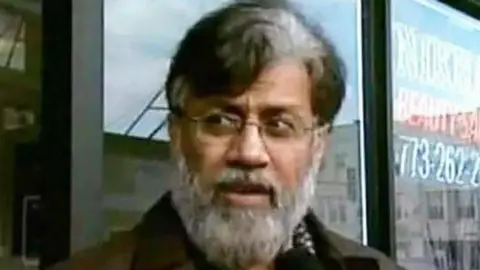
Tahawwur Rana, a Canadian citizen, landed in Delhi on Thursday. India's National Investigation Agency confirmed his extradition had been successful.
In 2011, a US court cleared him of a direct role in helping plot the attacks that killed 166 people, but convicted him for supporting a militant group blamed for the attacks.
Sentenced to 14 years in prison in 2013, the 64-year-old was released in 2020 on health grounds but was re-arrested later that year after India's extradition request.

A US court approved Rana's extradition in 2023 but he remained in custody pending a final approval by the country's government.
In February, President Donald Trump approved the extradition after his meeting with Prime Minister Narendra Modi.
The US Supreme Court then rejected Rana's appeals against the decision.
The extradition took place under the India-US Extradition Treaty signed by the two countries in 1997.

Who is Tahawwur Rana?​

Rana grew up in Pakistan and studied medicine before joining the Pakistani army's medical corps. He and his wife, also a doctor, became Canadian citizens in 2001.
They later moved to Chicago, where Rana ran several businesses, including an immigration and travel agency.
Indian authorities accused Rana of conspiring with his childhood friend David Coleman Headley to assist Pakistani militant group Lashkar-e-Taiba (LeT), which was blamed for the Mumbai attacks.
A group of 10 militants stormed a train station, hotels, cafes and a Jewish centre in Mumbai, shooting and throwing bombs. Both India and the US designated LeT as a terrorist organisation.
US prosecutors in the case said that in 2006, Rana allowed Headley to open an office of his Chicago-based immigration services firm in Mumbai, which Headley then used as cover to scout sites for the 2008 attacks.
Rana was also accused of allowing Headley to pose as a representative of his firm in order to gain access to newspaper offices by feigning interest in purchasing advertising space.
Headley - who pleaded guilty to identifying locations for the Mumbai attacks - was a key prosecution witness. He said he had links to LeT and to the Pakistani intelligence service ISI. Pakistan has repeatedly denied any such links. Headley also testified against Rana.
Rana's defence team at the time said he was manipulated and misled by Headley, an old friend from their days in a Pakistani military school.
In 2011, jurors at the federal court in Chicago convicted Rana for providing support to LeT and for his role in an aborted plot against a Danish newspaper Jyllands Posten. But he was cleared of the more serious charge of helping plot the Mumbai attacks and received a 14-year jail term.
Headley was given a 35-year sentence for his role in the attacks. He is lodged in a federal prison in Chicago.

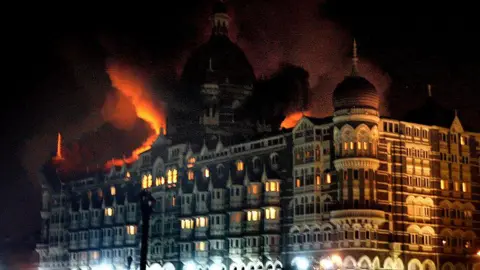
Getty Images A fire breaks out of the dome of the Taj hotel in Mumbai on November 26, 2008.
Getty Images
The terror attacks in 2008 brought India's financial capital to a halt

What are the charges against Rana in India?​

In India, Rana and Headley were tried in absentia in a Mumbai court for their alleged involvement in the attacks. Headley later turned approver in the case.
The charges brought against Rana by India's National Investigation Agency include criminal conspiracy, waging war against the Indian government and terrorism.
In his plea against being extradited to India in the lower court in the US, Rana had argued that India intended to prosecute him for the same offences for which he had been acquitted by the US court.
His plea was rejected, with the court saying the Indian charges were distinct from those he had been prosecuted for in the US.
In his appeal in the US Supreme Court to stay his extradition, Rana said it would violate US law and the United Nations Convention Against Torture "because there are substantial grounds for believing that, if extradited to India, petitioner will be in danger of being subjected to torture".
"The likelihood of torture in this case is even higher though as petitioner faces acute risk as a Muslim of Pakistani origin charged in the Mumbai attacks," the application said.
It also cited Rana's underlying health conditions and concerns about the treatment he would receive in Indian prison. His plea was rejected.
Ujjwal Nikam, the former public prosecutor in the case in Mumbai, told ANI news agency that Rana's extradition would help reveal more about "the involvement of Pakistan's security apparatus" in the attacks.

Tahawwur Rana left Pakistan Army, but continued wearing uniform at ISI, Lashkar meetings: Report Tahawwur Rana moved to Canada in 1997 with wife Samraz, a physician. He started an immigration consultancy and later expanded into the halal meat business.
Tahawwur Hussain Rana, who is being interrogated by the National Investigation Agency (NIA) in connection with the 26/11 Mumbai attacks, told investigators that even after leaving the Pakistani Army’s medical corps, he continued wearing his uniform while meeting Lashkar-e-Taiba operatives and people linked to Pakistan’s intelligence agency ISI, NDTV reported.
A cavalcade escorting Tahawwur Hussain Rana, a key accused in the 26/11 Mumbai terror attack case, leaves the Patiala House Court, in New Delhi, early Friday, April 10, 2025. (Hindustan Times)

Citing NIA sources, the report added that Rana hails from Chichawatni, a village in Pakistan’s Punjab province and his father was a school principal. Rana is one of three brothers. One of his brothers is a psychiatrist in the Pakistani army, while the other works as a journalist. He studied at Cadet College Hasanabdal, where he met David Coleman Headley (Dawood Sayed Gilani), the Pakistani-American linked to the 26/11 Mumbai terror attacks and currently in a US prison.
Rana moved to Canada in 1997 with his wife, Samraz Rana Akhtar, a practising physician. He started an immigration consultancy and later ventured into the halal meat business. The consultancy, however, became a front for terror activities, with Headley posing as a consultant.
Rana, who held a medical degree, regularly visited terror camps in his military uniform after leaving service, maintaining connections with groups tied to terrorism, including Lashkar-e-Taiba (LeT) and the Inter-Services Intelligence (ISI), sources told NDTV.
Investigations have also revealed that Rana maintained regular contact with Sajid Mir, a designated global terrorist and one of India's most wanted fugitives.
Mir is said to have been a key handler during the 26/11 attacks and is accused of orchestrating the siege at Mumbai’s Chabad House, which led to the deaths of six hostages.
The United States has announced a $5 million reward for information that could lead to Mir's capture. In 2022, India provided the United Nations with an audio recording, allegedly capturing Mir coordinating with the attackers during the siege.

Rana met ISI officer Major Iqbal

Clad in Pakistani army uniform, Rana also met Major Iqbal, a suspected ISI official, according to NIA sources quoted in the report.
Major Iqbal, identified in a 2010 US indictment as a serving ISI officer, is accused of financing, overseeing, and directing the reconnaissance missions carried out by David Headley.
Major Iqbal, who was named in a 2010 US indictment as a serving ISI officer, is accused of financing, overseeing, and directing the reconnaissance missions carried out by David Headley.
In his 2011 testimony, David Headley called Major Iqbal his primary handler within the ISI, part of a trio of officials who “recruited, trained, and directed” him.
Headley, who pleaded guilty in 2010 to avoid the death penalty, also revealed over 20 email exchanges with the person he knew as “Chaudhery Khan,” an alias for Major Iqbal, the report added.

 

dalvinder45

SPNer
Jul 22, 2023
1,069
44
80
A plan to hold a military exercise between the navies of Pakistan and Sri Lanka in the strategic waters of Trincomalee was shelved weeks back after New Delhi conveyed its concerns to Colombo over the proposed drills, multiple sources have said.
Trincomalee is situated on Sri Lanka's northeastern coast and is considered a significant hub in the Indian Ocean region, especially for India's maritime security interests.
The sources said the navies of the two countries planned to carry out the exercise off Trincomalee in line with their regular engagements.
The plan did not go through after India apprised its apprehensions over the planned exercise to the Sri Lankan side, they told PTI.


The navies of Pakistan and Sri Lanka are known to have cordial relations and warships from both countries visit each other's ports regularly, besides carrying out wargames.
There was no official word on the plan either from Sri Lanka or from Pakistan.
Military experts, explaining Trincomalee's strategic importance for India, said it has the potential to dominate the Bay of Bengal and much of the northeast Indian Ocean, and New Delhi was right in expressing concerns over the proposed exercise.
The Pakistani Navy operates in close cooperation with China's PLA Navy and New Delhi has reasons to have concerns over any visit by Pakistani warships to Trincomalee, said one of the experts.
The docking of Chinese missile and satellite tracking ship "Yuan Wang" at the Hambantota port in August 2022 had triggered a diplomatic row between India and Sri Lanka.
Another Chinese warship docked at the Colombo port in August 2023 had also triggered some concerns in New Delhi.
In the last few years, India has been focusing on extending assistance to Sri Lanka in developing Trincomalee's energy infrastructure.
India is especially looking at revitalising oil tank farms in Trincomalee that has one of the finest natural harbours in the world.
During Prime Minister Narendra Modi's visit to Colombo this month, India, Sri Lanka and the United Arab Emirates (UAE) firmed up an ambitious agreement to develop Trincomalee as an "energy hub", with a broader aim to help the island nation achieve energy security and fuel its economic growth.
Significantly, India and Sri Lanka also signed a defence pact to institutionalise military cooperation following talks between Modi and Sri Lankan President Anura Kumara Dissanayake.
The agreement on defence cooperation signals a major attempt to boost India-Sri Lanka defence ties, nearly four decades after the Indian Peace Keeping Force's intervention in the island nation strained the relations.
India has been expanding its overall strategic ties with Sri Lanka amid concerns over China's attempts to increase influence over the island nation.
Three years back, India handed over a Dornier maritime surveillance aircraft to Sri Lanka.
The aircraft was given to Sri Lanka from the inventory of the Indian Navy to help the country meet its immediate security requirement.
However. more worrying for India are the joint naval exercises presently going on between Russia and Pakistan in the Arabian sea adjoining. India has attracted the ire of Russia by trying to be close to USA, buying USA aircrafts at higher rates than the better Russian jets. With Pakistan Russia, China and even Sri Lanka joining hands in military operations doe not bode well for the Indian defenses.

Source: PTI India
 

dalvinder45

SPNer
Jul 22, 2023
1,069
44
80

Pakistan Army Chief General Asim Munir's hardline speech invoking the two-nation theory and threatening Baloch insurgents has sparked alarm over the country's return to a rigid, militarised stance eerily reminiscent of the pre-1971 East Pakistan crisis.


More than five decades after the fall of Dhaka, history appears to be knocking again -- this time in Balochistan. In a divisive speech delivered in Islamabad, Pakistan Army Chief General Asim Munir issued a stark warning to Baloch insurgents and separatist groups, invoking national unity and the two-nation theory.

But his remarks have sparked unease, not just for their ideological content, but for the troubling historical parallels they evoke.
 

Dalvinder Singh Grewal

Writer
Historian
SPNer
Jan 3, 2010
1,674
435
80

Musharraf gave control of Pak's nukes to US: Ex-CIA officer​

Source: ANI -
October 25, 2025 16:11 IST
'The United States loves working with dictators'
'Because then you don't have to worry about public opinion and you don't have to worry about the media anymore'

08pervez-musharraf-1.jpg

IMAGE: Pakistan's then military dictator General Pervez Musharraf listens to then prime minister Manmohan Singh (not in picture) in New Delhi, April 18, 2005. Photograph: B Mathur/Reuters
John Kiriakou, former CIA Officer, has said that the United States threw millions of dollars to Pakistan under the leadership of former President of Pakistan Pervez Musharraf, in a way 'purchased' him.
In an interview with ANI, Kiriakou said that Pakistan was deep buried under corruption that Former Prime Minister of Pakistan Benazir Bhutto led a lavish life in the Gulf while the common people starved.
"Our relations with the Pakistani government were very, very good. It was General Pervez Musharraf at the time. And look, let's be honest here. The United States loves working with dictators. Because then you don't have to worry about public opinion and you don't have to worry about the media anymore. And so we essentially just purchased Musharraf," Kiriakou, who served 15 years in the CIA, first as an analyst and later in counter-terrorism, said.
In a similar vein, Kiriakou recounted a Marie Antoinette moment with Bhutto. She complained to him of Asif Ali Zardari, the President of Pakistan of buying a Bentley 'again'.
"When Benazir Bhutto was in exile in Dubai, I went to see her with another senior officer. I went as the note taker. And she lived in this $5 million palace on the Gulf. And we were sitting in the front room, the salon of the house, and we heard a car pull up. And she said, her exact words, so help me God, if he came home with another Bentley, I'm going to kill him!" he told ANI.
On being asked, "Is that Zardari?"
"Yeah. Her husband."
"And I said to my boss afterwards, she makes $60,000 a year," he recounted.
Kiriakou rhetorically asked if these politicians meant to serve the people have no shame.
"She lives in a $5 million house and he has a collection of Bentleys. Aren't they ashamed of themselves? Like, how can they go back to Pakistan and look the Pakistani people in the face when their people don't even have shoes and enough food to eat? Like, I understand corruption is a problem there, but that level of corruption? Come on!" he said.
He bemoaned that the Pakistani public have to deal with such politicians!
"Well, those are the kinds of politicians that the Pakistani people have to deal with. Right. And so, you know, you talked about Benazir Bhutto, you talked about Zardari. Zardari is the current president over here," he said.
In Musharraf's autobiography, In the Line of Fire, he elaborated on how he decided to take a foreign policy U-turn by ending his support for the Taliban. Musharraf described how he first weighed the option of fighting the US.
"I war-gamed the United States as an adversary," he wrote, saying he assessed whether Pakistan could withstand the onslaught.
"The answer was no, we could not, on three counts," he added.
Pakistan's military would have been wiped out, its economy could not be sustained, and the nation lacked the unity needed for such a confrontation, Musharraf wrote.
 

Dalvinder Singh Grewal

Writer
Historian
SPNer
Jan 3, 2010
1,674
435
80

Pakistan conducts airstrikes inside Afghanistan, kills over a dozen civilians​

Afghanistan-Pakistan conflict: The Pakistani Air Force conducted strikes inside Afghanistan in a deadly escalation of the border conflict. An airstrike in Spin Boldak district of Kandahar killed at least 15 civilians and left hundreds injured. Taliban fighters hit back, seizing border posts and killing Pakistani soldiers, which made Islamabad dial Qatar and Saudi Arabia for mediatio​


How is India responding to the Pakistan-Afghanistan border clashes?
How many civilians were killed in Pakistan's airstrikes in Afghanistan?

What role are Qatar and Saudi Arabia playing in the Pakistan-Afghanistan conflict?

How is India responding to the Pakistan-Afghanistan border clashes?

Afghanistan Pakistan war

Afghan Taliban fighters patrol near the Afghanistan-Pakistan border in Spin Boldak. (Social Media)
New Delhi,UPDATED: Oct 15, 2025 19:06 IST
ween Pakistani forces and Taliban fighters have killed dozens along the volatile Pakistan-Afghanistan border in Kandahar province, intensifying the hostilities between the two former allies. Following a brief lull, clashes erupted overnight on Tuesday, with both sides accusing each other of starting the latest round of violence.
On Wednesday morning, Pakistani forces launched attacks with "light and heavy weapons" on the Spin Boldak district of Kandahar. As a result, "more than 12 civilians were martyred" and at least "100 were wounded," said Afghan government spokesperson Zabihullah Mujahid. Several children are suspected to be present in the house where a Pakistani strike hit a residential building. They have now been taken to the hospital.
e added, "Afghan forces were forced to take retaliatory action".
The Pakistani attack killed 15 civilians, reported news agency AFP. A local hospital told the news agency that more than 80 women and children were among the wounded.
Pakistan and the Afghan Taliban administration agreed to a temporary ceasefire for 48 hours starting at 6 PM (Pakistan Standard Time) on Wednesday, Islamabad's Foreign Ministry said.
On Wednesday, a fuel tanker exploded in the outskirts of Kabul. As a result, a massive fire broke out, reported ToloNews.
With the conflict showing no signs of slowing down and Afghanistan denying entry to Pakistani ministers for talks, Islamabad has dialed Qatar and Saudi Arabia to act as mediators.
The ongoing hostilities, which started last week after Islamabad targeted Tehreek-e-Taliban Pakistan (TTP) camps in Kabul, is the worst between the neighbours since the Taliban seized power in 2021. The development comes at a time when the Taliban foreign minister is on his maiden visit to India as New Delhi and Kabul ramp up ties amid a hostile Pakistan.

Afghanistan-Pakistan Conflict Rages On​

  • Taliban spokesperson Zabihullah Mujahid claimed that Pakistan initiated the fresh round of hostilities by firing "light and heavy weapons" in Spin Boldak district of Kandahar province, killing 15 civilians and injuring more than 100. A hospital in the district said over 80 women and children were among the wounded, AFP reported.
  • The Taliban claimed its fighters killed "a large number" of Pakistani soldiers in retaliatory fire, and seized Pakistani weapons and tanks. A viral video shows Taliban fighters riding on a seized Pakistani T-55 tank, which was procured by Islamabad from Serbia.
    On the other hand, the Pakistani military accused the Taliban of attacking two border posts in the southwest and northwest. It said both attacks were repulsed, with about 30 fighters killed. Pakistan claimed 20 more were killed near Spin Boldak. Viral videos also showed Pakistan Air Force (PAF) jets carrying out airstrikes in Kandahar.
    Pakistan claimed four civilians were wounded in the Taliban attack in Chaman district. In the border district of Orakzai, six Pakistani paramilitary soldiers were killed, Reuters reported. The clashes have displaced thousands of those living in the border areas.
    Meanwhile, Pakistan has asked Qatar and Saudi Arabia to mediate immediately as the violence escalated. "For God's Sake, stop Afghans from fighting," Pakistani officials told the countries. Recently, Pakistan and Saudi signed a deal where the nations committed to treating any attack against one as an attack against both.
    The clashes started after Pakistan reportedly conducted cross-border airstrikes in Kabul last week, targeting Tehreek-e-Taliban Pakistan (TTP) camps. Pakistan has accused the Taliban of harbouring TTP, which has killed hundreds of Pakistani soldiers since 2021.
    The Taliban mounted a strong offensive on Pakistani forces across the Durand Line, killing 58 Pakistani soldiers and destroying 20 Pakistani security outposts over the weekend.
    The hostilities saw a brief pause on Sunday after appeals from Saudi Arabia and Qatar before resuming on Tuesday night. Over the past 10 days, most border crossings between Pakistan and Afghanistan have remained closed.
    Amid deteriorating tensions, Afghanistan has denied entry to Pakistan's defence minister, ISI chief, and two military officials, rejecting their visa requests three times in as many days. It prompted Pakistan to suspend all ties with Afghanistan.
    The conflict comes as Afghan foreign minister Amir Khan Muttaqi is on a week-long groundbreaking trip to India. India has said it would re-establish its embassy in Kabul, creating unease in Pakistan.


Dalvinder Singh Grewal

Writer
Historian
SPNer
Jan 3, 2010
1,674
435
80

How is India responding to the Pakistan-Afghanistan border clashes?​

India is responding to the Pakistan-Afghanistan border clashes with calls for stability and a firm rejection of accusations linking its foreign policy to tensions in the region. During recent high-level meetings, Indian officials emphasized engagement and humanitarian aid to Afghanistan, while reiterating their stance against cross-border terrorism and dismissing Pakistan's claims of Indian involvement as "unfounded and illogical."

According to statements made by Indian External Affairs Minister S Jaishankar, India upgraded its mission in Kabul to an embassy and announced new health projects for Afghanistan, emphasizing development and regional cooperation. Afghanistan's Defense Minister Mawlawi Mohammad Yaqoob Mujahid supported India's position, clarifying that Afghan relations with India are independent and not influenced by outside parties. Furthermore, analysis from former diplomats urges India to respond to shifting alliances in the region—such as the recent Saudi-Pakistan pact—with steady diplomacy and clarity, rather than alarmism or retaliation. Overall, India's response focuses on diplomatic engagement, development support for Afghanistan, and principled rejection of narratives attributing the border crisis to Indian actions.
 

Dalvinder Singh Grewal

Writer
Historian
SPNer
Jan 3, 2010
1,674
435
80

Why Pakistan and the Afghan Taliban are fighting and what happens next​

Pakistan and Afghanistan announce ceasefire after days of intense attacks​

Thursday 16 October 2025 09:51 BST
poster.jpg


Afghanistan: Explosion rocks Kabul before ceasefire takes effect
On The Ground

On The Ground newsletter: Get a weekly dispatch from our international correspondents​

Pakistan and Afghanistan declared a ceasefire on Wednesday after several days of intense border fighting that left dozens dead on both sides and sharply escalated regional tensions.
The latest round of fighting erupted over the weekend and intensified midweek, marking the worst confrontation between the two South Asian neighbours since the Taliban takeover of Kabul in 2021.
According to Pakistan’s foreign ministry, the 48-hour truce took effect at 1300GMT on Wednesday. The ministry said both sides had pledged to pursue “constructive dialogue” to seek a “positive solution” to the dispute, and noted that the ceasefire was initiated at the request of the Afghan Taliban government.

Taliban spokesperson Zabihullah Mujahid said on social media that the ceasefire came at Pakistan’s “insistence”.
The temporary halt in fighting followed diplomatic pressure from regional powers such as Saudi Arabia and Qatar, alarmed that the escalating violence could destabilise an already fragile region.
What sparked the latest clashes?
The recent clashes did not emerge from a vacuum.Two explosions recently shook Kabul, while another blast struck a civilian market in Paktika province, according to the Taliban ministry of defence.

The Taliban accused Pakistan of violating Afghan sovereignty. Islamabad did not formally acknowledge responsibility for the attacks but urged the Taliban to rein in the Tehreek-e-Taliban Pakistan (TTP) or Pakistan Taliban, whose attacks have killed hundreds of Pakistani security forces in recent years.
A Pakistani security official told Reuters that the strikes were intended to target the TTP leader, Noor Wali Mehsud, who was reportedly travelling in a vehicle at the time.

Once strategic allies, Pakistan and the Taliban in Afghanistan have grown increasingly adversarial over Islamabad’s claims that Afghan territory is being used as a safe haven for TTP fighters, accused of numerous attacks inside Pakistan over the years. The Taliban deny those charges.
Trucks loaded with supplies park along a road leading to the Torkham border, after Pakistan closed border crossings with Afghanistan, following exchanges of fire between the two nations' forces, in Torkham, Pakistan, 15 October 2025

open image in gallery
Trucks loaded with supplies park along a road leading to the Torkham border, after Pakistan closed border crossings with Afghanistan, following exchanges of fire between the two nations' forces, in Torkham, Pakistan, 15 October 2025 (REUTERS)

Is Pakistan employing a new deterrence framework?​

Analysts note that Pakistan is finding it increasingly hard to overlook the rising fatalities caused by attacks that it claims are launched from Afghan soil.

According to the Centre for Research and Security Studies (CRSS), an Islamabad-based think-tank, more than 2,400 members of Pakistan’s security forces have been killed in the first nine months of 2025 alone, putting the country on track for its deadliest year in a decade.
Attacks have surged since the removal of former prime minister Imran Khan a few years ago. Khan’s administration had worked with the Taliban to negotiate a TTP ceasefire. While that truce collapsed during his tenure, the frequency of assaults remained comparatively lower.
Relations worsened further as Islamabad increasingly carried out airstrikes within Afghan territory, targeting locations it said were used by TTP fighters. Analysts point to the uptick in TTP attacks on Pakistani forces as the primary trigger for the recent border clashes.
Afghan mourners and relatives gather around an ambulance carrying the coffin of late Abdul Ghafoor Abid, a local reporter for the broadcasting organisation National Radio Television of Afghanistan (RTA), during his funeral and burial ceremony at a village in the Ahmad Aba district of Paktia province on 15 October 2025

open image in gallery
Afghan mourners and relatives gather around an ambulance carrying the coffin of late Abdul Ghafoor Abid, a local reporter for the broadcasting organisation National Radio Television of Afghanistan (RTA), during his funeral and burial ceremony at a village in the Ahmad Aba district of Paktia province on 15 October 2025 (AFP via Getty Images)
They believe that Islamabad is attempting to establish a new deterrence framework, signalling that any assault perceived to originate from Afghanistan, whether carried out by the TTP or other armed groups, will trigger consequences for Kabul.
“Any attack which emanates from Afghanistan will be responded [to] with [the] same ferocity on their territory, with Pakistan implying that [the] Afghan Taliban are facilitating such attacks in Pakistan, and thus are legitimate targets,” Abdul Basit, a scholar at the International Centre for Political Violence and Terrorism Research at Singapore’s S Rajaratnam School of International Studies, was quoted as saying by Al Jazeera.
Pakistan’s border regions have long been hotspots of conflict, dating back to 1979 when the country became a frontline state in the US-backed war against the then Soviet Union in Afghanistan.
According to the defence analyst Abdullah Khan, who is also the managing director of the Pakistan Institute for Conflict and Security Studies, the area’s instability worsened after the 9/11 attacks.
Afghan Taliban fighters patrol near the Afghanistan-Pakistan border in Spin Boldak, Kandahar Province, following exchanges of fire between Pakistani and Afghan forces in Afghanistan, 15 October 2025

open image in gallery
Afghan Taliban fighters patrol near the Afghanistan-Pakistan border in Spin Boldak, Kandahar Province, following exchanges of fire between Pakistani and Afghan forces in Afghanistan, 15 October 2025 (REUTERS)
He told the Associated Press: “After the September 11 attacks, Pakistan’s tribal belt descended into chaos as the Afghan Taliban, al-Qaida and other groups operated from both sides of the border for attacks on Nato forces and Pakistani security forces.”
Tensions between the two neighbours are further compounded by Pakistan’s deportation of tens of thousands of Afghan refugees. Since the decades of conflict began, at least three million Afghans have sought refuge in Pakistan, creating additional friction between the two neighbours.

How have international leaders responded?​

The recent Pakistan-Afghanistan border clashes have drawn concern from regional powers, urging both sides to exercise restraint and prioritise dialogue to prevent escalation.
Iran, Qatar, and Saudi Arabia all called for diplomacy to maintain regional stability and security.
India has not commented, though Pakistan is wary of New Delhi’s engagement with the Taliban, some observers note.
Ambulances rush along a road towards the site of an explosion in Kabul on 15 October 2025, amid heavy border clashes between Afghanistan and Pakistan

open image in gallery
Ambulances rush along a road towards the site of an explosion in Kabul on 15 October 2025, amid heavy border clashes between Afghanistan and Pakistan (AFP via Getty Images)
Saudi Arabia’s ministry of foreign affairs said: “The kingdom calls for restraint, avoiding escalation, and embracing dialogue and wisdom to contribute to reducing tensions and maintaining security and stability in the region.
“The kingdom affirms its support for all regional and international efforts aimed at promoting peace and stability and its continued commitment to ensuring security, which will achieve stability and prosperity for the brotherly Pakistani and Afghan peoples,” it added.
Iranian foreign minister Abbas Araghchi said: “Our position is that both sides must exercise restraint,” and added that “stability” between the two countries “contributes to regional stability”.
Qatar’s ministry of foreign affairs also urged “both sides to prioritise dialogue and diplomacy, exercise restraint, and work to contain the disputes in a way that helps reduce tension, avoids escalation, and contributes to regional peace and stability”.
China also called for safeguarding its citizens and investments, Russia urged both sides to exercise restraint, and US president Donald Trump suggested he could step in to help resolve the conflict.
Afghan men walk past a damaged building following an explosion in Kabul, on 16 October 2025. At least five people were killed and 35 wounded in explosions on October 15 in Kabul, an Italian NGO which runs a hospital in the Afghan capital said, before a truce with Pakistan entered into effect

open image in gallery
Afghan men walk past a damaged building following an explosion in Kabul, on 16 October 2025. At least five people were killed and 35 wounded in explosions on October 15 in Kabul, an Italian NGO which runs a hospital in the Afghan capital said, before a truce with Pakistan entered into effect (AFP via Getty Images)

What did Trump say?​

US president Donald Trump appears to have shifted his focus to the South Asian conflict from his recent Gaza peace plan. Speaking to reporters recently, he said: “And I hear there is a war now going on between Pakistan and Afghanistan. I said, I’ll have to wait till I get back. I am doing another one. Because I am good at solving wars.”
Pakistan reported 23 soldiers killed, while the Taliban said nine of its fighters died. Both sides, however, claimed much higher enemy casualties: Pakistan claimed over 200 Taliban and allied fighters killed, and Afghanistan said it had killed 58 Pakistani troops.

How is India involved?​

The clashes coincided with Taliban foreign minister Amir Khan Muttaqi’s first visit to India since the group returned to power.
Kabul-based analyst Ibraheem Bahiss of the International Crisis Group suggested that Muttaqi’s high-profile reception in India was “probably a factor in the ultimate decision by the Pakistan Army to escalate in the major way that we saw”.
Following the visit, The Hindu reported that Pakistan summoned the Afghan ambassador to express its “strong reservations” regarding the India-Afghanistan joint statement, in which both countries “unequivocally condemned all acts of terrorism emanating from regional countries”.
Residents ride a loaded truck of belongings, as they flee the area, following exchanges of fire between Pakistan and Afghanistan forces, at the border crossing in Chaman, Balochistan province, Pakistan, 15 October 2025

open image in gallery
Residents ride a loaded truck of belongings, as they flee the area, following exchanges of fire between Pakistan and Afghanistan forces, at the border crossing in Chaman, Balochistan province, Pakistan, 15 October 2025 (REUTERS)
From the mid-1990s until recent years, India had regarded the Taliban as a proxy for Pakistan’s intelligence services, holding the group and its allies responsible for deadly assaults on Indian diplomatic missions in Afghanistan.
However, following the Taliban’s return to power and amid growing tensions between Kabul and Islamabad, India has pursued a series of diplomatic engagements with the new Afghan leadership, culminating in Mr Muttaqi’s visit.
“Pakistani media has been furious over Muttaqi’s visit to India,” Afghan content creator Pathan Bhai said in a video, according to India Today.

What were the official responses to the clashes?​

Pakistani prime minister Shehbaz Sharif condemned the Afghan strikes, stating that the country’s military “not only gave a befitting reply to Afghanistan’s provocations but also destroyed several of their posts, forcing them to retreat”.

Interior minister Mohsin Naqvi described the attacks as “unprovoked”, adding that Afghan fire had targeted civilians. He strongly condemned the strikes, saying: “The firing by Afghan forces on civilian populations is a blatant violation of international laws.”
On the Afghan side, Enayatullah Khowarazmi, spokesperson for the ministry of defence, framed the strikes on Pakistani border posts as retaliatory measures.
He warned that “if the opposing side again violates Afghanistan’s airspace, our armed forces are prepared to defend their airspace and will deliver a strong response”.

Although TTP’s presence remains a key irritant for Pakistan, analysts believe the recent Pakistan-Afghanistan border clashes are unlikely to escalate into a larger conflict. Afghanistan lacks conventional military strength compared with Pakistan, and both sides appear focused on de-escalation at the moment.
However, the border is expected to stay tense for the foreseeable future, as Pakistan has signalled it will continue taking action against militants it claims are crossing from Afghanistan to target its security forces.
 

Dalvinder Singh Grewal

Writer
Historian
SPNer
Jan 3, 2010
1,674
435
80

Pak threatens 'open war' with Afghanistan amid truce talks​

Source: ANI -
October 26, 2025 11:17 IST
Pakistan's Defence Minister Khawaja Asif has warned that Islamabad will enter into an 'open war' with Kabul if the ongoing peace talks in Istanbul fail, TOLO News reported.
26asif.jpg

IMAGE: Pakistan's Defence Minister Khawaja Muhammad Asif. Photograph: Salahuddin/Reuters
The meetings aim to solve the dispute and rising tensions along the Afghan-Pak border after weeks of deadly clashes and ceasefire violations.
"In a conversation with reporters, Khawaja Asif added that although no incidents or clashes have occurred in recent days, indicating that the Doha Agreement has been somewhat effective," TOLO News said.
However, officials from the Afghanistan government have not responded to these remarks by Pakistan's Defence Minister, it said.

Delegations from both countries are in Turkey for the second round of discussions. The talks focus on implementing the Doha agreement, stopping cross-border attacks, and rebuilding trust.

According to TOLO News, the dialogue is covering four main points: creating a joint monitoring system to prevent future violence, ensuring respect for each other's sovereignty, addressing the roots of Pakistan's security issues from the past two decades, and removing trade restrictions.
The talks also include a discussion on stopping the forced deportation of Afghan refugees and keeping the refugee issue out of politics.
Asif, who led Pakistan's earlier Doha negotiations, said the situation at the border had been calm recently but warned it could change quickly if diplomacy fails.
The meeting follows the first round of talks, jointly mediated by Qatar and Türkiye, which took place in Doha on October 18 and October 19.
During this period, both parties agreed to an 'immediate ceasefire' following days of intense border clashes.
Last week, Qatar announced that Pakistan and Afghanistan had agreed to an 'immediate ceasefire' following intense border clashes.
In a statement issued by Qatar's Ministry of Foreign Affairs, the follow-up talks in Türkiye are to ensure the 'sustainability of the ceasefire and verify its implementation in a reliable and sustainable manner.'
"A round of negotiations between the Islamic Republic of Pakistan and Afghanistan was held in Doha, mediated by the State of Qatar and the Republic of Türkiye. During the negotiations, the two sides agreed to an immediate ceasefire and the establishment of mechanisms to consolidate lasting peace and stability between the two countries," the statement said.
Asif reminded them that Pakistan had supported Afghanistan for decades by hosting millions of migrants and sheltering them. Though earlier this week, Pakistani security forces shut down several long-standing Afghan refugee camps in Balochistan, displacing thousands of residents and demolishing their homes and shops.
Camps in Loralai, Gardi Jungle, Saranan, Zhob, Qala-e-Saifullah, Pishin, and Muslim Bagh have been affected.
Refugees said they were forced out suddenly without being allowed to gather their belongings.
The clashes erupted earlier this month after Islamabad demanded that the Taliban government curb militants attacking Pakistan from inside Afghanistan.
Pakistan launched airstrikes across the border, and both countries exchanged heavy fire, killing dozens.
However, Taliban officials denied claims that Afghan soil was being used to attack Pakistan. They said the Islamic Emirate 'does not interfere in the internal affairs of other countries' and remains committed to regional peace.
 

Dalvinder Singh Grewal

Writer
Historian
SPNer
Jan 3, 2010
1,674
435
80

Will obliterate you if...: Pak warns Taliban after peace talks fail​

Source: PTI—October 29, 2025, 16:47 IST
Pakistan's Defence Minister Khawaja Asif on Wednesday threatened to "obliterate" the Afghan Taliban and push them back to the caves in case of any future terror attack in his country, as ties between the two neighbours hit rock bottom after peace talks failed.
29afpak.jpg

IMAGE: Afghan Defence Minister Mullah Mohammad Yaqoob Mujahid and Pakistan's Defence Minister Khawaja Muhammad Asif (second from right) shake hands following the signing of a ceasefire agreement during a negotiations meeting mediated by Qatar and Turkey in Doha, Qatar, on October 19, 2025. Photograph: Qatar Ministry Of Foreign Affairs/Handout via Reuters

Asif issued the warning on social media soon after the four-day peace talks in Istanbul failed to yield any result regarding Pakistan's main demand that the Taliban should take action against militants using Afghanistan's soil for militancy in Pakistan.
Asif said that on the request of brotherly countries, Pakistan indulged in talks to give peace a chance, but venomous statements by certain Afghan officials clearly reflect the devious and splintered mindset of the Taliban regime. "Let me assure them that Pakistan does not require employing even a fraction of its full {censored}nal to completely obliterate the Taliban regime and push them back to the caves for hiding. If they wish so, the repeat of the scenes of their rout at Tora Bora with their tails between their legs would surely be a spectacle to watch for the people of the region," he said on X.
He said that the warmongers amongst the Taliban regime, who have vested interests in the continuation of instability in the region, should know that they have probably misread Pakistan's resolve and courage.
Asif said, "If the Taliban regime wants to fight, the world will INSHAALLAH (God willing) see that their threats are only a performative circus!"
"We have borne your treachery and mockery for too long, but no more. Any terrorist attack or any suicide bombing inside Pakistan shall give you the bitter taste of such misadventures. Be rest assured and test our resolve and capabilities, if you wish so, at your own peril and doom," he said.
Asif also commented on the popular Afghan narrative that it defeated empires.
"As far as the narrative of 'graveyard of empires,' Pakistan certainly doesn't claim to be an empire, but Afghanistan is definitely a graveyard, surely for its own people. Never a graveyard of empires but certainly a playground of empires you have been throughout history," he said.
https://vdo.ai/contact?utm_medium=video&utm_term=rediff.com&utm_source=vdoai_logo
The minister said that it is sad to see how the Taliban regime is blindly pushing Afghanistan into yet another conflict just to retain its usurped rule and maintain the war economy that sustains them.
He said that despite fully knowing their inherent limitations and the hollowness of their war cries, the Taliban are beating the war drums to maintain their crumbling façade.
"If the Afghan Taliban regime is madly hell-bent upon ruining Afghanistan and its innocent people once again, then so be it," he warned.
The ominous statement came after the Istanbul talks failed, igniting fears of war between the two sides.
Meanwhile, the United Nations voiced concern over the collapse of talks between Pakistan and Afghanistan, hoping that the fighting will not renew, the state-run APP news agency reported.
UN spokesperson Stephane Dujarric was asked about the collapse of the negotiations and whether it was a concern for the UN.
"Yes, it is, of course. "We very much hope that even if the talks are on pause, the fighting will not renew," he told reporters at UN Headquarters in New York.
After the failure of talks, the security sources in Pakistan said that the security of its people is of paramount importance to Pakistan.
Source: PTI
 

Dalvinder Singh Grewal

Writer
Historian
SPNer
Jan 3, 2010
1,674
435
80
Pakistan creates new post of Chief of Defence Forces

Pakistan on Saturday brought in a Constitutional amendment to create a new post of chief of defence forces to ensure greater coordination and unified command among the three services.

The 27th Constitutional Amendment bill presented in parliament proposes changes to Article 243 of the Constitution, which deals with the armed forces among other issues.

Under the amendment bill, the President will appoint the Army Chief and the Chief of Defence Force on the advice of the Prime Minister.

The Chief of Army Staff, who will also be the Chief of Defence Forces, will appoint the head of the National Strategic Command in consultation with the Prime Minister. The head of the National Strategic Command will be from the Pakistan Army, it adds.

The government will be able to promote individuals from the armed forces to the ranks of Field Marshal, Marshal of the Air Force and Admiral of the Fleet. The rank and privileges of Field Marshal will be for life, meaning that Field Marshals will remain Field Marshals for life.

The bill says that the post of Chairman Joint Chiefs of Staff Committee will expire on November 27, 2025.

According to a local media report on Friday, the move is said to have been inspired by lessons drawn from the four-day conflict between Pakistan and India in May and the evolving nature of modern warfare that demands integrated operational response.

In response to the April 22 Pahalgam terror attack, India launched Operation Sindoor on May 7, targeting terror infrastructure in territories controlled by Pakistan. The strikes triggered four days of intense clashes that ended with an understanding on stopping the military actions on May 10.

Air Chief Marshal A P Singh last month said at least a dozen Pakistani military aircraft, including US-origin F-16 jets, were destroyed or damaged in Indian strikes.

India has been maintaining that Pakistan pleaded for ending the hostilities in May after the Indian military pounded various Pakistani military infrastructure.

Soon after the conflict, the Pakistan government promoted Army Chief General Asim Munir to the rank of Field Marshal, making him the second top military officer in the country's history to be elevated to the position.

The 27th Constitutional Amendment bill also proposes to set up a Federal Constitutional Court, change the process for appointing high court judges, and change the threshold for provincial cabinets.

Law Minister Azam Nazeer Tarar presented the bill in the Senate, the upper house, hours after it was approved by the cabinet.

Tarar said that the bill had 49 clauses.

Let me clarify that there are three main areas and two ancillary. It will address five subject areas,

he said.

Senate Chairman Yousuf Raza Gillani referred the bill, as introduced, to the Standing Committees on Law and Justice for review and consideration.

He said that both committees may hold joint meetings for a detailed review and consideration, and the report would be presented before the House.

Opposition Pakistan Tehreek-e-Insaf (PTI) leader Ali Zafar said that debating the constitutional amendment was not appropriate when the leader of the opposition's seat remained vacant.

He said that the government and its allied parties appeared to be in a hurry to pass the bill.

I would suggest that instead of sending it to the committee, let this Senate be treated as a committee as a whole,

he said, suggesting the bill be debated by all individuals.

The PTI leader further said that the opposition had received the draft only on Saturday and had not yet read a word of it.

We cannot debate something we have not read,

he said.

Earlier, shortly before the Senate session, Prime Minister Shehbaz Sharif had chaired the cabinet meeting via video link from Azerbaijan, according to state-run PTV News.

The federal cabinet approved the draft for the 27th Constitutional Amendment and welcomed it to the fullest extent,

it had added.

Pak Army Chief Will Now Stay Till Nov 2027
Even as Pakistan's National Assembly and Senate passed surprise amendment bills providing for five year tenures to defence services chiefs in Pakistan, removing also the 64 year age limit proviso in Section 8 © of the Army Act, 1952 {and concomitant provisos in the Pakistan Air Force Act, 1953 and the Pakistan Navy Amendment Ordinance, 1961), expected promotions of four major generals, belonging to the 84th Pakistan Military Academy (PMA) Kakul long course, to the vacant three star posts of lieutenant general have been announced.

Major General Azhar Waqas, 12 Punjab Regiment, who was serving as director general, Pakistan Rangers, Sindh is appointed the new adjutant general.

Major General Mohd Aamer Najam, 19 Sindh Regiment, who was serving as chief instructor at the National Defence University will take over as NDU president as soon as Lieutenant General Asif Ghafoor demits office on retirement over the next few days.

Major General Mohammed Hassan Khattak, 16 Frontier Force Regiment, who was serving as deputy DG (K) at the Inter Services Intelligence (ISI) is expectedly elevated to three star rank and appointed the new quartermaster general.

The ISI's K unit is known to be dealing with operations pertaining to Kashmir and officers tenanting this slot are usually highly rated.

Another hot shot officer, Major General Tabassum Habib, Artillery, who was director general, Perspective Planning Cell at General Headquarters and also handling work related to the Special Investment Facilitation Council (SIFC), reporting directly to the army chief, picks up three star rank and is posted as director general, Joint Staff, at Joint Staff Headquarters, Chaklala. He will most likely continue work relating to his SIFC charge.

Having commanded the required artillery and infantry brigades and an infantry division, Major General Habib worked earlier in the Military Intelligence Directorate and on an United Nations Peacekeeping assignment.

He is an alumnus of the Kennedy School of Governance at Harvard to which handpicked bright sparks from the Pakistan army have been sent in the past.

Lieutenant General Ahsan Gulrez, 9 Frontier Force Regiment, one of the senior 80th PMA course officers not yet given a corps command, goes to the vacant slot of Corps Commander, II Corps, Multan.

These promotions again reflect the Asim Munir penchant of going by the book, not delving too deep in the seniority pecking order of two star generals, following accepted yardsticks of merit and competence associated with important assignments at that level.

General Asim Munir is now ensconced as army chief till November 2027 at least. After President Zardari concurs and the amendment bills become acts of parliament, the tenures of all three services chiefs (army, air force and navy) would be five years, instead of three.
The retirement age bar of 64 years (for generals, air chief marshals and admirals) won't apply to these three functionaries.

Extensions, re-appointments for these posts (if any) would also be for five years.

Pakistan's air chief, Air Chief Marshal Zaheer Ahmed Babar assumed office in March 2021. He is already on an extension. Navy Chief Admiral Naveed Ashraf was appointed in October 2023.

Significantly however, the tenure of the Chairman, Joint Chiefs of Staff (CJCSC) remains unchanged, at three years.

Though there is no evidence of any tension in relations between the army chief and the current CJCSC, this indicates that General Sahir Shamshad Mirza, 8 Sind Regiment, 76 PMA Long Course, who was promoted to four star rank in November 2022 along with Asim Munir, will fade out after a three year tenure in November 2025.

This would enable leeway to General Asim Munir to promote one of his loyal lieutenants then to four star rank, even as he continues to wield the reins of effective power within and without the army domain.

While the smooth, even hasty, passing of these bills in the National Assembly and Senate suggests that the Pakistan Muslim League civilian government led by Prime Minister Shahbaz Sharif, supported from outside by the People's Party of Pakistan (PPP), remains on the same page with the army leadership, a fact demonstrated also during the passage of the 26th amendment to the constitution curbing powers of the higher judiciary, Shahbaz Sharif may perhaps need to ponder a moment on lessons of Pakistan's history.

Whenever tenures of army chiefs were extended in the recent past, prime ministers were subsequently eased out of office by the same army chief.

PPP circles in Islamabad may or may not have been taken into confidence over tabling of these bills, but some among them are drawing vicarious pleasure from the thought that the decks may have been cleared for elevation of their scion Bilawal Bhutto Zardari for the prime minister's post in the next hybrid dispensation, if and when this eventuality happens.

This seems unlikely at present, as long as a docile Shahbaz does not acquire ambitions like those of his elder brother, three times PM Nawaz Sharif, of exercising real power.

Time For Pak Army Chief To Shuffle Generals

Though not announced or covered in the Pakistani media so far, the retirements of Pakistan army officers belonging to the 78th and 79th Pakistan Military Academy (PMA) long course, as also those serving from the 19th Officers Training Scheme (OTS, Mangla), appear to have been carried out on schedule, as was being widely expected.

Those retired include Lieutenant General Akhtar Nawaz (19th OTS; Frontier Force Regiment), Corps Commander, II Corps, Multan; Lieutenant General Asif Ghafoor (78th PMA; Artillery), President, National Defence University; Lieutenant General Mohd Ali (79th PMA; Artillery), erstwhile Quartermaster General, who is appointed secretary, defence for a three year term and Lieutenant General Saqib Mehmood Malik (79th PMA; Punjab Regiment), Corps Commander, 31 Corps, Bahawalpur.

the strength of three star lieutenant generals now stands at 24 (13 from Infantry, 2 Engineers, 1 Air Defence, 5 Armoured Corps, 2 Artillery, 1EME), leaving scope for at least three or four promotions.

Two important Corps Commands at Multan and Bahawalpur, as also the posts of Adjutant General and Quartermaster General at General Headquarters now stand vacant.

This may enable army chief General Syed Asim Munir to possibly reshuffle his team over the next few days/weeks.

He may accommodate three star officers primarily from the 80th PMA cohort of lieutenant generals who have not yet done Corps Commands.

General Munir would have the option of sending out some of the younger three star generals promoted from the 81st or 82nd PMA courses or the 21st/22nd OTS.

Lieutenant General Mohd Asim Malik, Baluch Regiment, sword of honour of the 80th PMA and newly appointed DG, ISI, now stands as the senior most three star general. He is obviously very close to the army chief.

Apart from dealing with the difficult counter terrorism situation in Khyber Pakhtunkhwa and Balochistan, he has been entrusted vital political tasks, those of negating the 'victim card' narrative of jailed former PM Imran Khan, dealing with the Pashtun Tahaffuz Movement call of a jirga with finesse and controlling a hostile higher judiciary through the looming succession in the supreme court and the much talked about tabling of the 26th constitutional amendment later this month.

Did Pak Army Chief Sack This General?

As has been usual of late, a veil of secrecy surrounds the recent, rather abrupt, removal of Lieutenant General Ayman Bilal Safdar, Artillery, as Corps Commander, I Corps, Mangla.

Though there is no official confirmation, reports have it that Lieutenant General Safdar was compulsorily retired and asked to report to General Headquarters (GHQ) on April 4.

He left his command on April 2 without any farewells and reportedly left for Umrah in Saudi Arabia.

No replacement has been announced for this vital offensive command slot of the Pakistan army so far.

Lieutenant General Safdar belongs to the 118 medium artillery regiment. He graduated from the 80th Pakistan Military Academy course.

He was promoted to three star rank in October 2022 along with 11 of his peers, in one of the last reshuffles occurring during the tenure of then army chief, General Qamar Javed Bajwa.

Lieutenant General Safdar had previously served as director general, perspective planning at GHQ, where he handled Financial Action Task Force (FATF) issues.

He served also as inspector general, Frontier Corps (South) Balochistan and in infantry division commands at Kharian and Sialkot (8 Division).

In what seemed professionally a fine military career, touching on key assignments, he did a stint at the National Defence University, Rawalpindi, as chief instructor.

A Rawalpindi based Web site, Global Defence Insights, has claimed Lieutenant General Safdar opted for early retirement.

However, two recalcitrant ex-army officers, Haider Mehdi and Adil Raja, who run the controversial programme @soldierspeaks on YouTube from abroad (USA amd UK), have been quick to allege that Lieutenant General Safdar was removed from command and suffered because he 'voiced serious criticism against' current army chief General Syed Asim Munir's policies and objected to the 'army's involvement in politics' and 'stealing of the 8 th February election mandate'.

Another charge being touted is about alleged extravagant and unauthorised expenditure incurred in construction of a new residential premise for the corps commander during Lieutenant General Safdar's tenure.

A reshuffle of corps commanders has been long overdue and officers of the 80th PMA course are chaffing at the bits for long hibernation in GHQ staff assignments.

The extension in service of Lieutenant General Nadeem Anjum as DG, Inter Services Intelligence (ISI) remains open-ended, since his retirement last November.

No other retirements of lieutenant generals are due before November 2024.

Delay in filling up the Mangla post would suggest that General Asim Munir has still not been able to fully contain simmering differences among three star generals in the Pakistan army.

Pakistan Army Chief Shuffles Generals

Three major generals were promoted in mid September 2023 to fill up vacancies emerging at the much aspired three-star level of lieutenant generals in the Pakistan army. However, contrary to past practice, details of the promotions were kept under wraps by a bridled Pakistani media.
his new approach bears the stamp perhaps of General Asim Munir, who became Pakistan's army chief in the backdrop of considerable controversy deliberately stoked by ousted prime minister Imran Khan. It may indicate also that General Munir could still be struggling to stamp his authority within the institution after the chaotic events of May 9, 2023.

Among those who retired on September 14, 2023 were Lieutenant General Muhd Aamer, Artillery, Corps Commander, XXX Corps, Gujranwala, 76th Pakistan Military Academy (PMA) Long Course; Lieutenant General Chiragh Haider, Frontier Force Regiment (FFR), 18th Officers Training School (OTS) course, Director General, Training & Evaluation (DG, IET) at General Headquarters (GHQ); Lieutenant General Khalid Zia, Punjab Regiment, Military Secretary, 77th PMA Long Course.

Lieutenant General Nadeem Anjum, Director General, Inter Services Intelligence, who was also slated to demit office on September 13, did not retire. His long rumoured extension came out in the open around this time (September 14-16, 2023) though its exact duration still remains vague. While some reports suggest a year, others suspect it may be open ended and of shorter duration.

Only two other ISI chiefs have been given extensions in the past, one, the ubiquitous Lieutenant General Akhtar Abdul Rehman, who held rein for seven long years (1980-1987), almost entirely handling Pakistan's Afghan policy during the Soviet invasion and two, Lieutenant General Ahmed Shuja Pasha, whose extension (2011-2012) under General Ashfaq Parvez Kayani; tenure as army chief created heartburn among peers and caused him to exit in somewhat controversial circumstances.

Lieutenant General Nadeem has apparently been able to win over the army chief's trust to play whatever supportive role is envisaged for him in the army's ensuing political engineering as Pakistan heads to the polls in January, 2024. He is involved also in the efforts being made under the newly set up Special Investment Facilitation Council to bring in army guided economic investments to bail out Pakistan's tottering economy.

Though seven or eight supersessions have taken place, as is usual at this level of the promotion pyramid, major generals from the 82nd Pakistan Military Academy, Kakul Long Course have been promoted.

Major General Amer Ahsan Nawaz, Baloch Regiment, who was serving as Commandant, Command and Staff College, Quetta, becomes the new military secretary, an important assignment coming the way of a comparatively junior general. Holding the CSC, Quetta slot usually marks out a professionally well rated officer on the career high road.

Postings of the other two promoted, Major General Tahir Hameed Shah, Artillery, Director General, Weapons and Equipment at General Headquarters and Major General Sarfraz Ahmed, Air Defence, General Officer Commanding, 8 Div, Sialkot were not immediately announced. The latter has now been designated Inspector General, Arms at GHQ.

Meanwhile, XXX Corps, Gujranwala remains headless for well nigh a fortnight and more, even as officers from the 80th PMA Long course, like Lieutenant General Asim Malik, Adjutant General, Lieutenant General Fayyaz Hussain Shah, IG Training and Evaluation, Lieutenant General Nauman Zakaria, DG, National Logistics Cell sweat it out to get Corps commands.

1762648690043.png
Prominent among those superseded in this round of two-star elevations is Major General Irfan Ahmed Malik, Artillery, who was serving as Commander, Strategic Forces, North, Sargodha. Till recently, he had worked under Lieutenant General Faiz Hameed at the ISI, in the high-profile position of DDG, counter-intelligence.

He became controversial as some remarks ascribed to him threatening Maryam Nawaz -- former prime minister Nawaz Sharif's daughter -- went viral. He tried hard to live down this notoriety but failed! He has been appeased with a posting to an otherwise lucrative position, that of Director General, Military Lands and Cantonments.

The new Commandant at CSC, Quetta is Major General Naseem Anwar, Frontier Force Regiment, 87th PMA. He was previously serving as GoC, 15 Div, Sialkot. Two other changes at the major general level bear mention. Division commanders under IV Corps, Lahore have been replaced in the aftermath of perceived 'masterly inaction' of erstwhile incumbents during the disturbances in the Lahore cantonment on May 9.

Muhd Shuja Anwar, Artillery, moves from 21 Div, Pano Aqil as GoC, 11 Division Lahore (replacing Major General Malik Amir Muhd Khan, FFR). Major General Shoaib bin Akram, FFR moves from the post of DG, security and counter terrorism at GHQ as the new GoC,10 Division Lahore (replacing Major General Qaiser Suleiman). Shoaib is from the same unit as the army chief, 23 FFR, and is placed now as a trusted junior in a key slot.

With these promotions, 25 three-star generals are now in place, 6 from the Artillery, 3 from the Armoured Corps, 2 each from Engineers and Air Defence, 12 from Infantry (FFR- 5, Baloch-2, Sindh-2, Punjab-2, AJK Regt-1).

Two or three vacancies remain to be filled. Munir may be waiting for two more slots to emerge, after the retirements due in November, when his trusted aide, Lieutenant General Muhd Saeed, Sindh Regiment (19th OTS), Chief of General Staff and Lieutenant General Ali Amir Awan, Artillery, Chairman, Pakistan Ordinance Factory are slated to bid adieu. Rumours persist, that Saeed may also get an extension, like Nadeem.

Significantly, a serving 3 star General, Lieutenant General Munir Afsar, Punjab, IG Communications and IT, is being posted to head the National Database and Registration Authority (NADRA), an independent and autonomous agency which works under the interior ministry, to regulate government databases and statistically manage the sensitive registration database of all Pakistani citizens.

On the political front, Imran Khan's popularity has not abated. The Cipher leaks case is being seriously pursued to keep him in long incarceration, though he is now shifted to Adiala jail, Rawalpindi, from Attock pursuant to an Islamabad high court order.

The Election Commission of Pakistan is still prevaricating on whether Imran's party, the Pakistan Tehrik e Insaf will be banned from the next elections or not.

New problems of carrying out accountability within the army may confront an insecure Asim Munir if Chief Justice Qazi Faiz Isa takes to logical conclusion the hearing of review petitions in his 2019 Faizabad Mor judgment, slated to resume early next month.
 

Dalvinder Singh Grewal

Writer
Historian
SPNer
Jan 3, 2010
1,674
435
80
Pakistan creates new post of Chief of Defence Forces

Pakistan on Saturday brought in a Constitutional amendment to create a new post of chief of defence forces to ensure greater coordination and unified command among the three services.

The 27th Constitutional Amendment bill presented in parliament proposes changes to Article 243 of the Constitution, which deals with the armed forces among other issues.

Under the amendment bill, the President will appoint the Army Chief and the Chief of Defence Force on the advice of the Prime Minister.

The Chief of Army Staff, who will also be the Chief of Defence Forces, will appoint the head of the National Strategic Command in consultation with the Prime Minister. The head of the National Strategic Command will be from the Pakistan Army, it adds.

The government will be able to promote individuals from the armed forces to the ranks of Field Marshal, Marshal of the Air Force and Admiral of the Fleet. The rank and privileges of Field Marshal will be for life, meaning that Field Marshals will remain Field Marshals for life.

The bill says that the post of Chairman Joint Chiefs of Staff Committee will expire on November 27, 2025.

According to a local media report on Friday, the move is said to have been inspired by lessons drawn from the four-day conflict between Pakistan and India in May and the evolving nature of modern warfare that demands integrated operational response.

In response to the April 22 Pahalgam terror attack, India launched Operation Sindoor on May 7, targeting terror infrastructure in territories controlled by Pakistan. The strikes triggered four days of intense clashes that ended with an understanding on stopping the military actions on May 10.

Air Chief Marshal A P Singh last month said at least a dozen Pakistani military aircraft, including US-origin F-16 jets, were destroyed or damaged in Indian strikes.

India has been maintaining that Pakistan pleaded for ending the hostilities in May after the Indian military pounded various Pakistani military infrastructure.

Soon after the conflict, the Pakistan government promoted Army Chief General Asim Munir to the rank of Field Marshal, making him the second top military officer in the country's history to be elevated to the position.

The 27th Constitutional Amendment bill also proposes to set up a Federal Constitutional Court, change the process for appointing high court judges, and change the threshold for provincial cabinets.

Law Minister Azam Nazeer Tarar presented the bill in the Senate, the upper house, hours after it was approved by the cabinet.

Tarar said that the bill had 49 clauses.

Let me clarify that there are three main areas and two ancillary. It will address five subject areas,

he said.

Senate Chairman Yousuf Raza Gillani referred the bill, as introduced, to the Standing Committees on Law and Justice for review and consideration.

He said that both committees may hold joint meetings for a detailed review and consideration, and the report would be presented before the House.

Opposition Pakistan Tehreek-e-Insaf (PTI) leader Ali Zafar said that debating the constitutional amendment was not appropriate when the leader of the opposition's seat remained vacant.

He said that the government and its allied parties appeared to be in a hurry to pass the bill.

I would suggest that instead of sending it to the committee, let this Senate be treated as a committee as a whole,

he said, suggesting the bill be debated by all individuals.

The PTI leader further said that the opposition had received the draft only on Saturday and had not yet read a word of it.

We cannot debate something we have not read,

he said.

Earlier, shortly before the Senate session, Prime Minister Shehbaz Sharif had chaired the cabinet meeting via video link from Azerbaijan, according to state-run PTV News.

The federal cabinet approved the draft for the 27th Constitutional Amendment and welcomed it to the fullest extent,

it had added.

Pak Army Chief Will Now Stay Till Nov 2027

Even as Pakistan's National Assembly and Senate passed surprise amendment bills providing for five year tenures to defence services chiefs in Pakistan, removing also the 64 year age limit proviso in Section 8 © of the Army Act, 1952 {and concomitant provisos in the Pakistan Air Force Act, 1953 and the Pakistan Navy Amendment Ordinance, 1961), expected promotions of four major generals, belonging to the 84th Pakistan Military Academy (PMA) Kakul long course, to the vacant three star posts of lieutenant general have been announced.

Major General Azhar Waqas, 12 Punjab Regiment, who was serving as director general, Pakistan Rangers, Sindh is appointed the new adjutant general.

Major General Mohd Aamer Najam, 19 Sindh Regiment, who was serving as chief instructor at the National Defence University will take over as NDU president as soon as Lieutenant General Asif Ghafoor demits office on retirement over the next few days.

Major General Mohammed Hassan Khattak, 16 Frontier Force Regiment, who was serving as deputy DG (K) at the Inter Services Intelligence (ISI) is expectedly elevated to three star rank and appointed the new quartermaster general.

The ISI's K unit is known to be dealing with operations pertaining to Kashmir and officers tenanting this slot are usually highly rated.

Another hot shot officer, Major General Tabassum Habib, Artillery, who was director general, Perspective Planning Cell at General Headquarters and also handling work related to the Special Investment Facilitation Council (SIFC), reporting directly to the army chief, picks up three star rank and is posted as director general, Joint Staff, at Joint Staff Headquarters, Chaklala. He will most likely continue work relating to his SIFC charge.

Having commanded the required artillery and infantry brigades and an infantry division, Major General Habib worked earlier in the Military Intelligence Directorate and on an United Nations Peacekeeping assignment.

He is an alumnus of the Kennedy School of Governance at Harvard to which handpicked bright sparks from the Pakistan army have been sent in the past.

Lieutenant General Ahsan Gulrez, 9 Frontier Force Regiment, one of the senior 80th PMA course officers not yet given a corps command, goes to the vacant slot of Corps Commander, II Corps, Multan.

These promotions again reflect the Asim Munir penchant of going by the book, not delving too deep in the seniority pecking order of two star generals, following accepted yardsticks of merit and competence associated with important assignments at that level.

General Asim Munir is now ensconced as army chief till November 2027 at least. After President Zardari concurs and the amendment bills become acts of parliament, the tenures of all three services chiefs (army, air force and navy) would be five years, instead of three.

The retirement age bar of 64 years (for generals, air chief marshals and admirals) won't apply to these three functionaries.

Extensions, re-appointments for these posts (if any) would also be for five years.

Pakistan's air chief, Air Chief Marshal Zaheer Ahmed Babar assumed office in March 2021. He is already on an extension. Navy Chief Admiral Naveed Ashraf was appointed in October 2023.

Significantly however, the tenure of the Chairman, Joint Chiefs of Staff (CJCSC) remains unchanged, at three years.

Though there is no evidence of any tension in relations between the army chief and the current CJCSC, this indicates that General Sahir Shamshad Mirza, 8 Sind Regiment, 76 PMA Long Course, who was promoted to four star rank in November 2022 along with Asim Munir, will fade out after a three year tenure in November 2025.

This would enable leeway to General Asim Munir to promote one of his loyal lieutenants then to four star rank, even as he continues to wield the reins of effective power within and without the army domain.

While the smooth, even hasty, passing of these bills in the National Assembly and Senate suggests that the Pakistan Muslim League civilian government led by Prime Minister Shahbaz Sharif, supported from outside by the People's Party of Pakistan (PPP), remains on the same page with the army leadership, a fact demonstrated also during the passage of the 26th amendment to the constitution curbing powers of the higher judiciary, Shahbaz Sharif may perhaps need to ponder a moment on lessons of Pakistan's history.

Whenever tenures of army chiefs were extended in the recent past, prime ministers were subsequently eased out of office by the same army chief.

PPP circles in Islamabad may or may not have been taken into confidence over tabling of these bills, but some among them are drawing vicarious pleasure from the thought that the decks may have been cleared for elevation of their scion Bilawal Bhutto Zardari for the prime minister's post in the next hybrid dispensation, if and when this eventuality happens.

This seems unlikely at present, as long as a docile Shahbaz does not acquire ambitions like those of his elder brother, three times PM Nawaz Sharif, of exercising real power.

Time For Pak Army Chief To Shuffle Generals

Though not announced or covered in the Pakistani media so far, the retirements of Pakistan army officers belonging to the 78th and 79th Pakistan Military Academy (PMA) long course, as also those serving from the 19th Officers Training Scheme (OTS, Mangla), appear to have been carried out on schedule, as was being widely expected.

Those retired include Lieutenant General Akhtar Nawaz (19th OTS; Frontier Force Regiment), Corps Commander, II Corps, Multan; Lieutenant General Asif Ghafoor (78th PMA; Artillery), President, National Defence University; Lieutenant General Mohd Ali (79th PMA; Artillery), erstwhile Quartermaster General, who is appointed secretary, defence for a three year term and Lieutenant General Saqib Mehmood Malik (79th PMA; Punjab Regiment), Corps Commander, 31 Corps, Bahawalpur.

the strength of three star lieutenant generals now stands at 24 (13 from Infantry, 2 Engineers, 1 Air Defence, 5 Armoured Corps, 2 Artillery, 1EME), leaving scope for at least three or four promotions.

Two important Corps Commands at Multan and Bahawalpur, as also the posts of Adjutant General and Quartermaster General at General Headquarters now stand vacant.

This may enable army chief General Syed Asim Munir to possibly reshuffle his team over the next few days/weeks.

He may accommodate three star officers primarily from the 80th PMA cohort of lieutenant generals who have not yet done Corps Commands.

General Munir would have the option of sending out some of the younger three star generals promoted from the 81st or 82nd PMA courses or the 21st/22nd OTS.

Lieutenant General Mohd Asim Malik, Baluch Regiment, sword of honour of the 80th PMA and newly appointed DG, ISI, now stands as the senior most three star general. He is obviously very close to the army chief.

Apart from dealing with the difficult counter terrorism situation in Khyber Pakhtunkhwa and Balochistan, he has been entrusted vital political tasks, those of negating the 'victim card' narrative of jailed former PM Imran Khan, dealing with the Pashtun Tahaffuz Movement call of a jirga with finesse and controlling a hostile higher judiciary through the looming succession in the supreme court and the much talked about tabling of the 26th constitutional amendment later this month.

Did Pak Army Chief Sack This General?
As has been usual of late, a veil of secrecy surrounds the recent, rather abrupt, removal of Lieutenant General Ayman Bilal Safdar, Artillery, as Corps Commander, I Corps, Mangla.

Though there is no official confirmation, reports have it that Lieutenant General Safdar was compulsorily retired and asked to report to General Headquarters (GHQ) on April 4.

He left his command on April 2 without any farewells and reportedly left for Umrah in Saudi Arabia.

No replacement has been announced for this vital offensive command slot of the Pakistan army so far.

Lieutenant General Safdar belongs to the 118 medium artillery regiment. He graduated from the 80th Pakistan Military Academy course.

He was promoted to three star rank in October 2022 along with 11 of his peers, in one of the last reshuffles occurring during the tenure of then army chief, General Qamar Javed Bajwa.

Lieutenant General Safdar had previously served as director general, perspective planning at GHQ, where he handled Financial Action Task Force (FATF) issues.

He served also as inspector general, Frontier Corps (South) Balochistan and in infantry division commands at Kharian and Sialkot (8 Division).

In what seemed professionally a fine military career, touching on key assignments, he did a stint at the National Defence University, Rawalpindi, as chief instructor.

A Rawalpindi based Web site, Global Defence Insights, has claimed Lieutenant General Safdar opted for early retirement.

However, two recalcitrant ex-army officers, Haider Mehdi and Adil Raja, who run the controversial programme @soldierspeaks on YouTube from abroad (USA amd UK), have been quick to allege that Lieutenant General Safdar was removed from command and suffered because he 'voiced serious criticism against' current army chief General Syed Asim Munir's policies and objected to the 'army's involvement in politics' and 'stealing of the 8 th February election mandate'.

Another charge being touted is about alleged extravagant and unauthorised expenditure incurred in construction of a new residential premise for the corps commander during Lieutenant General Safdar's tenure.

A reshuffle of corps commanders has been long overdue and officers of the 80th PMA course are chaffing at the bits for long hibernation in GHQ staff assignments.

The extension in service of Lieutenant General Nadeem Anjum as DG, Inter Services Intelligence (ISI) remains open-ended, since his retirement last November.

No other retirements of lieutenant generals are due before November 2024.

Delay in filling up the Mangla post would suggest that General Asim Munir has still not been able to fully contain simmering differences among three star generals in the Pakistan army.

Pakistan Army Chief Shuffles Generals

Three major generals were promoted in mid September 2023 to fill up vacancies emerging at the much aspired three-star level of lieutenant generals in the Pakistan army. However, contrary to past practice, details of the promotions were kept under wraps by a bridled Pakistani media.

This new approach bears the stamp perhaps of General Asim Munir, who became Pakistan's army chief in the backdrop of considerable controversy deliberately stoked by ousted prime minister Imran Khan. It may indicate also that General Munir could still be struggling to stamp his authority within the institution after the chaotic events of May 9, 2023.

Among those who retired on September 14, 2023 were Lieutenant General Muhd Aamer, Artillery, Corps Commander, XXX Corps, Gujranwala, 76th Pakistan Military Academy (PMA) Long Course; Lieutenant General Chiragh Haider, Frontier Force Regiment (FFR), 18th Officers Training School (OTS) course, Director General, Training & Evaluation (DG, IET) at General Headquarters (GHQ); Lieutenant General Khalid Zia, Punjab Regiment, Military Secretary, 77th PMA Long Course.

Lieutenant General Nadeem Anjum, Director General, Inter Services Intelligence, who was also slated to demit office on September 13, did not retire. His long rumoured extension came out in the open around this time (September 14-16, 2023) though its exact duration still remains vague. While some reports suggest a year, others suspect it may be open ended and of shorter duration.

Only two other ISI chiefs have been given extensions in the past, one, the ubiquitous Lieutenant General Akhtar Abdul Rehman, who held rein for seven long years (1980-1987), almost entirely handling Pakistan's Afghan policy during the Soviet invasion and two, Lieutenant General Ahmed Shuja Pasha, whose extension (2011-2012) under General Ashfaq Parvez Kayani; tenure as army chief created heartburn among peers and caused him to exit in somewhat controversial circumstances.

Lieutenant General Nadeem has apparently been able to win over the army chief's trust to play whatever supportive role is envisaged for him in the army's ensuing political engineering as Pakistan heads to the polls in January, 2024. He is involved also in the efforts being made under the newly set up Special Investment Facilitation Council to bring in army guided economic investments to bail out Pakistan's tottering economy.

Though seven or eight supersessions have taken place, as is usual at this level of the promotion pyramid, major generals from the 82nd Pakistan Military Academy, Kakul Long Course have been promoted.

Major General Amer Ahsan Nawaz, Baloch Regiment, who was serving as Commandant, Command and Staff College, Quetta, becomes the new military secretary, an important assignment coming the way of a comparatively junior general. Holding the CSC, Quetta slot usually marks out a professionally well rated officer on the career high road.

Postings of the other two promoted, Major General Tahir Hameed Shah, Artillery, Director General, Weapons and Equipment at General Headquarters and Major General Sarfraz Ahmed, Air Defence, General Officer Commanding, 8 Div, Sialkot were not immediately announced. The latter has now been designated Inspector General, Arms at GHQ.

Meanwhile, XXX Corps, Gujranwala remains headless for well nigh a fortnight and more, even as officers from the 80th PMA Long course, like Lieutenant General Asim Malik, Adjutant General, Lieutenant General Fayyaz Hussain Shah, IG Training and Evaluation, Lieutenant General Nauman Zakaria, DG, National Logistics Cell sweat it out to get Corps commands.

1762649010191.png
Prominent among those superseded in this round of two-star elevations is Major General Irfan Ahmed Malik, Artillery, who was serving as Commander, Strategic Forces, North, Sargodha. Till recently, he had worked under Lieutenant General Faiz Hameed at the ISI, in the high-profile position of DDG, counter-intelligence.

He became controversial as some remarks ascribed to him threatening Maryam Nawaz -- former prime minister Nawaz Sharif's daughter -- went viral. He tried hard to live down this notoriety but failed! He has been appeased with a posting to an otherwise lucrative position, that of Director General, Military Lands and Cantonments.

The new Commandant at CSC, Quetta is Major General Naseem Anwar, Frontier Force Regiment, 87th PMA. He was previously serving as GoC, 15 Div, Sialkot. Two other changes at the major general level bear mention. Division commanders under IV Corps, Lahore have been replaced in the aftermath of perceived 'masterly inaction' of erstwhile incumbents during the disturbances in the Lahore cantonment on May 9.

Muhd Shuja Anwar, Artillery, moves from 21 Div, Pano Aqil as GoC, 11 Division Lahore (replacing Major General Malik Amir Muhd Khan, FFR). Major General Shoaib bin Akram, FFR moves from the post of DG, security and counter terrorism at GHQ as the new GoC,10 Division Lahore (replacing Major General Qaiser Suleiman). Shoaib is from the same unit as the army chief, 23 FFR, and is placed now as a trusted junior in a key slot.

With these promotions, 25 three-star generals are now in place, 6 from the Artillery, 3 from the Armoured Corps, 2 each from Engineers and Air Defence, 12 from Infantry (FFR- 5, Baloch-2, Sindh-2, Punjab-2, AJK Regt-1).

Two or three vacancies remain to be filled. Munir may be waiting for two more slots to emerge, after the retirements due in November, when his trusted aide, Lieutenant General Muhd Saeed, Sindh Regiment (19th OTS), Chief of General Staff and Lieutenant General Ali Amir Awan, Artillery, Chairman, Pakistan Ordinance Factory are slated to bid adieu. Rumours persist, that Saeed may also get an extension, like Nadeem.

Significantly, a serving 3 star General, Lieutenant General Munir Afsar, Punjab, IG Communications and IT, is being posted to head the National Database and Registration Authority (NADRA), an independent and autonomous agency which works under the interior ministry, to regulate government databases and statistically manage the sensitive registration database of all Pakistani citizens.

On the political front, Imran Khan's popularity has not abated. The Cipher leaks case is being seriously pursued to keep him in long incarceration, though he is now shifted to Adiala jail, Rawalpindi, from Attock pursuant to an Islamabad high court order.

The Election Commission of Pakistan is still prevaricating on whether Imran's party, the Pakistan Tehrik e Insaf will be banned from the next elections or not.

New problems of carrying out accountability within the army may confront an insecure Asim Munir if Chief Justice Qazi Faiz Isa takes to logical conclusion the hearing of review petitions in his 2019 Faizabad Mor judgment, slated to resume early next month.
 
📌 For all latest updates, follow the Official Sikh Philosophy Network Whatsapp Channel:
Top