Sign Up |  Live StatsLive Stats    Articles 35,344| Comments 159,770| Members 17,817, Newest malinderlamba| Online 243
Home Contact
 (Forgotten?): 
    Sikhism

   
                                                                     Your Banner Here!    

Sikh Philosophy Network » Sikh Philosophy Network » Guru Granth Darpan » Gurmat Vichaar » Guru Nanak Never Questioned the Creator

Guru Nanak Never Questioned the Creator

Our Donation Goal : Why Donate? : Donate Today! : Donate Anonymously (ਗੁਪਤ) : Our Family of Supporters
Goal this month: 400 USD, Received: 35 USD (9%)
Please Donate...
Related Topics...
Thread Thread Starter Forum Replies Last Post
Guru Arjan : The Creator Sikh80 Sikh Sikhi Sikhism 7 28-Feb-2011 22:41 PM
Nanak is The Guru, Nanak is The Lord Himself Sikh80 Gurmat Vichaar 457 15-Dec-2010 00:08 AM
To be restless to meet Guru and the Creator pk70 Gurmat Vichaar 11 20-Mar-2009 10:44 AM
Beliefs and contribution Of Guru nanak Dev ji. Guru Nanak dev ji Maharaj Sikh80 New to Sikhism 0 28-Jan-2008 13:10 PM


Tags
creator, guru, nanak, questioned
Closed Thread Post New Topic In This Forum Stay Connected to Sikhism, Click Here to Register Now!
  #19 (permalink)  
Old 10-Jul-2008, 04:35 AM
pk70's Avatar pk70 pk70 is offline
 
Enrolled: Feb 25th, 2008
Location: USA
Posts: 1,584
pk70 has a spectacular aura aboutpk70 has a spectacular aura aboutpk70 has a spectacular aura aboutpk70 has a spectacular aura aboutpk70 has a spectacular aura aboutpk70 has a spectacular aura aboutpk70 has a spectacular aura aboutpk70 has a spectacular aura aboutpk70 has a spectacular aura aboutpk70 has a spectacular aura about
   
Adherent: Sikhism
Liked 616 Times in 317 Posts
    Nationality: United States
Re: Guru Nanak Never Questioned the Creator

  Donate Today!   Email to Friend  Tell a Friend   Show Printable Version  Print   Contact sikhphilosophy.net Administraion for any Suggestions, Ideas, Feedback.  Feedback  

Register to Remove Advertisements
[quote=ekmusafir_ajnabi;82697]Pk70 ji,
Reference:: Sikh Philosophy Network http://www.sikhphilosophy.net/gurmat-vichaar/22251-guru-nanak-never-questioned-the-creator.html

I welcome your comments. I feel honored to respond to them; who is wrong or right Lord knows. Some of your views actually are same as mine; however, I have questions on your following quote if you don’t mind.
( quote)
If he does not comment as a human being he would have been called hard hearted being
What I see in the totality of Gurbani is different. I look at what Guru ji said almost about every thing in context of His Ordinance.
Why Guru Nanak would feel insecure if he wouldn’t question the Lord? Gurbani says that Bhagats and materialistic people can never get along due to their different approach towards life and God. Why would Guru ji get concerned by those people’s judgment who have failed to understand His Ordinance? People called Guru ji” Bhootna, Betala, Vichara” due to their lack of understanding of His divine Grace Lord bestowed on him. He didn’t get bothered because of their foolish comments; instead he questioned their claim of being close to Lord through Hippocratic ways. Guru ji never actually bothered what other say about him. Take another example, talking on death, Guru ji calls people fools who cry over it since it is just a call from HIM, it is a fundamental truth, who comes is destined to go. He never cared what people would say about his comments on death of a young ( Raag Maroo M-1 and Raag Vad hans Mehla 1). Through out Guru Granth Sahib ji, Lord’s being beyond error is stressed, why Guru ji would question HIM just to please people? I feel, main purpose was to make people aware that whom people think are jewels, actually are equal to an insect in Lord’s eyes if the soul has forgotten Him, if sources are not used to protect, tragedies are inevitable. Now let’s analyze Guru’s being human as you stated. Even being human, Guru ji defies all what humans do in context of religious and social traditions, never fall for them to please any one, why would he violate His basic Ordinance to please the ignorant? His “bhana” is actually described by Guru ji not by questioning Him but by letting people know to grow up instead of blaming HIM. Ek musafor ajnabi ji, some of your views are actually aligned with what I felt after reading Guru Shabad keeping in mind totality of Guru Message about His Ordinance, here are your comments supporting my views in context of His Ordinance.
(quote Ek Musafir ajnabi ji)
. Life incidents are designed to teach us a lesson. If everything is done as per the plans of God then why do we cry out and complain. When we do some good we jump to take credit. When something bad happens we try to find an escape goat. Why not then accept the fault is ones own. We will have no problems. If God is responsible for both good and bad and he decides to take it out on us because we belong to him, our body is his then why not sit and accept it. The martyrdom is Guru Arjan Dev ji is a prime example of the accepting the Will / Hukam without complaints.
Reference:: Sikh Philosophy Network http://www.sikhphilosophy.net/showthread.php?t=22251

In the Guru Vaak Guru ji ("ਆਪੇ ਜੋੜਿ ਵਿਛੋੜੇ ਆਪੇ ਵੇਖੁ ਤੇਰੀ ਵਡਿਆਈ ) promotes His Bhana, why would he question HIM in the first place to please people? Aren’t you with me that Guru ji, Sant and enlightened ones remain above praise or criticism, why would then Guru ji be bothered if people would call him hard hearted being?

(Quote )Please feel free to accept or reject my explanation as your conscious allows.

Personally I thank you for sharing your views with me, your great understanding of Gurbani became many times “ a wake up call” for me at least. So keep it up please..


Do share your immediate thoughts or reactions on this issue? We value your views! Login Now! or Sign Up Today! to share your views with us.. Gurfateh!
__________________

Har Bisrat Sda Khuari - Mehla 5

Regards,
G. Singh

Let SPN become a 125,000 member community
Sponsored Links
  #20 (permalink)  
Old 10-Jul-2008, 08:23 AM
pk70's Avatar pk70 pk70 is offline
 
Enrolled: Feb 25th, 2008
Location: USA
Posts: 1,584
pk70 has a spectacular aura aboutpk70 has a spectacular aura aboutpk70 has a spectacular aura aboutpk70 has a spectacular aura aboutpk70 has a spectacular aura aboutpk70 has a spectacular aura aboutpk70 has a spectacular aura aboutpk70 has a spectacular aura aboutpk70 has a spectacular aura aboutpk70 has a spectacular aura about
   
Adherent: Sikhism
Liked 616 Times in 317 Posts
    Nationality: United States
Re: Guru Nanak Never Questioned the Creator

Respected Bhain ji,
As we both are aware we are totally on opposite sides in understanding Gurbani and its application. You look at the references as true stories to attach them to other sources and call Gurbani based upon Veda etc; however, contrary to that, I see it was revealed to Guru Nanak ji and references are merely to negate their negative effect on the followers , references and similarities do not prove Gurbani’s origin is Veda etc. especially when Guru ji himself shares with his followers ( Vaar Maagh ki P 27) his experience of a moment with the LORD when he was called upon and what HE Himself assigned him to do-His praise. ( all the prevailed religions and scriptures couldn’t do any thing good to him- Guru) As per Guru ji’s own word that call resulted in Naam promotion. For that reason Guru ji had to criticise incorrect practices of all prevailed religions His addressing almost all prevailed faith/ sects proves that Guru ji is promoting some thing before was not done right way or got corrupted.To clarify ones own message, references are must. Going from Guru Granth Sahib Ji to Bhai Gurdaas’s Vaaran and Dasm Granth doesn’t make any one more convincing provided Gurubani Message is kept intact. When we discuss all this, there is no question of who we believe in as final authority since we are just discussing Gurbani and we need none save for our efforts to understand Gurbani correctly as it is in poetic form, a lot of explanation is needed but Guru Message in totality should be kept in mind so that these illusions can be removed. I am only concerned when Gurbani is used not as per Guru Message but to prove some thing one suddenly thought of after studying various philosophies or faiths. Probably last time again I am going to comment on your recent quote which doesn’t say what you believe it says. Let’s start with your latest one. Then I shall comment on your quote of Bhai Gurdaas ji from other thread which is also misquoted.( Translation is not great, we will strict ourselves to the main idea only)

ਧਰਣੀਧਰ ਈਸ ਨਰਸਿੰਘ ਨਾਰਾਇਣ ਦਾੜਾ ਅਗ੍ਰੇ ਪ੍ਰਿਥਮਿ ਧਰਾਇਣ ਬਾਵਨ ਰੂਪੁ ਕੀਆ ਤੁਧੁ ਕਰਤੇ ਸਭ ਹੀ ਸੇਤੀਹੈਚੰਗਾ
Ḏẖarṇīḏẖar īs narsingẖ nārā*iṇ. Ḏāṛā agrė paritham ḏẖarā*iṇ. Bāvan rūp kī*ā ṯuḏẖ karṯė sabẖ hī sėṯī hai cẖanga. ||3||
Reference:: Sikh Philosophy Network http://www.sikhphilosophy.net/showthread.php?t=22251
The Lord is the support of the earth, the man-lion and Primal being.Thou, O Lord, are the Upholder of the earth with Thine for teeth.Thou, O creator, assumed the form of a pigmy and are the sublime Lord of all.
. Look at the Vaak” seti hai changa, means still only you are sublime of all, that is what Guru ji is preaching here.
ਸ੍ਰੀ ਰਾਮਚੰਦ ਜਿਸੁ ਰੂਪੁ ਰੇਖਿਆ ਬਨਵਾਲੀ ਚਕ੍ਰਪਾਣਿ ਦਰਸਿ ਅਨੂਪਿਆ ਸਹਸ ਨੇਤ੍ਰ ਮੂਰਤਿ ਹੈ ਸਹਸਾ ਇਕੁ ਦਾਤਾ ਸਭ ਹੈ ਮੰਗਾ
Sarī rāmcẖanḏ jis rūp na rėkẖ*i*ā. Banvālī cẖakarpāṇ ḏaras anūpi*ā. Sahas nėṯar mūraṯ hai sahsā ik ḏāṯā sabẖ hai mangā. ||4||
Thou alone are Ramchand, who has no form and outline. Thou, O flower-gift God, of fascinating sight, has a quoit in Thy hand. Thou has thousands of forms. Thou alone are the Giver and all others are beggars.
Again here Guru’s surat( attention) is not on His created devtas but on HIM, look at” sehas netr moorat” it is definition of His sargun Sroop. Who are called great, they are beggars in Guru’s views when compared to HIM. What a Sikh learns from it, to contemplate on HIM not to propagate old theories about Devtas because they are beggars at His court. Your translator uses the word” Great Ram Chand” where is a word” great in Guru Vaak”? Imagination rather nostalgia! Alone stands is HIM the GIVER to all, rest are the beggars, period, that is what Guru ji is promoting through these reference.

ਭਗਤਿ ਵਛਲੁ ਅਨਾਥਹ ਨਾਥੇ ਗੋਪੀ ਨਾਥੁ ਸਗਲ ਹੈ ਸਾਥੇ ਬਾਸੁਦੇਵ ਨਿਰੰਜਨ ਦਾਤੇ ਬਰਨਿਸਾਕਉਗੁਣਅੰਗਾ
Bẖagaṯ vacẖẖal anāthah nāthė. Gopī nāth sagal hai sāthė. Bāsuḏėv niranjan ḏāṯė baran na sāka*o guṇ angā. ||5||
Thou, O Lord, are the lover of Thine devotees and the Patron of the patronless. The Lord of milk-maids is ever with every one. O my beneficent and Immaculate Luminous Lord. I can describe not thine Praise even a bit.
Again here Guru ji is praising His Sargun existence without letting up praise of His being Infinite. See the words in red, convey the inability to express HIM( inexpressible, infinite), all others are explainable otherwise.
ਮੁਕੰਦ ਮਨੋਹਰ ਲਖਮੀ ਨਾਰਾਇਣ ਦ੍ਰੋਪਤੀ ਲਜਾ ਨਿਵਾਰਿ ਉਧਾਰਣ ਕਮਲਾਕੰਤ ਕਰਹਿ ਕੰਤੂਹਲ ਅਨਦ ਬਿਨੋਦੀ ਨਿਹਸੰਗਾ
Mukanḏ manohar lakẖmī nārā*iṇ. Ḏaropaṯī lajā nivār uḏẖāraṇ. Kamlākanṯ karahi kanṯūhal anaḏ binoḏī nihsangā. ||6||
My Beauteous Lord is the Giver of salvation and the spouse of wealth. He, the Lord, is the Saviour of Daropadi, from the clutches of the destroyers of her honour. The Detached Lord of mammon does the wondrous deeds, sports and makes merry.
Here be advised, saving of Dropati is not credited to Krishana but to the Lord Himself, sticking on a story will not do just what Guru ji is promoting. When Devtas are called beggars what importance they have left before His Mighty power?
Even in Gurbani Guru ji declares all credit to Him when Guru ji is revered in high esteem.
ਅਮੋਘ ਦਰਸਨ ਆਜੂਨੀਸੰਭਉ ਅਕਾਲਮੂਰਤਿਜਿਸੁ ਕਦੇ ਨਾਹੀ ਖਉ ਅਬਿਨਾਸੀ ਅਬਿਗਤ ਅਗੋਚਰ ਸਭੁ ਕਿਛੁ ਤੁਝ ਹੀ ਹੈ ਲਗਾ
Amogẖ ḏarsan ājūnī sambẖa*o. Akāl mūraṯ jis kaḏė nāhī kẖa*o. Abẖināsī abigaṯ agocẖar sabẖ kicẖẖ ṯujẖ hī hai lagā. ||7||
Fruitful is His sight and Immortal His form, which perishes not ever, he is unborn and self-illumined. O my Imperishable, Eternal and Inapprehensible, Lord, Everything is attached to Thee.
Reread above Vaak, Guru ji directly expressing His being as beyond birth and death. This Shabad is just a praise of the Lord in context of His Sargun Sroop, nothing more than that. Don’t you learn something that all credit and praise are given to the Lord here and why?. Guru ji will keep mentioning all prevailed super beings but suddenly reduces them to be merely expression of His Sargun Sroop and all credits of establishments are given to HIM. Bhian ji, you can keep giving quotes after quotes, it doesn’t mean what you think is promoted by Gurbani because just names there you see are not to verify their big deals but His play and His mighty power to be understood. Purpose of all is to take the follower directly to the source- Lord.
ਸ੍ਰੀਰੰਗ ਬੈਕੁੰਠ ਕੇ ਵਾਸੀ ਮਛੁ ਕਛੁ ਕੂਰਮੁ ਆਗਿਆ ਅਉਤਰਾਸੀ ਕੇਸਵ ਚਲਤ ਕਰਹਿ ਨਿਰਾਲੇ ਕੀਤਾ ਲੋੜਹਿ ਸੋ ਹੋਇਗਾ
Sarīrang baikunṯẖ kė vāsī. Macẖẖ kacẖẖ kūram āgi*ā a*uṯrāsī. Kėsav cẖalaṯ karahi nirālė kīṯā loṛeh so ho*igā. ||8||
God, the lover of eminence, abides in Heaven, In His will, the Lord came in the from of the Big Fish and the Tortoise. The Lord of Beauteous hair, does wondrous deeds and what He wishes to do, that alone comes to pass.
Here again every thing is attributed to His Ordinance, in Gurbani, there is none great but HIM and His establishments as Sargun sroop too. His Nirgun form is put in the first place in JapJi and stamp of His Nirgun Form is repeated through out Guru Granth Sahib Ji; it has a meaning Bhainji, its not repeated without any purpose; it has a big purpose; main message is that seeker should not get confused with His manifestation and should remain out of duality. All Gurbani is extended explanation of Japji( I am glad some friends of mine support that fact too), the more you study Gurbani in context of Japji, the more Guru Message becomes clear. My source is more “ the interpretation of Gurbani within Guru Granth Sahib ji than all other stories told here or there.


The sarguna of God is Harikrishna and the lineage of Krishan avtaars of whom Gurbani says, Guruji is the avtaar in this lineage for the Kaliyug
Please don’t get influenced by stories. Guru ji attributed all Names of prevailed so called Devtas/Gods to the LORD. For Guru ji, He is Krishan, Ram, Vasudev etc but the difference between those so called gods and the Lord is that they came and went due to physical body they had to wear and the Nirgun stays because He permeates in His creation but never ever had a body. It is so simple.
The fact remains veer ji, these aren't new pseudo faiths but a well established sanatan tradition existing within Sikhism from the beginning. You cannot wish away Shri Chand Yogi and sanatan Udasi Panth. You cannot ignore sanatan Nirmala Panth and sanatan Nihang Panth. You cannot ignore the entire message of Shri Guru Granth Sahib Ji which is based on Vedic thought and Upanishads which clear Vaishnava themesn particular breaking down caste barriers, japping Gurmantra to obtain mukti. You cannot ignore the existence of Sri Dasam Granth Sahib Ji bani with it's almost total allusions to lessons from Hinduism, and even if YOU don't accept it, Akal Takht and majority of the Sikh Panth does including Nirmalas and Nihangs. You don't have to accept but you can't ignore sanatan Naamdhari's either.
Gurbani has described clearly that the One Supreme formless Lord is in fact manifested as Bhagavan Krishna and the lineage of Krishan avtaaras. So it makes perfect sense what is described in Vaaran of Bhai Gurdas Ji, namely that the Vahiguru Gurmantra of the Sikhs is Vaishnava mantra of Harikrishan and his titles and avtaaras
My respected Bhain ji, when you admit HE manifest in avtaras, how could you deny we are also His manifestation. We agree on His both forms, Sargun and Nirgun, interestingly we long for His Nirgun Form only. Guru ji pines for that Nirgun Lord( Sri Guru Granth Sahib Ji 877) asking others to help to see Him with in, then points out barrier between that Nirgun Sroop and us. Why we need this confusion over those who are declared not helpful compared to Gurbani in pursuit of Realizing HIM? Why seekers need to learn about Vedas etc. Namjap ji question” can some one tell in simple words about Him, what to do and how to realize” Why he is asking that? It doesn’t mean he doesn’t know about Nirgun form and sargun form or Gurbani. What triggers him to question that? Answer lies in our academic debates which is nothing but drums of ignorance.
Also quote of H K Khalsa frm understanding
Bhain ji lets see what Bhai Sahib Gurdaas ji is saying
ਸਤਿਜੁਗਿ ਸਤਿਗੁਰ ਵਾਸਦੇਵ ਵਵਾ ਵਿਸਨਾ ਨਾਮੁ ਜਪਾਵੈ

satijugi satigur vaasadayv vavaa visanaa naamu japaavai|
In Satyug, Visnu in the form of Vasudev is said to have incarnated and ‘V’ Of Vahiguru reminds of Visnu.
Here as Guru ji did, Bhai sahib is commenting on what is going on before Guru
Nanak, no need to sticking to any of these reference, bear with me, why, I shall let you know in the end.
ਦੁਆਪਰਿ ਸਤਿਗੁਰ ਹਰੀ ਕ੍ਰਿਸਨ ਹਾਹਾ ਹਰਿ ਹਰਿ ਨਾਮੁ ਜਪਾਵੈ
duaapari satigur haree krisan haahaa hari hari naamu japaavai|
The true Guru of dvapar is said to be Harikrsna and ‘H’ of Vahiguru reminds of Hari.
Again about the next story
ਤੇਤੇ ਸਤਿਗੁਰ ਰਾਮ ਜੀ ਰਾਰਾ ਰਾਮ ਜਪੇ ਸੁਖੁ ਪਾਵੈ
taytay satigur raam jee raaraa raam japay sukhu paavai|
In the the treta was Ram and ‘R’ of Vahiguru tells that rembering Ram will produce joy and happiness.
Another story
ਕਲਿਜੁਗਿ ਨਾਨਕ ਗੁਰ ਗੋਬਿੰਦ ਗਗਾ ਗੋਬਿੰਦ ਨਾਮੁ ਅਲਾਵੈ
kalijugi naanak gur gobind gagaa gobind naamu alaavai|
In kalijug, Gobind is in the form of Nanak and ‘G’ of Vahiguru gets Govind recited.
Here note it down,so called Kalyug is purified by the grace of the Lord as through Nanak HE got His NAME” GOBIND” be contemplated. If we go by your approach, Gobind means Krishan, as you are aware Guru ji promoted Lord’s name not
Krishna’s name; obviously Bhai Sahib ji is saying that He the Creator has made people remember Him through Guru Nanak. Now reread last Vaak.
ਚਾਰੇ ਜਾਗੇ ਚਹੁ ਜੁਗੀ ਪੰਚਾਇਣ ਵਿਚਿ ਜਾਇ ਸਮਾਵੈ
chaaray jaagay chahu jugee panchaain vichi jaai samaavai|
The recitations o f all the four ages subsume in Panchayan i.e. in the soul of the common man.
ਚਾਰੋ ਅਛਰ ਇਕੁ ਕਰਿ ਵਾਹਗੁਰੂ ਜਪੁ ਮੰਤ੍ਰ ਜਪਾਵੈ
Reference:: Sikh Philosophy Network http://www.sikhphilosophy.net/showthread.php?t=22251
chaaro achhar iku kari vaahaguroo japu mantr japaavai|
When joining four letters Vahiguru is remembered,

ਜਹਾ ਤੇ ਉਪਜਿਆ ਫਿਰਿ ਤਹਾ ਸਮਾਵੈ ੪੯
What miracle happened in so called bad times "Kalyug"( which is not in fact), all letters of yuga” vava, haha, gagga and rara are made together by Guru Nanak and it has become” Wahaguru” the real name of the Lord. So from where it came eventually merged in it. Bhai Sahib ji is promoting Guru ji’s NAAM SIMRAN of HIM not others as you see. Here also it becomes very clear why we differ so strongly. Any way you are entitled to your views as I do but I see no reconciliation in context of these quotes.

ਜਹਾ ਤੇ ਉਪਜਿਆ ਫਿਰਿ ਤਹਾ ਸਮਾਵੈ ੪੯
jahaa tay upajiaa dhiri tahaa samaavai
491
The jiv merges again in its origin.
~Vaar 1 Pauri 49 of 49 of Vaaran Bhai Gurdas Ji

NOTE Guru Teg Bahadar Ji's sacrfice is not limited to Hindu Janeo protection as many propagate, jealousy of Ram Rai House and other meenas,undertone opposition by funatic Hinduas and Muslims along with extremely funatic approach of Empror Aurangzeb also contributed to Guru ji's scarifice. Persian references reveal how Guru ji was being portrayed as a dangerous one by these jealous opposition, amazingly contrary to Guru ji Hymns and Teachings and way of living. So it is better not to use this great scarifice of Guru ji to prove any other myths. Thanks for sharing your views.
  #21 (permalink)  
Old 11-Jul-2008, 13:22 PM
Randip Singh's Avatar Randip Singh Randip Singh is offline
 
Enrolled: May 25th, 2005
Location: United Kingdom
Age: 43
Posts: 2,686
Randip Singh is a jewel in the roughRandip Singh is a jewel in the roughRandip Singh is a jewel in the roughRandip Singh is a jewel in the roughRandip Singh is a jewel in the roughRandip Singh is a jewel in the roughRandip Singh is a jewel in the roughRandip Singh is a jewel in the roughRandip Singh is a jewel in the roughRandip Singh is a jewel in the roughRandip Singh is a jewel in the roughRandip Singh is a jewel in the rough
   
Adherent: Sikhism
Liked 2,299 Times in 1,009 Posts
    Nationality: United Kingdom
Exclamation Re: Guru Nanak Never Questioned the Creator

Quote:
Originally Posted by Harjas Kaur Khalsa View Post
This is my opinion based on studying the concepts and philosophical system in Gurbani itself. It is not my decision to say to Guru, "Pick these concepts instead of those."

As to why not another faith, I think it's beyond obvious that Guruji lived in a certain geographical region at a particular time in history. Guruji belongs to the traditions of India, and not the Western countries. And undeniably the Vaishnava influence is so strong, even to the same philosophical positions which differs from other schools of Vedanta. For example Gurbani completely subordinates every deva to the nirgun Parabrahm. And in particular says this about Shiva:
ਬ੍ਰਹਮ ਗਿਆਨੀ ਕਉ ਖੋਜਹਿ ਮਹੇਸੁਰ ॥
breham giaanee ko khojehi mehaesur ||
The God-conscious being is sought by the great god Shiva.

~Sri Guru Granth Sahib Ji p. 273
The Shaivite sampradyas and the Vaishnav sampradyas are always having conflicts because the Vaishnav tradition always subordinates Shiv below even a God-conscious human being. The argument that Bramalok and Shivalok are marginal because still in materiality is also a Vaishnav teaching which annoys most other schools of Hinduism.

ਸਿਵ ਪੁਰੀ ਬ੍ਰਹਮ ਇੰਦ੍ਰ ਪੁਰੀ ਨਿਹਚਲੁ ਕੋ ਥਾਉ ਨਾਹਿ ॥
siv puree breham eindhr puree nihachal ko thhaao naahi ||
The realm of Shiva, the realms of Brahma and Indra as well - no place anywhere is permanent.

~Sri Guru Granth Sahib Ji p. 214
So these kind of concepts in Gurbani just point to close relationship of Vaishnav philosophy in Gurbani, more so than evidence of Guruji correcting faults in Hindu teaching in general. Because Gurbani is nearly identical to Vaishnav Vedantic theology on several points, how could it be correcting faults of Hinduism and reject validity of Vaishnav Vedanta? Just to generalize that all Hindus worship Shiva as Mahadeva, and then read Gurbani subordinating Shiva and Brahma is not correct to infer a contrary teaching. It is Gaudiya Vaishnava school of philosophy to teach this, and also subordination of Vishnu to Krsna. Only Har Krishan is equated as the Supreme nirgun Parabrahm.


ਗੁਰਮੁਖਿ ਸੰਗੀ ਕ੍ਰਿਸਨ ਮੁਰਾਰੇ ॥
guramukh sangee kirasan muraarae ||
The Lord Krishna becomes the Gurmukh's Companion.

ਦਇਆਲ ਦਮੋਦਰੁ ਗੁਰਮੁਖਿ ਪਾਈਐ ਹੋਰਤੁ ਕਿਤੈ ਨ ਭਾਤੀ ਜੀਉ ॥੨॥
dhaeiaal dhamodhar guramukh paaeeai horath kithai n bhaathee jeeo ||2||
The Gurmukh finds the Merciful Lord. He is not found any other way. ||2||

ਨਿਰਹਾਰੀ ਕੇਸਵ ਨਿਰਵੈਰਾ ॥
nirehaaree kaesav niravairaa ||
He does not need to eat; His Hair is Wondrous and Beautiful; He is free of hate.

ਕੋਟਿ ਜਨਾ ਜਾ ਕੇ ਪੂਜਹਿ ਪੈਰਾ ॥
kott janaa jaa kae poojehi pairaa ||
Millions of people worship His Feet.

ਗੁਰਮੁਖਿ ਹਿਰਦੈ ਜਾ ਕੈ ਹਰਿ ਹਰਿ ਸੋਈ ਭਗਤੁ ਇਕਾਤੀ ਜੀਉ ॥੩॥
guramukh hiradhai jaa kai har har soee bhagath eikaathee jeeo ||3||
He alone is a devotee, who becomes Gurmukh, whose heart is filled with the Lord, Har, Har. ||3||

ਅਮੋਘ ਦਰਸਨ ਬੇਅੰਤ ਅਪਾਰਾ ॥
amogh dharasan baeanth apaaraa ||
Forever fruitful is the Blessed Vision of His Darshan; He is Infinite and Incomparable.

ਵਡ ਸਮਰਥੁ ਸਦਾ ਦਾਤਾਰਾ ॥
vadd samarathh sadhaa dhaathaaraa ||
He is Awesome and All-powerful; He is forever the Great Giver.

ਗੁਰਮੁਖਿ ਨਾਮੁ ਜਪੀਐ ਤਿਤੁ ਤਰੀਐ ਗਤਿ ਨਾਨਕ ਵਿਰਲੀ ਜਾਤੀ ਜੀਉ ॥੪॥੬॥੧੩॥
guramukh naam japeeai thith thareeai gath naanak viralee jaathee jeeo ||4||6||13||
As Gurmukh, chant the Naam, the Name of the Lord, and you shall be carried across. O Nanak, rare are those who know this state! ||4||6||13||
~Sri Guru Granth Sahib Ji p. 98
In Gurbani it seems the nirgun Parabrahm is Supreme and not specifically sargun Har Krishan although certain pauris do elevate Har Krishan. And this is no contradiction to Gaudiya Vaishnava teachings either because the nondual nirgun is held to be the highest Supreme knowledge of the God. Most of the names for God in Gurbani come directly from Vaishnava bhakti school. For example, "Govinda, Gopala." These are titles of Har Krishan. "Go" is the root meaning "cow." We know gopis as cow maids. Govinda means "herder of cows." Gopala means "protector of cows." The meanings don't vanish or change suddenly.
ਲੋਚਨ ਹੈ ਜਿਨ ਕੇ ਸੁ ਪ੍ਰਭਾ ਧਰ ਆਨਨ ਹੈ ਜਿਨ ਕੋ ਸਮ ਮੈਨਾ ॥ ਕੈਕੈ ਕਟਾਛ ਚੁਰਾਇ ਲਯੋ ਮਨ ਪੈ ਤਿਨ ਕੋ ਜੋਊ ਰੱਛਕ ਧੈਨਾ
Lochan hai jin ke su prabhaa dhar aanan hai jin ko sam mainaa|| Kai-kai kataachh churaae layo man pai tin ko jooo rachchhak dhaeenaa||
They, whose eyes are like lotus and the remaining body like the god of love, their mind has been stolen by Krishna the protector of cows, with signs;
~Shri Dasam Granth Sahib Ji p. 763
ਸਤਿਜੁਗਿ ਸਤਿਗੁਰ ਵਾਸਦੇਵ ਵਵਾ ਵਿਸਨਾ ਨਾਮੁ ਜਪਾਵੈ ।
satijugi satigur vaasadayv vavaa visanaa naamu japaavai|
In Satyug, Visnu in the form of Vasudev is said to have incarnated and ‘V’ Of Vahiguru reminds of Visnu.

ਦੁਆਪਰਿ ਸਤਿਗੁਰ ਹਰੀ ਕ੍ਰਿਸਨ ਹਾਹਾ ਹਰਿ ਹਰਿ ਨਾਮੁ ਜਪਾਵੈ ।
duaapari satigur haree krisan haahaa hari hari naamu japaavai|
The true Guru of dvapar is said to be Harikrsna and ‘H’ of Vahiguru reminds of Hari.

ਤੇਤੇ ਸਤਿਗੁਰ ਰਾਮ ਜੀ ਰਾਰਾ ਰਾਮ ਜਪੇ ਸੁਖੁ ਪਾਵੈ ।
taytay satigur raam jee raaraa raam japay sukhu paavai|
In the the treta was Ram and ‘R’ of Vahiguru tells that rembering Ram will produce joy and happiness.

ਕਲਿਜੁਗਿ ਨਾਨਕ ਗੁਰ ਗੋਬਿੰਦ ਗਗਾ ਗੋਬਿੰਦ ਨਾਮੁ ਅਲਾਵੈ ।
kalijugi naanak gur gobind gagaa gobind naamu alaavai|
In kalijug, Gobind is in the form of Nanak and ‘G’ of Vahiguru gets Govind recited.

ਚਾਰੇ ਜਾਗੇ ਚਹੁ ਜੁਗੀ ਪੰਚਾਇਣ ਵਿਚਿ ਜਾਇ ਸਮਾਵੈ ।
chaaray jaagay chahu jugee panchaain vichi jaai samaavai|
The recitations o f all the four ages subsume in Panchayan i.e. in the soul of the common man.

ਚਾਰੋ ਅਛਰ ਇਕੁ ਕਰਿ ਵਾਹਗੁਰੂ ਜਪੁ ਮੰਤ੍ਰ ਜਪਾਵੈ ।
chaaro achhar iku kari vaahaguroo japu mantr japaavai|
When joining four letters Vahiguru is remembered,

ਜਹਾ ਤੇ ਉਪਜਿਆ ਫਿਰਿ ਤਹਾ ਸਮਾਵੈ ॥੪੯॥੧॥
jahaa tay upajiaa dhiri tahaa samaavai ॥49॥1॥
The jiv merges again in its origin.

~Displaying Vaar 1 Pauri 49 of Vaaran Bhai Gurdas Ji

Regardless of someone's personal attitude about validity of Bhai Gurdas vaaran, he did live during time of 4 forms of Guru and was personal scribe of Adi Granth. So, it's not so easy to dismiss his interpretation of Gurbani because it clashes with our own opinions. But listen to what Bhai Gurdas Ji is saying the beej Gurmantar coming from letters that stand for Krishna in particular:

Vishnu. Vasudeyva. Harikrishna. Raam. Govinda.

All names of Bhagavan Krishna in Vaishnava bhakti sampradyas. How can the relationship be ignored? Not one name, title, avtaara for any other deva. If you are going to do any kind of credible analysis of this relationship it can't be overlooked.


As to Sufi Islam, the fact is they were influenced by Vaishnava Vedanta, which is why they are persecuted to this day in Muslim countries. Sufi schools practice forms of pranayama, intensive meditation and trance ("wajd" related to mastallah or mastana, same as the yogic "God-intoxicated."), some get siddhias and pierce or burn themselves and remain unharmed, they believe in a form of chakra system, samaadhi, and are considered an Advaita religion and not a dualistic monotheism. They practice dhikr which is quite similar to pranayam Naam abhiyaas while japping the name Allah. It's fair to say Sufism is already a synthesis of Islam and bhakti yoga, more than Sikhism is a true synthesis of bhakti Islam and Vaishnav bhakti. It seems to me Sikh religion is influenced by teachings from Sufi Vaishnavism as well as Vaishnav Vedanta more than any true form of Islam.


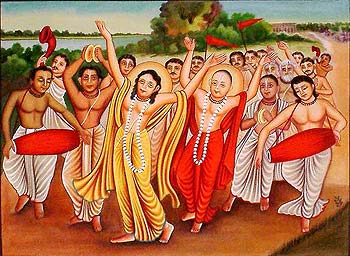
Chaitanya Mahaprabhu

If you watch the video below, you can see how the Muslims have been influenced by Vaishnava Vedanta sants to create the sect of Sufism with it's intense emphasis on kirtan and Gurmantra as spiritual practices. There is even a Shaivite siddha yoga type influence as well. I don't believe there is any literature whatsoever within Islam which is anything like the yoga and bhakti sutras to explain the mysticism within Sufism. Sufism is heavily influenced by Hindu religion. And my guess is that's because the influences were "true" philosophically, and "worked" yogically as to creating trance states and alterations of consciousness with clear signs of Kundalini awakening, kriyas, etc. Almost everyone would agree, Sufi's have very little in common with orthodox Islam. And some Sufi practices are indistinguishable from a yoga ashram.


http://www.youtube.com/watch?v=v_ACMyqDDDg
http://www.youtube.com/watch?v=-mWvv8PSntk
http://www.youtube.com/watch?v=3Yjt7PSZTg8
http://www.youtube.com/watch?v=63WGG1r9s9U
[font="Arial"][color="Navy"]

ਅਚੁਤ ਪਾਰਬ੍ਰਹਮ ਪਰਮੇਸੁਰ ਅੰਤਰਜਾਮੀ ॥
achuth paarabreham paramaesur antharajaamee ||
The Supreme Lord God is imperishable, the Transcendent Lord, the Inner-knower, the Searcher of hearts.

ਮਧੁਸੂਦਨ ਦਾਮੋਦਰ ਸੁਆਮੀ ॥
madhhusoodhan dhaamodhar suaamee ||
He is the Slayer of demons, our Supreme Lord and Master.

ਰਿਖੀਕੇਸ ਗੋਵਰਧਨ ਧਾਰੀ ਮੁਰਲੀ ਮਨੋਹਰ ਹਰਿ ਰੰਗਾ ॥੧॥
rikheekaes govaradhhan dhhaaree muralee manohar har rangaa ||1||
The Supreme Rishi, the Master of the sensory organs, the uplifter of mountains, the joyful Lord playing His enticing flute. ||1||

ਮੋਹਨ ਮਾਧਵ ਕ੍ਰਿਸ੍ਨ ਮੁਰਾਰੇ ॥
mohan maadhhav kirasa muraarae ||
The Enticer of Hearts, the Lord of wealth, Krishna, the Enemy of ego.

ਜਗਦੀਸੁਰ ਹਰਿ ਜੀਉ ਅਸੁਰ ਸੰਘਾਰੇ ॥
jagadheesur har jeeo asur sanghaarae ||
The Lord of the Universe, the Dear Lord, the Destroyer of demons.

ਜਗਜੀਵਨ ਅਬਿਨਾਸੀ ਠਾਕੁਰ ਘਟ ਘਟ ਵਾਸੀ ਹੈ ਸੰਗਾ ॥੨॥
jagajeevan abinaasee thaakur ghatt ghatt vaasee hai sangaa ||2||
The Life of the World, our eternal and ever-stable Lord and Master dwells within each and every heart, and is always with us. ||2||

ਧਰਣੀਧਰ ਈਸ ਨਰਸਿੰਘ ਨਾਰਾਇਣ ॥
dhharaneedhhar ees narasingh naaraaein ||
The Support of the Earth, the man-lion, the Supreme Lord God.

ਦਾੜਾ ਅਗ੍ਰੇ ਪ੍ਰਿਥਮਿ ਧਰਾਇਣ ॥
dhaarraa agrae prithham dhharaaein ||
The Protector who tears apart demons with His teeth, the Upholder of the earth.

ਬਾਵਨ ਰੂਪੁ ਕੀਆ ਤੁਧੁ ਕਰਤੇ ਸਭ ਹੀ ਸੇਤੀ ਹੈ ਚੰਗਾ ॥੩॥
baavan roop keeaa thudhh karathae sabh hee saethee hai changaa ||3||
O Creator, You assumed the form of the pygmy to humble the demons; You are the Lord God of all. ||3||

ਸ੍ਰੀ ਰਾਮਚੰਦ ਜਿਸੁ ਰੂਪੁ ਨ ਰੇਖਿਆ ॥
sree raamachandh jis roop n raekhiaa ||
You are the Great Raam Chand, who has no form or feature.

ਬਨਵਾਲੀ ਚਕ੍ਰਪਾਣਿ ਦਰਸਿ ਅਨੂਪਿਆ ॥
banavaalee chakrapaan dharas anoopiaa ||
Adorned with flowers, holding the chakra in Your hand, Your form is incomparably beautiful.

ਸਹਸ ਨੇਤ੍ਰ ਮੂਰਤਿ ਹੈ ਸਹਸਾ ਇਕੁ ਦਾਤਾ ਸਭ ਹੈ ਮੰਗਾ ॥੪॥
sehas naethr moorath hai sehasaa eik dhaathaa sabh hai mangaa ||4||
You have thousands of eyes, and thousands of forms. You alone are the Giver, and all are beggars of You. ||4||

ਭਗਤਿ ਵਛਲੁ ਅਨਾਥਹ ਨਾਥੇ ॥
bhagath vashhal anaathheh naathhae ||
You are the Lover of Your devotees, the Master of the masterless.

ਗੋਪੀ ਨਾਥੁ ਸਗਲ ਹੈ ਸਾਥੇ ॥
gopee naathh sagal hai saathhae ||
The Lord and Master of the milk-maids, You are the companion of all.

ਬਾਸੁਦੇਵ ਨਿਰੰਜਨ ਦਾਤੇ ਬਰਨਿ ਨ ਸਾਕਉ ਗੁਣ ਅੰਗਾ ॥੫॥
baasudhaev niranjan dhaathae baran n saako gun angaa ||5||
O Lord, Immacuate Great Giver, I cannot describe even an iota of Your Glorious Virtues. ||5

ਮੁਕੰਦ ਮਨੋਹਰ ਲਖਮੀ ਨਾਰਾਇਣ ॥
mukandh manohar lakhamee naaraaein ||
Liberator, Enticing Lord, Lord of Lakshmi, Supreme Lord God.

ਦ੍ਰੋਪਤੀ ਲਜਾ ਨਿਵਾਰਿ ਉਧਾਰਣ ॥
dhropathee lajaa nivaar oudhhaaran ||
Savior of Dropadi's honor.

ਕਮਲਾਕੰਤ ਕਰਹਿ ਕੰਤੂਹਲ ਅਨਦ ਬਿਨੋਦੀ ਨਿਹਸੰਗਾ ॥੬॥
kamalaakanth karehi kanthoohal anadh binodhee nihasangaa ||6||
Lord of Maya, miracle-worker, absorbed in delightful play, unattached. ||6||

ਅਮੋਘ ਦਰਸਨ ਆਜੂਨੀ ਸੰਭਉ ॥
amogh dharasan aajoonee sanbho ||
The Blessed Vision of His Darshan is fruitful and rewarding; He is not born, He is self-existent.

ਅਕਾਲ ਮੂਰਤਿ ਜਿਸੁ ਕਦੇ ਨਾਹੀ ਖਉ ॥
akaal moorath jis kadhae naahee kho ||
His form is undying; it is never destroyed.

ਅਬਿਨਾਸੀ ਅਬਿਗਤ ਅਗੋਚਰ ਸਭੁ ਕਿਛੁ ਤੁਝ ਹੀ ਹੈ ਲਗਾ ॥੭॥
abinaasee abigath agochar sabh kishh thujh hee hai lagaa ||7||
O imperishable, eternal, unfathomable Lord, everything is attached to You. ||7||

ਸ੍ਰੀਰੰਗ ਬੈਕੁੰਠ ਕੇ ਵਾਸੀ ॥
sreerang baikunth kae vaasee ||
The Lover of greatness, who dwells in heaven.

ਮਛੁ ਕਛੁ ਕੂਰਮੁ ਆਗਿਆ ਅਉਤਰਾਸੀ ॥
mashh kashh kooram aagiaa aoutharaasee ||
By the Pleasure of His Will, He took incarnation as the great fish and the tortoise.

ਕੇਸਵ ਚਲਤ ਕਰਹਿ ਨਿਰਾਲੇ ਕੀਤਾ ਲੋੜਹਿ ਸੋ ਹੋਇਗਾ ॥੮॥
kaesav chalath karehi niraalae keethaa lorrehi so hoeigaa ||8||
The Lord of beauteous hair, the Worker of miraculous deeds, whatever He wishes, comes to pass. ||8||

ਨਿਰਾਹਾਰੀ ਨਿਰਵੈਰੁ ਸਮਾਇਆ ॥
niraahaaree niravair samaaeiaa ||
He is beyond need of any sustenance, free of hate and all-pervading.

ਧਾਰਿ ਖੇਲੁ ਚਤੁਰਭੁਜੁ ਕਹਾਇਆ ॥
dhhaar khael chathurabhuj kehaaeiaa ||
He has staged His play; He is called the four-armed Lord.

ਸਾਵਲ ਸੁੰਦਰ ਰੂਪ ਬਣਾਵਹਿ ਬੇਣੁ ਸੁਨਤ ਸਭ ਮੋਹੈਗਾ ॥੯॥
saaval sundhar roop banaavehi baen sunath sabh mohaigaa ||9||
He assumed the beautiful form of the blue-skinned Krishna; hearing His flute, all are fascinated and enticed. ||9||

ਬਨਮਾਲਾ ਬਿਭੂਖਨ ਕਮਲ ਨੈਨ ॥
banamaalaa bibhookhan kamal nain ||
He is adorned with garlands of flowers, with lotus eyes.

ਸੁੰਦਰ ਕੁੰਡਲ ਮੁਕਟ ਬੈਨ ॥
sundhar kunddal mukatt bain ||
His ear-rings, crown and flute are so beautiful.

ਸੰਖ ਚਕ੍ਰ ਗਦਾ ਹੈ ਧਾਰੀ ਮਹਾ ਸਾਰਥੀ ਸਤਸੰਗਾ ॥੧੦॥
sankh chakr gadhaa hai dhhaaree mehaa saarathhee sathasangaa ||10||
He carries the conch, the chakra and the war club; He is the Great Charioteer, who stays with His Saints. ||10||

ਪੀਤ ਪੀਤੰਬਰ ਤ੍ਰਿਭਵਣ ਧਣੀ ॥
peeth peethanbar thribhavan dhhanee ||
The Lord of yellow robes, the Master of the three worlds.

ਜਗੰਨਾਥੁ ਗੋਪਾਲੁ ਮੁਖਿ ਭਣੀ ॥
jagannaathh gopaal mukh bhanee ||
The Lord of the Universe, the Lord of the world; with my mouth, I chant His Name.

ਸਾਰਿੰਗਧਰ ਭਗਵਾਨ ਬੀਠੁਲਾ ਮੈ ਗਣਤ ਨ ਆਵੈ ਸਰਬੰਗਾ ॥੧੧॥
saaringadhhar bhagavaan beethulaa mai ganath n aavai sarabangaa ||11||
The Archer who draws the bow, the Beloved Lord God; I cannot count all His limbs. ||11||

~Sri Guru Granth Sahib Ji p. 1082
ਨ ਸੰਖੰ ਨ ਚਕ੍ਰੰ ਨ ਗਦਾ ਨ ਸਿਆਮੰ ॥
n sankhan n chakran n gadhaa n siaaman ||
God has no conch-shell, no religious mark, no paraphernalia; he does not have blue skin.

ਅਸ੍ਚਰਜ ਰੂਪੰ ਰਹੰਤ ਜਨਮੰ ॥
ascharaj roopan rehanth janaman ||
His Form is Wondrous and Amazing. He is beyond incarnation.

ਨੇਤ ਨੇਤ ਕਥੰਤਿ ਬੇਦਾ ॥
naeth naeth kathhanth baedhaa ||
The Vedas say that He is not this, and not that.

~Sri Guru Granth Sahib Ji p. 1359


Rather than reading into two apparently contradictory pauris of Gurbani, by Shri Guru Arjun Dev Ji. I think it will make more sense and be closer to the correct interpretation if people realize Guruji is not praising one thing and then negating it later as if He couldn't make up His mind. Guruji is defining the God as formed and formless, having sarguna (perceivable attributes due to manifestation in the materiality and including all consequent shortcomings of being subject to the material world of pakrti which forms the three gunas: essential nature of being: rajo guna, tamo guna and satva guna. Gunas by the way are defined as "string" and also as "tendencies." Guna - Wikipedia, the free encyclopedia

The teaching of the Three Gunas is found in the Vaishnava scriptures: Mahabharata, Bhagavad Gita, and Śrīmad Bhāgavatam. Those writings which elevate Bhagavan Krishna as the Supreme Godhead.


So just reflect for a moment how long ago this teaching was revealed to mankind and only within the last 20 years has modern day physics discovered that "strings" were the basic building blocks of all matter. And Quantum Mechanical theory shows that all matter has a relationship to consciousness at the particle level. This relationship to a perceiver has been described as "tendancies to exist" from the writings of physicist Fritjof Capra based on the Einstein-Podolsky-Rosen Complex. This is whether Quantum Entanglement and Non-Locality have implications which cause physicists to take a leap into the realm of spirituality and metaphysics to explain, at least theoretically. Quantum Physics with regard to spirituality

I think this shows very clearly that there is a kind of infallibly revealed truth from the God in these teachings. And Guruji was also able to recognize this because He is a God-realized Satguru. I'm completely convinced that Gurbani is absolute truth with no mythology or fake thing in it, except that which is explicitly stated to be mythological by Guruji.


The Vaishnava Vedanta sampradya is primarily a Dvaitic monotheistic philosophy and contrasts with the strictly Advaitist schools in that it makes perfect sense, "Why is Guru praying to God if Guru is God?" Because that is the element of Vaishnav Bhakti teaching which is Dvaitic. However, it is a modified philosophy because of the inclusion of the Advaitist definition of the God in the teaching of Chaitanya Mahaprabhu, Achintya Bheda Abheda ("inconceivable oneness and difference"). So because of the expanded definition the Supreme God is defined in terms of dualism, sarguna as well as non-dualism, nirguna. So he will have describable attribures such as:

ਸ੍ਰੀ ਰਾਮਚੰਦ ਜਿਸੁ ਰੂਪੁ ਨ ਰੇਖਿਆ ॥
sree raamachandh jis roop n raekhiaa ||
You are the Great Raam Chand, who has no form or feature.

ਬਨਵਾਲੀ ਚਕ੍ਰਪਾਣਿ ਦਰਸਿ ਅਨੂਪਿਆ ॥
banavaalee chakrapaan dharas anoopiaa ||
Adorned with flowers, holding the chakra in Your hand, Your form is incomparably beautiful. ~Sri Guru Granth Sahib Ji p. 1082
So contrary to being a negation of the validity of the sargun saroop of Raam Chandra, a Krishan avataar, Gurbani is actually confirming the Gaudiya Vaishnav theology that He is formless and also has a form. God as the Supreme aspect is nirguna, but Gurbani also has a Dvaitist teaching, in that the formless God also takes on a sargun saroop to manifest in sansaara. Advaita means "not two," and refers to the nirgun, attributeless, formless, highest reality of the God.

ਅੰਤਰਿ ਬਾਹਰਿ ਹਰਿ ਪ੍ਰਭੁ ਏਕੋ ਦੂਜਾ ਅਵਰੁ ਨ ਕੋਈ ॥
anthar baahar har prabh eaeko dhoojaa avar n koee ||
Inwardly and outwardly, they saw only the One Lord God; for them there was no other second. ~Sri Guru Granth Sahib Ji p. 445

And it is clear that this exactly principle is the very definition of Gaudiya Vaishnava school of Vedanta which teaches Dvaita and Advaita and emphasizes devotional kirtan and chanting of Har Krishan and his avataars.


~Bhul chak maaf
A great post and a lot too take in.

I am not sure about the connection between Sufism and Vaishnavism. Read "The Sufi's" and "The Way of The Sufi" both by Idries Shah. The forward is very interesting.

My own opinion is that the Guru's did not adhere to any one school of thinking. Have you noticed that all school's of thought i.e. Hindu based , Islamic and Christian based are criticised in Bani for losing their way. Even Jains are described as "corrupt". Bani seems not to make a criticism of Buddism, something I find interesting (I maybe mistaken).

The Guru's background as Kshatriya's would have possibly "Shivite" in nature...again I maybe mistaken.

I will do a deeper analysis of what you have written when I have time.
  #22 (permalink)  
Old 11-Jul-2008, 18:57 PM
Narayanjot Kaur's Avatar Narayanjot Kaur Narayanjot Kaur is offline
SPN Sewadaar
 
Enrolled: Dec 3rd, 2006
Location: Chester PA
Posts: 13,323
Narayanjot Kaur is a splendid one to behold
Narayanjot Kaur is a splendid one to beholdNarayanjot Kaur is a splendid one to beholdNarayanjot Kaur is a splendid one to beholdNarayanjot Kaur is a splendid one to beholdNarayanjot Kaur is a splendid one to beholdNarayanjot Kaur is a splendid one to beholdNarayanjot Kaur is a splendid one to beholdNarayanjot Kaur is a splendid one to beholdNarayanjot Kaur is a splendid one to beholdNarayanjot Kaur is a splendid one to beholdNarayanjot Kaur is a splendid one to beholdNarayanjot Kaur is a splendid one to beholdNarayanjot Kaur is a splendid one to beholdNarayanjot Kaur is a splendid one to behold
   
Adherent: Sikhism
Blog Entries: 1
Liked 6,648 Times in 3,475 Posts
    Nationality: United States
Re: Guru Nanak Never Questioned the Creator

Quote:
Originally Posted by randip singh View Post
A great post and a lot too take in.

I am not sure about the connection between Sufism and Vaishnavism. Read "The Sufi's" and "The Way of The Sufi" both by Idries Shah. The forward is very interesting.

My own opinion is that the Guru's did not adhere to any one school of thinking. Have you noticed that all school's of thought i.e. Hindu based , Islamic and Christian based are criticised in Bani for losing their way. Even Jains are described as "corrupt". Bani seems not to make a criticism of Buddism, something I find interesting (I maybe mistaken).

The Guru's background as Kshatriya's would have possibly "Shivite" in nature...again I maybe mistaken.

I will do a deeper analysis of what you have written when I have time.
Randip ji

Let me join you in thanking Harjas ji for what has been a sustained and careful analysis and review of Gurbani in relation to Vaishnavism. These essays on this and other threads truly dignify our study.

Harjas ji, there is a kind of heroic effort in your writing to date and, yes, a lot to take in.

On the question of Guru Nanak and Buddhism: I have been pondering this point for weeks now. There is a key similarity that surfaces in relation to each branch of Buddhism that I have looked into. Again, not sure, but the answer may lie in this idea. In Gurbani and in Buddhism, samadhi is not the end of the road for spiritual development while still alive on the plane of earth. There is something after samadhi that has an active moral and ethical component that appears missing in the later Vedantic traditions.

Buddhism seems to say that samadhi is not where one stops, savoring the bliss of one's personal encounter with God. In fact there are Buddhist scholars who are even suspicious of samadhi as a goal. They see it as a path to something else. And the question is asked vigorously -- And, after samadhi?

  #23 (permalink)  
Old 11-Jul-2008, 19:32 PM
Harjas Kaur Khalsa's Avatar Harjas Kaur Khalsa Harjas Kaur Khalsa is offline
 
Enrolled: Feb 15th, 2006
Posts: 516
Harjas Kaur Khalsa is an unknown quantity at this point
   
Adherent: Sikhism
Liked 13 Times in 10 Posts
    Nationality: United States
Re: Guru Nanak Never Questioned the Creator

Quote:
ਮੁਕੰਦ ਮਨੋਹਰ ਲਖਮੀ ਨਾਰਾਇਣ ॥ ਦ੍ਰੋਪਤੀ ਲਜਾ ਨਿਵਾਰਿ ਉਧਾਰਣ ॥ ਕਮਲਾਕੰਤ ਕਰਹਿ ਕੰਤੂਹਲ ਅਨਦ ਬਿਨੋਦੀ ਨਿਹਸੰਗਾ ॥੬॥
Mukanḏ manohar lakẖmī nārā*iṇ. Ḏaropaṯī lajā nivār uḏẖāraṇ. Kamlākanṯ karahi kanṯūhal anaḏ binoḏī nihsangā. ||6||
My Beauteous Lord is the Giver of salvation and the spouse of wealth. He, the Lord, is the Saviour of Daropadi, from the clutches of the destroyers of her honour. The Detached Lord of mammon does the wondrous deeds, sports and makes merry.
Here be advised, saving of Dropati is not credited to Krishana but to the Lord Himself, sticking on a story will not do just what Guru ji is promoting. When Devtas are called beggars what importance they have left before His Mighty power? Even in Gurbani Guru ji declares all credit to Him when Guru ji is revered in high esteem.
Veer ji, the story of the saving of Draupadi's honor is taken from the Mahabharata, Bhagavad-Gita. And in the story it is indeed Bhagavan Krishna who she prays to, and who saves her. When Gurbani is mentioning story of Draupadi, how can anyone NOT credit to Krishan? Moreover, the whole pauri of Gurbani is praising the One Parabrahm as manifest in the Krishan avtaaras.
"O Krishna, son of Devaki,
Lord of the universe, of inexhaustible powers,
Krishna of the blue-lotus skin,
Krishna of the white-lily eyes,
Saffron-robed Krishna,
Help me now!"
-Draupadi's cry to Krishna in Book Three
It is part of Vaishnava sampradya to consider Bhagavan Krishan and this lineage of Vishnu avtaaras as the sargun saroop of the One Supreme Uncreated nirgun God and to subordinate every other deva as demi-god, including Vishnu. So to see in Gurbani a subordination of every demi-god to the One Supreme is not itself contradicting Vaishnavism at all. The fact that Gurbani subordinates every deva, including Vishnu, but does NOT subordinate the das avtaaras is pure Vaishnavism. Can you explain why this whole pauri is praising the One Supreme Lord in the form of das avtaaras?

(18) At the coming of day, all manifested things come forth from the unmanifested and at the coming of night they merge in that same, called the unmanifested.
(19) This very same multitude of existences arising again and again merges helplessly at the coming of night, O Partha (Arjuna), and streams forth into being at the coming of day.
(20) But beyond this unmanifested, there is yet another Unmanifested Eternal Being who does not perish even when all existences perish.
(21) This Unmanifested is called the Imperishable. Him they speak of as the Supreme Status. Those who attain to Him return not. That is My supreme abode.
~Bhagavad-Gita ch. 8


Belief of Vaishnavism is that the nirguna manifests as the das avtaaras, and while all-pervading exists within every deva and every being, only the das avtaaras are the sargun saroop of the nirgun Supreme Parabrahm. And it should be noted that Vaishnavism often contradicts Brahmanism, with the exception of the school of Ramanuja and Goswami Tulsidas who tried to Brahminize Vaishnavism. So we see Guruji contradicting Brahminism and casteism, yet elevating the One Supreme nirguna and praising the sarguna of the lineage of Krishan avataars, and explaining the all-pervading nature of the Oneness of Advaita. Can this association of Vaishnavism in Gurbani be accidental? I would dare say nearly every major teaching in Gurbani has an origin which can be directly traced, and in some places almost word for word conformity with Vaishnava Upanishads.


ਏਕ ਕ੍ਰਿਸਨੰ ਸਰਬ ਦੇਵਾ ਦੇਵ ਦੇਵਾ ਤ ਆਤਮਾ ॥
eaek kirasanan sarab dhaevaa dhaev dhaevaa th aathamaa ||
The One Lord Krishna is the Divine Lord of all; He is the Divinity of the individual soul.

ਆਤਮਾ ਬਾਸੁਦੇਵਸ੍ਯ੍ਯਿ ਜੇ ਕੋ ਜਾਣੈ ਭੇਉ ॥ਨਾਨਕੁ ਤਾ ਕਾ ਦਾਸੁ ਹੈ ਸੋਈ ਨਿਰੰਜਨ ਦੇਉ ॥੪॥
aathamaa baasudhaevasiy jae ko jaanai bhaeo || naanak thaa kaa dhaas hai soee niranjan dhaeo ||4||
Nanak is a slave to anyone who understands this mystery of the all-pervading Lord; he himself is the Immaculate Divine Lord. ||4||
~Sri Guru Granth Sahib Ji p. 469


ਕ੍ਰਿਸ੍ਨਾ ਤੇ ਜਾਨਊ ਹਰਿ ਹਰਿ ਨਾਚੰਤੀ ਨਾਚਨਾ ॥੧॥
kirasaa thae jaanoo har har naachanthee naachanaa ||1||
Know that, through Krishna, the Lord, Har, Har, the dance of creation dances. ||1||

ਪਹਿਲ ਪੁਰਸਾਬਿਰਾ ॥
pehil purasaabiraa ||
First of all, there was only the Primal Being.

ਅਥੋਨ ਪੁਰਸਾਦਮਰਾ ॥
athhon purasaadhamaraa ||
From that Primal Being, Maya was produced.

ਅਸਗਾ ਅਸ ਉਸਗਾ ॥
asagaa as ousagaa ||
All that is, is His.
~Sri Guru Granth Sahib Ji p. 693


Quote:
ਧਰਣੀਧਰ ਈਸ ਨਰਸਿੰਘ ਨਾਰਾਇਣ ॥ ਦਾੜਾ ਅਗ੍ਰੇ ਪ੍ਰਿਥਮਿ ਧਰਾਇਣ ॥ ਬਾਵਨ ਰੂਪੁ ਕੀਆ ਤੁਧੁ ਕਰਤੇ ਸਭ ਹੀ ਸੇਤੀਹੈਚੰਗਾ॥੩॥
Ḏẖarṇīḏẖar īs narsingẖ nārā*iṇ. Ḏāṛā agrė paritham ḏẖarā*iṇ. Bāvan rūp kī*ā ṯuḏẖ karṯė sabẖ hī sėṯī hai cẖanga. ||3||
The Lord is the support of the earth, the man-lion and Primal being.Thou, O Lord, are the Upholder of the earth with Thine for teeth.Thou, O creator, assumed the form of a pigmy and are the sublime Lord of all.
Look at the Vaak” seti hai changa, means still only you are sublime of all, that is what Guru ji is preaching here.
Narasingh Narayana? The dwarf? All in the same sentence as the Supreme Lord who subsumes (pervades within) all? Veerji, this Guru vaak is praising the Krishan avtaaras as the One Supreme Lord. The Lord Himself is manifesting through these avtaaras is what Gurbani is saying.


Quote:
Narasiṃha ("man-lion") (also spelt as Narasingh, Narasinga) (नरसिंह in Devanagari) is described as an incarnation (avatara) of Vishnu within the Puranic texts of Hinduism who takes the form of half-man / half-lion, having a human torso and lower body, but with a lion-like face and claws. He is worshipped in deity form by a significant number of Vaishnava groups throughout India (especially in the South) and is primarily known as the 'Great Protector', being a form of Vishnu who specifically defends and protects his devotees in times of need.
Narasimha: Information and Much More from Answers.com
Even with a very superficial reading of this pauri, how can one negate or ignore the distinct mention of das avtaaras as manifesting as the One Supreme? Seeing praise of das avtaara in Gurbani, and of Narasingh, how can anyone overlook association of Order of Singhs with this warrior avtaar whose duty is to destroy tyranny and protect devotees?


ਬਬਾ ਬ੍ਰਹਮੁ ਜਾਨਤ ਤੇ ਬ੍ਰਹਮਾ ॥
babaa breham jaanath thae brehamaa ||
BABBA: One who knows God is a Brahmin.

ਬੈਸਨੋ ਤੇ ਗੁਰਮੁਖਿ ਸੁਚ ਧਰਮਾ ॥
baisano thae guramukh such dhharamaa ||
A Vaishnaav is one who, as Gurmukh, lives the righteous life of Dharma.
~Sri Guru Granth Sahib Ji p. 258

It is Vaishnava teaching against the corruption of caste and varna system to say the real Brahmin is the one who worships the God, irrespective of birth caste, be he brahmin or shudra. And so we find this tuuk also in Gurbani. Strange for Guruji to associate a Vaishnav with a Gurumukh.

Saint Narsi Mehta, true Vaishnaav:
Quote:
"A few days later, a Brahmin was giving a feast. He wanted to invite Narsi but did not. When guests started arriving, he saw a Harijan with every Brahmin coming in. He realized his mistake and begged Narsi’s pardon. Narsi taught them that a true Brahmin accepted the universal brotherhood of all men and treated them equally."

Quote:
In the trinity of Vishnu, Shiva, and Brahma, Vishnu is the sattva quality of a centripetal tendency towards light and truth, which holds the universe together by pervading all existence. Vishnu comes from a root meaning "to pervade," and he is known as the Pervader. Thus Vishnu dwells in everything and defeats the power of destruction...

The Vaishnavas distinguish five forms of God: in his transcendent form; the avataras, which are incarnations of God sent to save the dharma, cosmic law, and mankind, with Vishnu as an essentially human character; the vyuha, emanations of his power, as Vasudeva-Krishna, Samkarsana, Pradyumna, and Aniruddha, who play a part in Vishnu's creation, preservation, and absorption of the universe; the immanent God; and the image or statue...

A tribe of ksatriyas, warriors, called the Satvata, were bhagavatas and were seen by the Greek writer Megasthenes at the end of the fourth century BCE. This sect then combined with the cult of Narayana, a demiurge god-creator who later became one of the names of Vishnu. Soon after the start of the Common Era, the Abhiras or cowherds of a foreign tribe, contributed Gopala Krishna, the young Krishna, who was adopted by the Abhiras and worked as a cowherd and flirted with the cowherdesses. Only as a mature young man did he return to Mathura and slay Kamsa.

The Vasudeva, Krishna, and Gopala cults became integrated through new legends into Greater Krishnaism, the second and most outstanding phase of Vaishnavism.
Being non-Vedic, Krishnaism then started to affiliate with Vedism so that the orthodox would find it acceptable. Vishnu of the Rg Veda was assimilated into Krishnaism and became the supreme God who incarnates whenever necessary to save the world. Krishna became one of the avataras of Vishnu.

In the eighth century CE the bhakti of Vaishnavism came into contact with Shankara's Advaita doctrine of spiritual monism and world-illusion. This philosophy was considered destructive of bhakti and important opposition in South India came from Ramanuja in the eleventh century and Madhva in the fifteenth century. Ramanuja stressed Vishnu as Narayana and built on the bhakti tradition of the Alvars, poet-saints of South India from the sixth to the ninth centuries (see Shri Vaishnavas).

In North India there were new Vaishnava movements: Nimbarka in the fourteenth century with the cult of Radha, Krishna's favourite cowgirl (see Nimavats); Ramananda and the cult of Rama in the same century (see Ramanandis); Kabir in the fifteenth century, whose god is Rama (see Kabirpanthis); Vallabha in the sixteenth century with the worship of the boy Krishna and Radha (see Vallabhas); and Caitanya in the same century with his worship of the grown-up Krishna and Radha (see Gaudiya Vaishnavas). In the Maratha country poet-saints such as Namdev and Tukaram from the fourteenth to the seventeenth centuries worshipped Vishnu in the form of Vithoba of Pandharpur (see Vitthalas).
Vaishnava

Quote:
ਸ੍ਰੀ ਰਾਮਚੰਦ ਜਿਸੁ ਰੂਪੁ ਨ ਰੇਖਿਆ ॥ ਬਨਵਾਲੀ ਚਕ੍ਰਪਾਣਿ ਦਰਸਿ ਅਨੂਪਿਆ ॥ ਸਹਸ ਨੇਤ੍ਰ ਮੂਰਤਿ ਹੈ ਸਹਸਾ ਇਕੁ ਦਾਤਾ ਸਭ ਹੈ ਮੰਗਾ ॥੪॥
Sarī rāmcẖanḏ jis rūp na rėkẖ*i*ā. Banvālī cẖakarpāṇ ḏaras anūpi*ā. Sahas nėṯar mūraṯ hai sahsā ik ḏāṯā sabẖ hai mangā. ||4||
Thou alone are Ramchand, who has no form and outline. Thou, O flower-gift God, of fascinating sight, has a quoit in Thy hand. Thou has thousands of forms. Thou alone are the Giver and all others are beggars.
Again here Guru’s surat( attention) is not on His created devtas but on HIM, look at” sehas netr moorat” it is definition of His sargun Sroop. Who are called great, they are beggars in Guru’s views when compared to HIM. What a Sikh learns from it, to contemplate on HIM not to propagate old theories about Devtas because they are beggars at His court. Your translator uses the word” Great Ram Chand” where is a word” great in Guru Vaak”? Imagination rather nostalgia! Alone stands is HIM the GIVER to all, rest are the beggars, period, that is what Guru ji is promoting through these reference.
An Indian reader will immediately recognize the famous king of Avodya, an English reader may be helped by translating as great or famous Raam Chand without changing the essential meaning.

yatah khyatim yatam katham u sahate tad vigarham
To think that the devatas are equal to Krishna.
~One of the ten offenses against the Name, Padma Purana

Ramachandra isn't considered to be a deva by Vaishnav tradition. He is an avtaara of the One Supreme Lord, exactly as in Guruji's description. Moreover there are different types of avtaaras, and Ramachandra is considered a "complete" avtaar. You cannot keep ignoring Raam Chand, Narasingh, the dwarf, Har Krishan all in the same pauri being equated with the formless Supreme nirguna and think it is accidental. Where in "this particular pauri" is Guruji subordinating das avtaara? He is not. He is equating them as sarguna.

So just to read that Gurbani subordinates devas is no proof at all, since that is Vaishnav philosophy. Remember also that Vaishnavism is famous for path to God through devotional bhakti, kirtan and japping Naam Gurmantras. Isn't this also the essence of Sikh path while even using the same Naams for Gurmantra? Raam, Govind, Gopala, Vasudeyv?


"Arjuna said: You are the Supreme Brahman, the ultimate, the supreme abode and purifier, the Absolute Truth and the eternal Divine Person. You are the primal God, transcendental and original, and you are the unborn and all-pervading beauty. All the great sages like Narada, Asita, Devala, and Vyasa proclaim this of You, and now You Yourself are declaring it to me. O Krsna, I totally accept as truth all that You have told me. Neither the gods nor the demons, O Lord, know Thy personality." (Bg. 10.12-14).


ਊਤਮੁ ਊਚੌ ਪਾਰਬ੍ਰਹਮੁ ਗੁਣ ਅੰਤੁ ਨ ਜਾਣਹਿ ਸੇਖ ॥
ootham oocha paarabreham gun anth n jaanehi saekh ||
that the Supreme Lord God is the most sublime and lofty. Even the thousand-tongued serpent does not know the limits of His Glories.

ਨਾਰਦ ਮੁਨਿ ਜਨ ਸੁਕ ਬਿਆਸ ਜਸੁ ਗਾਵਤ ਗੋਬਿੰਦ ॥
naaradh mun jan suk biaas jas gaavath gobindh ||
Naarad, the humble beings, Suk and Vyaasa sing the Praises of the Lord of the Universe.

ਰਸ ਗੀਧੇ ਹਰਿ ਸਿਉ ਬੀਧੇ ਭਗਤ ਰਚੇ ਭਗਵੰਤ ॥
ras geedhhae har sio beedhhae bhagath rachae bhagavanth ||
They are imbued with the Lord's essence; united with Him; they are absorbed in devotional worship of the Lord God.
~Sri Guru Granth Sahib Ji p. 298


Quote:
randip singh writes: "I am not sure about the connection between Sufism and Vaishnavism. Read "The Sufi's" and "The Way of The Sufi" both by Idries Shah. The forward is very interesting.

My own opinion is that the Guru's did not adhere to any one school of thinking. Have you noticed that all school's of thought i.e. Hindu based , Islamic and Christian based are criticised in Bani for losing their way. Even Jains are described as "corrupt". Bani seems not to make a criticism of Buddism, something I find interesting (I maybe mistaken).

The Guru's background as Kshatriya's would have possibly "Shivite" in nature...again I maybe mistaken."
There are different schools of Sufism. Just like there is no single kind of Vaishnavism, there is no single school of Sufism. I find it interesting that everyone equates Kabir ji as a Muslim, when his own Kabir-panthis call themselves Vaishnav because he was a great devotee of Lord Raam. So when we read again this baghat bani of Kabir ji, it's difficult to reconcile how these could be taken as words of a Muslim and not a Vaishnav.

ਬਿੰਦ੍ਰਾਬਨ ਮਨ ਹਰਨ ਮਨੋਹਰ ਕ੍ਰਿਸਨ ਚਰਾਵਤ ਗਾਊ ਰੇ ॥
bindhraaban man haran manohar kirasan charaavath gaaoo rae ||
In Brindaaban, where Krishna grazes his cows, he entices and fascinates my mind.
6 Gaurhee Saint Kabir

ਜਾ ਕਾ ਠਾਕੁਰੁ ਤੁਹੀ ਸਾਰਿੰਗਧਰ ਮੋਹਿ ਕਬੀਰਾ ਨਾਊ ਰੇ ॥੨॥੨॥੧੫॥੬੬॥
jaa kaa thaakur thuhee saaringadhhar mohi kabeeraa naaoo rae ||2||2||15||66||
You are my Lord Master, the Archer of the Universe; my name is Kabeer. ||2||2||15||66||
6 Gaurhee Saint Kabir
~Sri Guru Granth Sahib Ji p. 338


So I think in this way, because Kabir Ji was born a Muslim, people continue to identify him this way, when his primary spiritual teaching was clearly not Islam, but an Islam influenced by Vaishnava bhakti. I think people have tended to make this kind of misidentification of Sufism precisely because of the understanding that Guru of Sikhism was cosmopolitan uniting people of all faiths. While this is true, it can be shown the umbrella uniting them all was Vaishnavism. Where in all of Islam do you find japping Naam of God as a spiritual practice? In Vaishnav influenced Sufism, because it is the essence of Vaishnava bhakti.

What purist Muslims think about Sufism:
Quote:
Sufism is marred by un-Islamic beliefs and is an Ideology in itself:
1. The belief of Wahdat al-Wajood, which implies that the Creator (Allah) and the creation are one, and the creation is just the manifestation of the Creator.
2. The belief that the Prophets and the Sufi saints are alive in their graves, just as they were alive in this world. They are fully aware of the outside world; they can communicate with the living and help those who call upon them.
3. The spirits (Ruh) of the righteous comes back from the Barzakh.
4. Gross exaggeration in praising the Messenger of Allah (sallallahu alaihi wa-sallam) whilst neglecting his (sallallahu alaihi wa-sallam) teachings in understanding the religion.
5. Total and complete obedience to a Sufi Shaikh.
6. Penance and living the lives of hermits are ways to get closer to Allah.
7. Some Majzoobs, who have reached the goal of Sufism, run the affairs of the creation.
Quote:
Like many other Sufi doctrines, pantheism is adopted from man-made religions and philosophies, as confirmed by S. R. Sharda in his book, Sufi Thought

"Sufi literature of the post-Timur period shows a significant change in thought content. It is pantheistic. After the fall of Muslim orthodoxy from power at the centre of India for about a century, due to the invasion of Timur, the Sufi became free from the control of the Muslim orthodoxy and consorted with Hindu saints, who influenced them to an amazing extent. The Sufi adopted Monism and wifely devotion from the Vaishnava Vedantic school and Bhakti and Yogic practices. By that time, the popularity of the Vedantic pantheism among the Sufis had reached its zenith."

What Sufism has to do with Islam? Discover the True Religion of Muslim - MANIFEST AND HIDDEN KNOWLEDGE, SAINT WORSHIP, Akhyaar (chosen), Abdaal (substitutes), Abraar (pious), Awtaad (pegs), Nuqabaa (watchmen), Qutb (pole), Ghawth (Succor), Bayazid Ta

Quote:
Drawing from Qur'anic verses, virtually all Sufis distinguish Lataif-e-Sitta (The Six Subtleties), Nafs, Qalb, Ruh, Sirr, Khafi & Akhfa. These lataif (singular : latifa) designate various psychospiritual "organs", or faculties of sensory perception.[16] Sufic development involves the awakening of these spiritual centers of perception that lie dormant in an individual. Each center is associated with a particular color and general area of the body, often with a particular prophet, and varies from order to order. The help of a guide is considered necessary to help activate these centers. After undergoing this process, the dervish is said to reach a certain type of "completion."

These six "organs" or faculties: Nafs, Qalb, Ruh, Sirr, Khafi and Akhfa, and the purificative activities applied to them, contain the basic orthodox Sufi philosophy. The purification of the elementary passionate nature (Tazkiya-I-Nafs), followed by cleansing of the spiritual heart so that it may acquire a mirror-like purity of reflection (Tazkiya-I-Qalb) and become the receptacle of God's love (Ishq) and illumination of the spirit (Tajjali-I-Ruh). This process is fortified by emptying of egoic drives (Taqliyya-I-Sirr) and remembrance of God's attributes (Dhikr), and completion of journey by purification of the last two faculties, Khafi and Akhfa.

The person gets acquainted with the lataif one by one by Muraqaba (Sufi meditation), Dhikr (Remembrance of God) and purification of one's psyche of negative thoughts, emotions, and actions. Loving God and one's fellow, irrespective of his or her race, religion or nationality, and without consideration for any possible reward, is the key to ascension according to Sufis.
Wikipedia search result
Six chakras. Purification of the ego by meditation and Naam jap (dhikr: reciting name of Allah). Islam indeed. Sufism is definitely a form of Islamicized Vaishnavism, and not an independant form of Islamic mysticism. How can it be said Guruji borrowed from Islam and Vaishnavism equally? What Islamic teachings appear in Shri Guru Granth Sahib? That which appears is Vaishnav-influenced. And the central theme of Vaishnava bhakti? Mukti through devotional practice of Naam jap.

Quote:
Both of Sheikh Chand's books were written in the form of questions and answers and contain discussions on identical philosophical thoughts. The dialogue in Hargauri-Sambad is between Shiva and Durga and that in Talibnama between the poet himself and his pir, Shah Doulah. The principal themes of the discussions are faith in the guru, mystery about the Creator, cosmology and yoga. It also has a description of Shiva's imparting secret wisdom to Durga. Here the influence of Nath religion is discernible...

A Sufi's ultimate aim is to attain union with God. The devotee is shown this path by the pir or murshid (spiritual guide or teacher). Guided by the pir, the Sufi tries to free himself from the senses and purify his soul. Through spiritual rites, he frees himself from all worldly attachments and attractions and then surrenders unconditionally to Allah...

The poets expressed their sentiments and feelings in unambiguous language. At times they used metaphors to give indirect vent to their feelings, often using the love of radha and krishna symbolically. Extensive use of this symbolism has led many contemporary critics to describe the poets of this stream as 'Muslim Vaishnava poets', 'pro-Vaishnava Muslim poets' etc.
BANGLAPEDIA: Sufi Literature

Indries Shah combined teaching of Mevlana Sufism with Theosophy and Gurdjieff's writings to a largely western audience. It is more correct to say he was "new age" rather than imparting an authentic Sufi tradition. He has been much criticized in the Islamic world for teaching Sufism without Islam. His western followers are not taken seriously by any authentic Sufi lineage, including Mevlana Order. So while he may have wise things to say as a teacher from Sufi background, his writings will not be authoritative for purposes of tracing historical bhakti Vaishnav or even yogic Shaivite Nath influence in Sufism.


Quote:
My own opinion is that the Guru's did not adhere to any one school of thinking. Have you noticed that all school's of thought i.e. Hindu based , Islamic and Christian based are criticised in Bani for losing their way.
Really analyzing Gurbani of both Shri Guru Granth Sahib Ji and Shri Dasam Granth Sahib Ji you find a unifying theme... Vaishnavism. Guruji criticized Braministic ritualized Hinduism. But His teaching is nearly identical to Vaishnavism. I find that interesting.

Take for example a quick look at Guru ji's message.

1. teaching of reincarnation
2. teaching of heaven and hell and devalokas.
3. teaching of Mahadeva Trimurti in association with creation.
4. criticism and correction of caste system, janeo, pandits, yogis, brahmins and even devas as not being able to find the limits of the nirguna.
5. teaching Dharma Bull of the 4 yugs.
6. teaching that Naam jap is the boat of mukti for the Kaliyug.
7. teaching dhyaan and gyaan.
8. teaching of chakrs and dasm duar, closing the nine bodily gates
9. teaching of jeevanmukti
10. teaching salvation is found in human body and even devas long for it.
11. teaching spiritual lessons from Hindu classic scriptures, i.e. Draupadi's honor.
12. teaching to keep amrit vela with practice of Naam jap.
13. Naam jap is taught using Gurmantra
14. Guru-shishya relationship is taught.
15. Gur-deekhya through charan-pahul which is subsumed into Khande Ki pahul of Dasam Pita ji.
16. merging into God-consciousness Brahm-jnana/gyaan, samaadhi is the ultimate.


Where is there any teaching of Guruji which is completely opposed to Vaishnava Vedanta? Rather, almost every single major teaching can be traced to Vaishnava Upanishads.

Can any be traced to Islam or Christianity?


Vaishnav initiation (diksha) with charan pahul. Lotus feet of the guru.


ਗੁਰ ਕੇ ਚਰਣ ਧੋਇ ਧੋਇ ਪੀਵਾ ॥੧॥
gur kae charan dhhoe dhhoe peevaa ||1||
I wash the Guru's Feet, and drink in this water. ||1||

ਗੁਰ ਕੀ ਰੇਣੁ ਨਿਤ ਮਜਨੁ ਕਰਉ ॥
gur kee raen nith majan karo ||
I take my daily bath in the dust of the Guru's Feet.
~Sri Guru Granth Sahib Ji p. 239

Tilak mark of Vaishnav tradition is taking the dust of the feet of the holy on one's head for auspisciousness of opening third eye agni chakra.
"when in the world the sinful ways will be on the rise and noble behavior will vanish, as the disappearance of the moon when on its wane on the darkest night, there will appear Vishnu as a prominent Prophet from the Keshatra Clan and will manifest in consecutive form through 10 Prophets to bring back the ways of virtue to the ailing world."
~Mandala 7, Ush 5, Mantra 5 and Chapter 6 Rig Veda


ਜਿਨਿ ਜਿਨਿ ਨਾਮ ਤਿਹਾਰੋ ਧਿਆਇਆ ॥ ਦੂਖ ਪਾਪ ਤਿਨ ਨਿਕਟ ਨ ਆਇਆ ॥
जिनि जिनि नाम तिहारो धिआइआ ॥ दूख पाप तिन निकट न आइआ ॥
Those who mediated on the Name of the Lord, none of the sorrows and sins came near them.

ਜੇ ਜੇ ਅਉਰ ਧਿਆਨ ਕੋ ਧਰਹੀਂ ॥ ਬਹਿਸ ਬਹਿਸ ਬਾਦਨ ਤੇ ਮਰਹੀਂ ॥੪੧॥
जे जे अउर धिआन को धरहीं ॥ बहिस बहिस बादन ते मरहीं ॥४१॥
Those who meditated on any other Entity, they ended themselves in futile discussions and quarrels.

ਹਮ ਇਹ ਕਾਜ ਜਗਤ ਮੋ ਆਏ ॥ ਧਰਮ ਹੇਤ ਗੁਰਦੇਵਿ ਪਠਾਏ ॥
हम इह काज जगत मो आए ॥ धरम हेत गुरदेवि पठाए ॥
I have been sent into this world by the Preceptor-Lord to propagate Dharma (righteousness).

ਜਹਾਂ ਤਹਾਂ ਤੁਮ ਧਰਮ ਬਿਥਾਰੋ ॥ ਦੁਸਟ ਦੋਖੀਅਨਿ ਪਕਰਿ ਪਛਾਰੋ ॥੪੨॥
जहां तहां तुम धरम बिथारो ॥ दुसट दोखीअनि पकरि पछारो ॥४२॥
The Lord asked me to spread Dharma, and vanquish the tyrants and evil-minded persons.

ਯਾਹੀ ਕਾਜ ਧਰਾ ਹਮ ਜਨਮੰ ॥ ਸਮਝ ਲੇਹੁ ਸਾਧੂ ਸਭ ਮਨਮੰ ॥
याही काज धरा हम जनमं ॥ समझ लेहु साधू सभ मनमं ॥
I have taken birth of this purpose, the saints should comprehend this in their minds.

ਧਰਮ ਚਲਾਵਨ ਸੰਤ ਉਬਾਰਨ ॥ ਦੁਸਟ ਸਭਨ ਕੋ ਮੂਲ ਉਪਾਰਨ ॥੪੩॥
धरम चलावन संत उबारन ॥ दुसट सभन को मूल उपारन ॥४३॥
(I have been born) to spread Dharma, and protect saints, and root out tyrants and evil-minded persons.

ਜੇ ਜੇ ਭਏ ਪਹਿਲ ਅਵਤਾਰਾ ॥ ਆਪੁ ਆਪੁ ਤਿਨ ਜਾਪੁ ਉਚਾਰਾ ॥
जे जे भए पहिल अवतारा ॥ आपु आपु तिन जापु उचारा ॥
All the earlier incarnations caused only their names to be remembered.

ਪ੍ਰਭ ਦੋਖੀ ਕੋਈ ਨ ਬਿਦਾਰਾ ॥ ਧਰਮ ਕਰਨ ਕੋ ਰਾਹੁ ਨ ਡਾਰਾ ॥੪੪॥
प्रभ दोखी कोई न बिदारा ॥ धरम करन को राहु न डारा ॥४४॥
They did not strike the tyrants and did not make them follow th path of Dharma.
~Sri Dasam Granth Sahib p. 138

Quote:
The Guru's background as Kshatriya's would have possibly "Shivite" in nature...again I maybe mistaken.
You are correct. Some Shavaite Nath Yogi influence does exist within Sikhism, particularly Shri Chand Yogi and the Udasi Panth is a Shaivite Order. Nihangs have traditions such as sukha/bhang similar to Shaivite chillum. The wearing of jura and keeping uncut hair is traced to Shaivite yogic Nath sampradya. Sufi's also have blending of Vaishnav and Nath influences as well. Again, if it was just one, or even a few similarities between Vaishnava and Nath traditions and Sikh religion, it could be downplayed somewhat. But I find it unbelievable there is this parallel which is nearly exact on every major point of teaching (including yogic kechari mudra and amrit nectar trickling down after raising kundalini shakti) together with complete denial of any association whatsoever by almost every major Sikh authority. It's not the relationship that I find troubling, but the blanket denials which seem impossible to support.


ਮੁਦ੍ਰਾ ਮਦਕ ਸਹਜ ਧੁਨਿ ਲਾਗੀ ਸੁਖਮਨ ਪੋਚਨਹਾਰੀ ਰੇ ॥੨॥
mudhraa madhak sehaj dhhun laagee sukhaman pochanehaaree rae ||2||
My mudra - my hand-gesture, is the pipe; tuning into the celestial sound current within, the Shushmanaa - the central spinal channel, is my cooling pad. ||2||

ਤੀਰਥ ਬਰਤ ਨੇਮ ਸੁਚਿ ਸੰਜਮ ਰਵਿ ਸਸਿ ਗਹਨੈ ਦੇਉ ਰੇ ॥
theerathh barath naem such sanjam rav sas gehanai dhaeo rae ||
Pilgrimages, fasting, vows, purifications, self-discipline, austerities and breath control through the sun and moon channels - all these I pledge.

ਸੁਰਤਿ ਪਿਆਲ ਸੁਧਾ ਰਸੁ ਅੰਮ੍ਰਿਤੁ ਏਹੁ ਮਹਾ ਰਸੁ ਪੇਉ ਰੇ ॥੩॥
surath piaal sudhhaa ras anmrith eaehu mehaa ras paeo rae ||3||
My focused consciousness is the cup, and the Ambrosial Nectar is the pure juice. I drink in the supreme, sublime essence of this juice. ||3||

ਨਿਝਰ ਧਾਰ ਚੁਐ ਅਤਿ ਨਿਰਮਲ ਇਹ ਰਸ ਮਨੂਆ ਰਾਤੋ ਰੇ ॥
nijhar dhhaar chuai ath niramal eih ras manooaa raatho rae ||
The pure stream constantly trickles forth, and my mind is intoxicated by this sublime essence.
~Sri Guru Granth Sahib Ji p. 969


Shiv saroop of Nihang Singh. The farla represents Ganges river flowing out. See Shiva icon.


Shaivite babas packing chillum pipe with hashish, traditional Shivaite practice. Sikhism forbids smoking, yet Nihang Jatha retains tradition of Sukha/bhang protein drink.


ਸੁਰਗ ਪਇਆਲ ਮਿਰਤ ਭੂਅ ਮੰਡਲ ਸਰਬ ਸਮਾਨੋ ਏਕੈ ਓਹੀ ॥
surag paeiaal mirath bhooa manddal sarab samaano eaekai ouhee ||
In the heavenly paradise, in the nether regions of the underworld, on the planet earth and throughout the galaxies, the One Lord is pervading everywhere.

ਸਿਵ ਸਿਵ ਕਰਤ ਸਗਲ ਕਰ ਜੋਰਹਿ ਸਰਬ ਮਇਆ ਠਾਕੁਰ ਤੇਰੀ ਦੋਹੀ ॥੧॥
siv siv karath sagal kar jorehi sarab maeiaa thaakur thaeree dhohee ||1||
Everyone calls upon You with their palms pressed together, saying, ""Shiva, Shiva"". O Merciful Lord and Master, everyone cries out for Your Help. ||1||

ਪਤਿਤ ਪਾਵਨ ਠਾਕੁਰ ਨਾਮੁ ਤੁਮਰਾ ਸੁਖਦਾਈ ਨਿਰਮਲ ਸੀਤਲੋਹੀ ॥
pathith paavan thaakur naam thumaraa sukhadhaaee niramal seethalohee ||
Your Name, O Lord and Master, is the Purifier of sinners, the Giver of peace, immaculate, cooling and soothing.

ਗਿਆਨ ਧਿਆਨ ਨਾਨਕ ਵਡਿਆਈ ਸੰਤ ਤੇਰੇ ਸਿਉ ਗਾਲ ਗਲੋਹੀ ॥੨॥੮॥੧੨੯॥
giaan dhhiaan naanak vaddiaaee santh thaerae sio gaal galohee ||2||8||129||
O Nanak, spiritual wisdom, meditation and glorious greatness come from dialogue and discourse with Your Saints. ||2||8||129||
~Sri Guru Granth Sahib Ji p. 207

~Bhul chak maaf karni ji
  #24 (permalink)  
Old 11-Jul-2008, 20:45 PM
Harjas Kaur Khalsa's Avatar Harjas Kaur Khalsa Harjas Kaur Khalsa is offline
 
Enrolled: Feb 15th, 2006
Posts: 516
Harjas Kaur Khalsa is an unknown quantity at this point
   
Adherent: Sikhism
Liked 13 Times in 10 Posts
    Nationality: United States
Re: Guru Nanak Never Questioned the Creator

Quote:
On the question of Guru Nanak and Buddhism: I have been pondering this point for weeks now. There is a key similarity that surfaces in relation to each branch of Buddhism that I have looked into. Again, not sure, but the answer may lie in this idea. In Gurbani and in Buddhism, samadhi is not the end of the road for spiritual development while still alive on the plane of earth. There is something after samadhi that has an active moral and ethical component that appears missing in the later Vedantic traditions.

Buddhism seems to say that samadhi is not where one stops, savoring the bliss of one's personal encounter with God. In fact there are Buddhist scholars who are even suspicious of samadhi as a goal. They see it as a path to something else. And the question is asked vigorously -- And, after samadhi?
Buddhism has fundamental differences in that they do not believe in an atman, an individual soul. They do not believe in a Paramatman, a Lord God in any Dvaitic or monotheistic sense. They do parallel Advaitic teachings about nirguna however.


Quote:
Buddha taught that there is no permanent self in the conventional sense (anatta), what most people call self is a delusion or wrong view, not seeing things as they really are, (principally; lacking experiential insight of the five aggregates of clinging).

Buddhism teaches that all things are impermanent, in a constant state of flux; all is transient, and no abiding state exists by itself. This applies to humanity, as much as to anything else in the cosmos; thus, there is no unchanging and abiding self. Our sense of "I" or "me" is simply a sense, belonging to the ever-changing entity, that (conventionally speaking) is us, our body, and mind. This expresses in essence the Buddhist principle of anatta (Pāli; Sanskrit: anātman).
Anatta = Anatman. No atman.

Nanak means Na Anak. Not but one. Or One God only which is the same as exclaimed by Ek Onkar. Prophecies of Guru Nanak

To the Buddhist, there is no God in the personal sense. No sarguna. So I don't think Buddhist philosophy is reflected in Gurbani. Buddhists wouldn't make the association. Buddhists do however honor and revere Guru Nanak as a reincarnation of the bodhisatva Guru Bodhidharma, the founder of martial arts. Interestingly, Bodhidharma/Padmasambhava the monk is often shown with uncut hair and beard.


Quote:
In Bhutan and Tibet he is better known as Guru Rinpoche ("Precious Master") or Lopon Rinpoche,[1] where followers of the Nyingma school regard him as the second Buddha. He said: "My father is the intrinsic awareness, Samantabhadra. My mother is the ultimate sphere of reality, Samantrabhadri. I belong to the caste of non-duality of the sphere and awareness. My name is the Glorious Lotus Born. I am from the unborn sphere of all phenomena. I consume concepts of duality as my diet. I act in the way of the Buddhas of the three times."
So the incarnation the Buddhists believe associated with Guru Nanak Dev Ji was a Master martial artist, a master tantric yogi, and the person who converted the demonic heruka deities into dharma protectors, and the second incarnation of Lord Buddha, interestingly a Vishnu avataar.


ਗੁਰੁ ਜੋਗੀ ਪੁਰਖੁ ਮਿਲਿਆ ਰੰਗੁ ਮਾਣੀ ਜੀਉ ॥
gur jogee purakh miliaa rang maanee jeeo ||
I have met the Guru, the Yogi, the Primal Being; I am delighted with His Love.

ਗੁਰੁ ਹਰਿ ਰੰਗਿ ਰਤੜਾ ਸਦਾ ਨਿਰਬਾਣੀ ਜੀਉ ॥
gur har rang ratharraa sadhaa nirabaanee jeeo ||
The Guru is imbued with the Love of the Lord; He dwells forever in Nirvaanaa.
~Sri Guru Granth Sahib Ji p. 173


Quote:
In Gurbani and in Buddhism, samadhi is not the end of the road for spiritual development while still alive on the plane of earth. There is something after samadhi that has an active moral and ethical component that appears missing in the later Vedantic traditions.

Buddhism seems to say that samadhi is not where one stops, savoring the bliss of one's personal encounter with God. In fact there are Buddhist scholars who are even suspicious of samadhi as a goal. They see it as a path to something else.
There are different levels of samaadhi. And Vedanta has them all recorded. Buddhism borrows from Vedanta, as it preceeded it, and Siddhartha Buddha was born and raised Hindu. Buddhists have no path to God in any conventional sense because they don't believe in a personal being which could be called "God." They believe in Shunyata, essential emptiness, which Gelugspa tradition of the Dalai Lama teaches is also the calm-abiding of the Clear Light of mind.

"The lama prepares the dying person by reading from the Book of the Dead, that "swifter than lightning, the luminous splendor of the colorless light of emptiness... will surround you on all sides... If one is concentrated on shunyata (emptiness), then the Clear Light can be entered."
Sacred Art of Dying

Quote:
Samadhi (samādhi समाधि, pronounced [sɑmadʰi]) is a Sanskrit term for the state of consciousness induced by complete meditation. Its etymology comes from sam (together or integrated), a (towards), and dha (to get, to hold). Thus the result might be seen to be to acquire integration or wholeness, or truth (samapatti)...

Samadhi is the main subject of the first part of the Yoga Sutras called Samadhi-pada. According to Vyasa, a major figure in Hinduism and one of the traditional authors of the Mahabharata, "yoga is samadhi." This is generally interpreted to mean that Samadhi is a state of complete control (samadhana) over the functions and distractions of consciousness.

Samadhi is described in different ways within Hinduism such as the state of being aware of one’s Existence without thinking, in a state of undifferentiated “Beingness" or as an altered state of consciousness that is characterized by bliss (ananda) and joy (sukha).

Furthermore samadhi has been categorised as:

Laya Samadhi
Savikalpa Samadhi
Nirvikalpa Samadhi
Sahaja Samadhi
Laya Samadhi is a latent ("laya"), potential level of samadhi. It begins in deep meditation or trance—even with movement, such as dancing. This kind of samadhi is a state of joy, deep and general well-being, and peaceful meditation.

Savikalpa Samadhi refers to the initial temporary state of full-valued samadhi. The conscious mind is still active, as is the kalpa, meaning imagination. One should compare this meaning to that of sankalpa, which is "wish." Kalpa takes on a different, but related, meaning to sankalpa because one must use imagination or consciousness (kalpa) to envision a wish or desire (sankalpa). Conversely, vikalpa means "against imagination." At this final level of samadhi, the mind has become quiet and given up its desires and attendant. Vikalpa leads to the Truth, releasing one from any binds of mind (which are mostly imaginations). In Savikalpa Samadhi, we get the taste of Bliss and Beingness, but are still attached to our erroneous identification with the body as well as to our numerous worldly attractions.

Nirvikalpa Samadhi is the end result. There are no more kalpas (imaginings, wishes or other products from work of the mind), because the mind is finally under control. Upon entering Nirvikalpa Samadhi, the differences we saw before have faded and we can see everything as one. In this condition nothing but pure Awareness remains and nothing is missing to take away from Wholeness and Perfection.

Entering samadhi in the beginning takes effort and holding on to a state of samadhi takes even more effort. The beginning stages of samadhi (Laya and Savikalpa Samadhi) are only temporary. By "effort" it is not meant that the mind has to work more. Instead, it means work to control the mind and release the self. Note that normal levels of meditation (mostly the lower levels) can be held automatically, as in "being in the state of meditation" rather than overtly "meditating." The ability to obtain positive results from meditation is much more difficult than simply meditating. It is recommended to find a qualified spiritual master (guru or yogi) who can teach a meditator about the workings of the mind.

Samadhi is the only stable unchanging reality; all else is ever-changing and does not bring everlasting peace or happiness.

Staying in Nirvikalpa Samadhi is effortless but even from this condition one must eventually return to ego-consciousness. Otherwise, this highest level of Samadhi leads to Nirvana, which means total Unity and the logical end of individual identity (and also death of the body). However, it is entirely possible to stay in Nirvikalpa Samadhi and yet be fully functional in this world. This condition is known as Sahaja Nirvikalpa Samadhi or Sahaja Samadhi. Only the truly Enlightened can be and remain spontaneously free...
http://en.wikipedia.org/wiki/Sam%C4%81dhi

ਜੋ ਕਿਛੁ ਕਰੈ ਭਲਾ ਕਰਿ ਮਾਨਉ ਸਹਜ ਜੋਗ ਨਿਧਿ ਪਾਵਉ ॥੧॥
jo kishh karai bhalaa kar maano sehaj jog nidhh paavo ||1||
Whatever the Lord does, look upon that as good; thus you shall obtain the treasure of Sehj Yoga. ||1||
~Sri Guru Granth Sahib Ji p. 359


~Bhul chak maaf
  #25 (permalink)  
Old 11-Jul-2008, 21:13 PM
Narayanjot Kaur's Avatar Narayanjot Kaur Narayanjot Kaur is offline
SPN Sewadaar
 
Enrolled: Dec 3rd, 2006
Location: Chester PA
Posts: 13,323
Narayanjot Kaur is a splendid one to behold
Narayanjot Kaur is a splendid one to beholdNarayanjot Kaur is a splendid one to beholdNarayanjot Kaur is a splendid one to beholdNarayanjot Kaur is a splendid one to beholdNarayanjot Kaur is a splendid one to beholdNarayanjot Kaur is a splendid one to beholdNarayanjot Kaur is a splendid one to beholdNarayanjot Kaur is a splendid one to beholdNarayanjot Kaur is a splendid one to beholdNarayanjot Kaur is a splendid one to beholdNarayanjot Kaur is a splendid one to beholdNarayanjot Kaur is a splendid one to beholdNarayanjot Kaur is a splendid one to beholdNarayanjot Kaur is a splendid one to behold
   
Adherent: Sikhism
Blog Entries: 1
Liked 6,648 Times in 3,475 Posts
    Nationality: United States
Re: Guru Nanak Never Questioned the Creator

Four Noble Truths
  1. This world is suffering.
  2. The cause of suffering is desire.
  3. The cessation of suffering is the cessation of desire.
  4. The cessation of desire is achieved through practicing the Noble Eight-fold Path, which includes right speech, right action, right livelihood, etc. (Path of True Living).

Reference:: Sikh Philosophy Network http://www.sikhphilosophy.net/showthread.php?t=22251
This is where where there may be a moral and ethical connection with Sikhism
  #26 (permalink)  
Old 11-Jul-2008, 21:31 PM
Harjas Kaur Khalsa's Avatar Harjas Kaur Khalsa Harjas Kaur Khalsa is offline
 
Enrolled: Feb 15th, 2006
Posts: 516
Harjas Kaur Khalsa is an unknown quantity at this point
   
Adherent: Sikhism
Liked 13 Times in 10 Posts
    Nationality: United States
Re: Guru Nanak Never Questioned the Creator

I believe there is a moral and ethical connection with all true spiritual systems of any religion, because Truth is One. So you are right on that note.
  #27 (permalink)  
Old 12-Jul-2008, 00:56 AM
pk70's Avatar pk70 pk70 is offline
 
Enrolled: Feb 25th, 2008
Location: USA
Posts: 1,584
pk70 has a spectacular aura aboutpk70 has a spectacular aura aboutpk70 has a spectacular aura aboutpk70 has a spectacular aura aboutpk70 has a spectacular aura aboutpk70 has a spectacular aura aboutpk70 has a spectacular aura aboutpk70 has a spectacular aura aboutpk70 has a spectacular aura aboutpk70 has a spectacular aura about
   
Adherent: Sikhism
Liked 616 Times in 317 Posts
    Nationality: United States
Re: Guru Nanak Never Questioned the Creator

  Donate Today!  
Quote:
Originally Posted by aad0002 View Post
Four Noble Truths
  1. This world is suffering.
  2. The cause of suffering is desire.
  3. The cessation of suffering is the cessation of desire.
  4. The cessation of desire is achieved through practicing the Noble Eight-fold Path, which includes right speech, right action, right livelihood, etc. (Path of True Living).

This is where where there may be a moral and ethical connection with Sikhism
It comes down to pleasing. 1. Pleasing to ourselves, pleasing others to please ourselves 2. Only pleasing HIM. First one is in practice in high gear, the later needs to be experimented by the seekers. Pleasing HIM only can negate all which become barrier between HIM and us, pleasing Him only will enable us to understand His Ordinance. Pleasing Him only also keeps soul in Harmony to His Laws. Tell me aad0002 ji, if I stated otherwise in context of your comments because I feel it is an extension to them.
   Click Here to Donate Now!

Support Us!
Become a Promoter!
Gurfateh ji, you can become a SPN Promoter by Donating as little as $10 each month. With limited resources & high operational costs, your donations make it possible for us to deliver a quality website and spread the teachings of the Sri Guru Granth Sahib Ji, to serve & uplift humanity. Every contribution counts. Donate Generously. Gurfateh!
Closed ThreadPost New Topic In This Forum Stay Connected to Sikhism, Click Here to Register Now!

Bookmarks


LinkBacks (?)
LinkBack to this Thread: http://www.sikhphilosophy.net/gurmat-vichaar/22251-guru-nanak-never-questioned-the-creator.html
Posted By For Type Date
Abu Izzadeen The British-Jamaican Radical Islamist Mocks Sikhs - The Voice of Sikhs - Page 4 This thread Refback 03-Jul-2011 00:37 AM
BBC - MESSAGE BOARDS - Asian Network - Outrage over secret Halal - Conversation This thread Refback 22-Sep-2010 00:22 AM
VEDA - Vedas and Vedic Knowledge Online - Vedic Encyclopedia, Bhakti-yoga in vedas, Library This thread Refback 26-Aug-2010 01:24 AM

Currently Active Users Viewing This Thread: 1 (0 members and 1 guests)
 
Tools Search
Search:

Advanced Search
Display Modes

Posting Rules
You may not post new threads
You may not post replies
You may not post attachments
You may not edit your posts

BB code is On
Smilies are On
[IMG] code is On
HTML code is Off
Trackbacks are On
Pingbacks are On
Refbacks are On

» Gurbani Jukebox
Listen to Gurbani while surfing SPN!
» Active Discussions
sikhism I became victim by...
Today 19:50 PM
0 Replies, 4 Views
sikhism How important is Matha...
By Ishna
Today 19:05 PM
58 Replies, 990 Views
sikhism Sikh Diamonds Video...
Today 17:42 PM
5 Replies, 98 Views
sikhism On a Scale of Most...
Today 17:27 PM
30 Replies, 1,244 Views
sikhism Who is "Mohan"?
By Chinu
Today 17:07 PM
17 Replies, 244 Views
sikhism Sikh Books downloads
Today 15:39 PM
2 Replies, 40 Views
sikhism ਨਾਮਾ
Today 11:06 AM
0 Replies, 26 Views
sikhism Salok Sheikh Farid ji...
Today 09:35 AM
0 Replies, 28 Views
sikhism In Punjab, three farmers...
Today 05:36 AM
0 Replies, 37 Views
sikhism Supernatural Sikhs, what...
Today 03:45 AM
19 Replies, 399 Views
sikhism Sukhmani Sahib Astpadi...
Yesterday 22:57 PM
0 Replies, 38 Views
Herman Hesse,...
Yesterday 14:06 PM
12 Replies, 212 Views
Do You Think You Are...
Yesterday 09:59 AM
94 Replies, 8,252 Views
Sukhmani Sahib Astpadi...
Yesterday 05:18 AM
0 Replies, 56 Views
Truth Stranger Than...
Yesterday 02:52 AM
0 Replies, 62 Views
» Books You Should Read...
Powered by vBadvanced CMPS v3.2.2

All times are GMT +6.5. The time now is 20:09 PM.
Powered by vBulletin® Version 3.8.6
Copyright ©2000 - 2012, Jelsoft Enterprises Ltd.
Search Engine Optimization by vBSEO 3.5.2 Copyright © 2004-12, All Rights Reserved. Sikh Philosophy Network


Page generated in 2.61339 seconds with 29 queries