After 90 years and a long campaign, the victims of a British atrocity in a holy city are being recognised as martyrs and freedom fighters by the Indian government
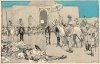
The massacre at Amritsar (above) inspired Gandhi to become more involved in mainstream politics and was a turning point in the campaign for Indian independence.
On a sweltering afternoon 90 years ago in April, a squad of Gurkha and Baluchi troops under the command of British officers marched into an enclosed park in the city of Amritsar and levelled their weapons. The park was densely crowded and there was only one way in and out. The officer in charge – General Reginald Dyer, whose name will forever be cloaked in infamy – then gave the order to fire.
Within 10 minutes the soldiers had fired 1,650 rounds, and hundreds of people lay dead, dying or wounded in the city's Jallianwala Bagh. General Dyer could not have realised that the massacre, and the outraged response it triggered, marked a crucial landmark in India's struggle for independence. Yet, despite the importance of the atrocity in the freedom struggle, the people who died there have never been officially recognised by the Indian government. Until now.
After a decades-long campaign by the relatives of those killed, officials have announced the dead shall be officially recognised as "freedom fighters". While it is unlikely any relatives will be able to claim compensation (that right was limited to spouses and daughters of those killed) the families say the decision marks the significance of what was one of the bloodiest and most shameful incidents of Britain's colonial rule in India, and the sacrifice of those killed.
"I am very happy indeed," said Nand Lal Arora, a marketing executive whose grandfather, Faqir Chand, was among those killed on 13 April 1919. The event was portrayed in Richard Attenborough's epic Gandhi. "My father and grandfather had gone to the park to hear the speeches. My grandfather was on the stage when the shooting started and he was killed. My father suffered a back injury. My grandfather and family did something for the country and I'm glad the government has decided to recognise it."
The massacre at the park, or bagh, in the holy city of Amritsar came against a backdrop of growing unrest within the Punjab and elsewhere in India against British rule. In the aftermath of the First World War, the Indian National Congress had stepped up its demands for greater autonomy for India and there had been unrest in several cities in the region and in Amritsar itself. Just two days before, a British woman had been attacked by a mob. Much of the agitation was in protest against the Rowlatt Act, anti-sedition legislation that gave the authorities unprecedented powers to prohibit meetings, newspapers and anything else considered a threat. Those people gathered in the park that afternoon did so in contravention of martial orders, to hear speeches against the Act. General Dyer, who had been born in India and spoke Urdu, then the lingua franca of large parts of northern India, had decided he needed radical action to impose order. Well before he marched his troops into the park, he had decided he would order them to fire if he found crowds gathered in contravention of his orders.
At the subsequent inquiry, General Dyer – who was ultimately forced to resign from the Army but who became a hero to many in Britain for his actions – told investigators: "I think it quite possible that I could have dispersed the crowd without firing but they would have come back again and laughed, and I would have made, what I consider, a fool of myself."
Asked if he had afterwards provided medical care for the injured, he responded: "Certainly not. It was not my job. Hospitals were open and they could have gone there."
On a recent afternoon, Bhushan Behal, who heads an organisation of victims' families and who has fought for "freedom fighter" recognition for the past three decades, led The Independent on a tour of the Jallianwala Bagh, which was long ago converted into a memorial garden. Mr Behal said his grandfather, Harrar Behal, a lawyer who had been speaking that fateful day, was the first to be killed.
"He was on the stage, the first person shot, said Mr Behal. "We have the names of 464 people who were shot but maybe there were 2,000 in total who died [that day or later]. I am very happy by the government decision. I have fought for this for 30 years so we are feeling very happy."
The well-tended park is today a quiet, reflective place. But signs remind visitors that the ground now planted with roses is soaked with the blood of hundreds of Hindus, Sikhs and Muslims and it is not hard to find signs of the violence wrought that afternoon 90 years ago by General Dyer and his men. A brick wall, specially preserved, still shows the deep marks from bullets. A short distance away is a well into which scores of desperate people leapt to escape the gunfire. A marble memorial marks the spot where the stage had been set up and where Mr Behal's grandfather and others had been speaking.
Another member of the group, Bobby Chouhan, who is not related to anyone killed in the incident but who has been campaigning, added: "The [lives of these] people helped the freedom movement. It was related to the freedom movement."
Historians agree. Professor Harish Sharma of Amritsar's Guru Nanak Dev University, said the massacre and the response in India and in Britain, was a decisive moment in the struggle for independence which would eventually be won in 1947. In particular, the killings inspired Mohandas Gandhi to become more involved in mainstream politics. He described the killings as "a calculated piece of inhumanity toward utterly innocent and unarmed men, including children, and unparalleled for its ferocity in the history of modern British administration". Mr Sharma said of the massacre: "This was a key event. It brought about a U-turn in the nationhood movement."
Nigel Collett, author of the seminal biography of General Dyer, The Butcher of Amritsar, agreed the massacre was instrumental in changing the direction of the freedom movement and convincing Gandhi that he could no longer stand on the sidelines. "It was the straw that broke the camel's back," he said. "He said he never trusted the British again. It was an important part of the national struggle."
The British government paid compensation to the victims' families in 1921. And in 1997 the Queen and Prince Philip visited the site, an occasion when the Duke of Edinburgh made one of his typical off-hand comments. Yet the Indian government moved to honour the victims only after a long struggle, not only by relatives of the victims but by the state authorities.
In a little-noticed directive issued late in December, the Home Ministry said the victims would be newly recognised, along with about 60 Indians killed by the British in 1872 in the so-called Kuka massacre. They will now join countless numbers of "freedom fighters" recognised for their role in India's independence, in incidents ranging from the events of the 1930s and 1940s to the Goan liberation struggle of 1955.
The communiqué said: "Respecting the sentiments of the Punjab government, the ministry is pleased to accord freedom-fighter status to the martyrs of Kuka movement of 1872 and that of Jallianwala Bagh in 1919. These massacres have been formally included in the national freedom movement."
There is an intriguing and just possibly remarkable footnote to the struggle for recognition for those killed at Jallianwala Bagh. On the edge of Amritsar, an old farmer who claims to be the sole survivor of the massacre shares a house with his son, grandson and great-grandson.
Shingara Singh says he was aged 23 at the time, which would make him 113. Opinion is divided about the veracity of his claims. The government of India has honoured him with a meeting with the President, but others who have examined his testimony, including Professor Sharma and Mr Behl, are adamant he could not have been there.
The old man with deeply creased skin and dressed in a bright orange turban, burned with anger when asked about the British military who committed the massacre. "I am angry," he said. "I want to kill the British who did this."
Mr Singh said he and others had been on the way to the Golden Temple but that it had been blocked by police and they instead gathered at the bagh. He told how the troops had entered the park, how they had begun firing and how people battled in vain to escape. Holding up his thin arm, he said he was shot in the biceps before he hid behind a low wall. "People were shouting, 'We are dying, we are dying'," he said.
As unlikely as it seems, is it possible that Mr Singh is a direct link to this event, a remarkable lone survivor? As he sat amid the quiet of the farmland where his family has grown wheat and rice for decades, Mr Singh was asked about those who doubted the truth of his story. In a moment, the old man's eyes flashed with anger. "Maybe you are hearing this from my enemies," he roared. "Just put them in front of me."
The massacre at Amritsar (above) inspired Gandhi to become more involved in mainstream politics and was a turning point in the campaign for Indian independence.
On a sweltering afternoon 90 years ago in April, a squad of Gurkha and Baluchi troops under the command of British officers marched into an enclosed park in the city of Amritsar and levelled their weapons. The park was densely crowded and there was only one way in and out. The officer in charge – General Reginald Dyer, whose name will forever be cloaked in infamy – then gave the order to fire.
Within 10 minutes the soldiers had fired 1,650 rounds, and hundreds of people lay dead, dying or wounded in the city's Jallianwala Bagh. General Dyer could not have realised that the massacre, and the outraged response it triggered, marked a crucial landmark in India's struggle for independence. Yet, despite the importance of the atrocity in the freedom struggle, the people who died there have never been officially recognised by the Indian government. Until now.
After a decades-long campaign by the relatives of those killed, officials have announced the dead shall be officially recognised as "freedom fighters". While it is unlikely any relatives will be able to claim compensation (that right was limited to spouses and daughters of those killed) the families say the decision marks the significance of what was one of the bloodiest and most shameful incidents of Britain's colonial rule in India, and the sacrifice of those killed.
"I am very happy indeed," said Nand Lal Arora, a marketing executive whose grandfather, Faqir Chand, was among those killed on 13 April 1919. The event was portrayed in Richard Attenborough's epic Gandhi. "My father and grandfather had gone to the park to hear the speeches. My grandfather was on the stage when the shooting started and he was killed. My father suffered a back injury. My grandfather and family did something for the country and I'm glad the government has decided to recognise it."
The massacre at the park, or bagh, in the holy city of Amritsar came against a backdrop of growing unrest within the Punjab and elsewhere in India against British rule. In the aftermath of the First World War, the Indian National Congress had stepped up its demands for greater autonomy for India and there had been unrest in several cities in the region and in Amritsar itself. Just two days before, a British woman had been attacked by a mob. Much of the agitation was in protest against the Rowlatt Act, anti-sedition legislation that gave the authorities unprecedented powers to prohibit meetings, newspapers and anything else considered a threat. Those people gathered in the park that afternoon did so in contravention of martial orders, to hear speeches against the Act. General Dyer, who had been born in India and spoke Urdu, then the lingua franca of large parts of northern India, had decided he needed radical action to impose order. Well before he marched his troops into the park, he had decided he would order them to fire if he found crowds gathered in contravention of his orders.
At the subsequent inquiry, General Dyer – who was ultimately forced to resign from the Army but who became a hero to many in Britain for his actions – told investigators: "I think it quite possible that I could have dispersed the crowd without firing but they would have come back again and laughed, and I would have made, what I consider, a fool of myself."
Asked if he had afterwards provided medical care for the injured, he responded: "Certainly not. It was not my job. Hospitals were open and they could have gone there."
On a recent afternoon, Bhushan Behal, who heads an organisation of victims' families and who has fought for "freedom fighter" recognition for the past three decades, led The Independent on a tour of the Jallianwala Bagh, which was long ago converted into a memorial garden. Mr Behal said his grandfather, Harrar Behal, a lawyer who had been speaking that fateful day, was the first to be killed.
"He was on the stage, the first person shot, said Mr Behal. "We have the names of 464 people who were shot but maybe there were 2,000 in total who died [that day or later]. I am very happy by the government decision. I have fought for this for 30 years so we are feeling very happy."
The well-tended park is today a quiet, reflective place. But signs remind visitors that the ground now planted with roses is soaked with the blood of hundreds of Hindus, Sikhs and Muslims and it is not hard to find signs of the violence wrought that afternoon 90 years ago by General Dyer and his men. A brick wall, specially preserved, still shows the deep marks from bullets. A short distance away is a well into which scores of desperate people leapt to escape the gunfire. A marble memorial marks the spot where the stage had been set up and where Mr Behal's grandfather and others had been speaking.
Another member of the group, Bobby Chouhan, who is not related to anyone killed in the incident but who has been campaigning, added: "The [lives of these] people helped the freedom movement. It was related to the freedom movement."
Historians agree. Professor Harish Sharma of Amritsar's Guru Nanak Dev University, said the massacre and the response in India and in Britain, was a decisive moment in the struggle for independence which would eventually be won in 1947. In particular, the killings inspired Mohandas Gandhi to become more involved in mainstream politics. He described the killings as "a calculated piece of inhumanity toward utterly innocent and unarmed men, including children, and unparalleled for its ferocity in the history of modern British administration". Mr Sharma said of the massacre: "This was a key event. It brought about a U-turn in the nationhood movement."
Nigel Collett, author of the seminal biography of General Dyer, The Butcher of Amritsar, agreed the massacre was instrumental in changing the direction of the freedom movement and convincing Gandhi that he could no longer stand on the sidelines. "It was the straw that broke the camel's back," he said. "He said he never trusted the British again. It was an important part of the national struggle."
The British government paid compensation to the victims' families in 1921. And in 1997 the Queen and Prince Philip visited the site, an occasion when the Duke of Edinburgh made one of his typical off-hand comments. Yet the Indian government moved to honour the victims only after a long struggle, not only by relatives of the victims but by the state authorities.
In a little-noticed directive issued late in December, the Home Ministry said the victims would be newly recognised, along with about 60 Indians killed by the British in 1872 in the so-called Kuka massacre. They will now join countless numbers of "freedom fighters" recognised for their role in India's independence, in incidents ranging from the events of the 1930s and 1940s to the Goan liberation struggle of 1955.
The communiqué said: "Respecting the sentiments of the Punjab government, the ministry is pleased to accord freedom-fighter status to the martyrs of Kuka movement of 1872 and that of Jallianwala Bagh in 1919. These massacres have been formally included in the national freedom movement."
There is an intriguing and just possibly remarkable footnote to the struggle for recognition for those killed at Jallianwala Bagh. On the edge of Amritsar, an old farmer who claims to be the sole survivor of the massacre shares a house with his son, grandson and great-grandson.
Shingara Singh says he was aged 23 at the time, which would make him 113. Opinion is divided about the veracity of his claims. The government of India has honoured him with a meeting with the President, but others who have examined his testimony, including Professor Sharma and Mr Behl, are adamant he could not have been there.
The old man with deeply creased skin and dressed in a bright orange turban, burned with anger when asked about the British military who committed the massacre. "I am angry," he said. "I want to kill the British who did this."
Mr Singh said he and others had been on the way to the Golden Temple but that it had been blocked by police and they instead gathered at the bagh. He told how the troops had entered the park, how they had begun firing and how people battled in vain to escape. Holding up his thin arm, he said he was shot in the biceps before he hid behind a low wall. "People were shouting, 'We are dying, we are dying'," he said.
As unlikely as it seems, is it possible that Mr Singh is a direct link to this event, a remarkable lone survivor? As he sat amid the quiet of the farmland where his family has grown wheat and rice for decades, Mr Singh was asked about those who doubted the truth of his story. In a moment, the old man's eyes flashed with anger. "Maybe you are hearing this from my enemies," he roared. "Just put them in front of me."