
Sikh Theology
SPNer
- Oct 31, 2024
- 37
- 3
- 35
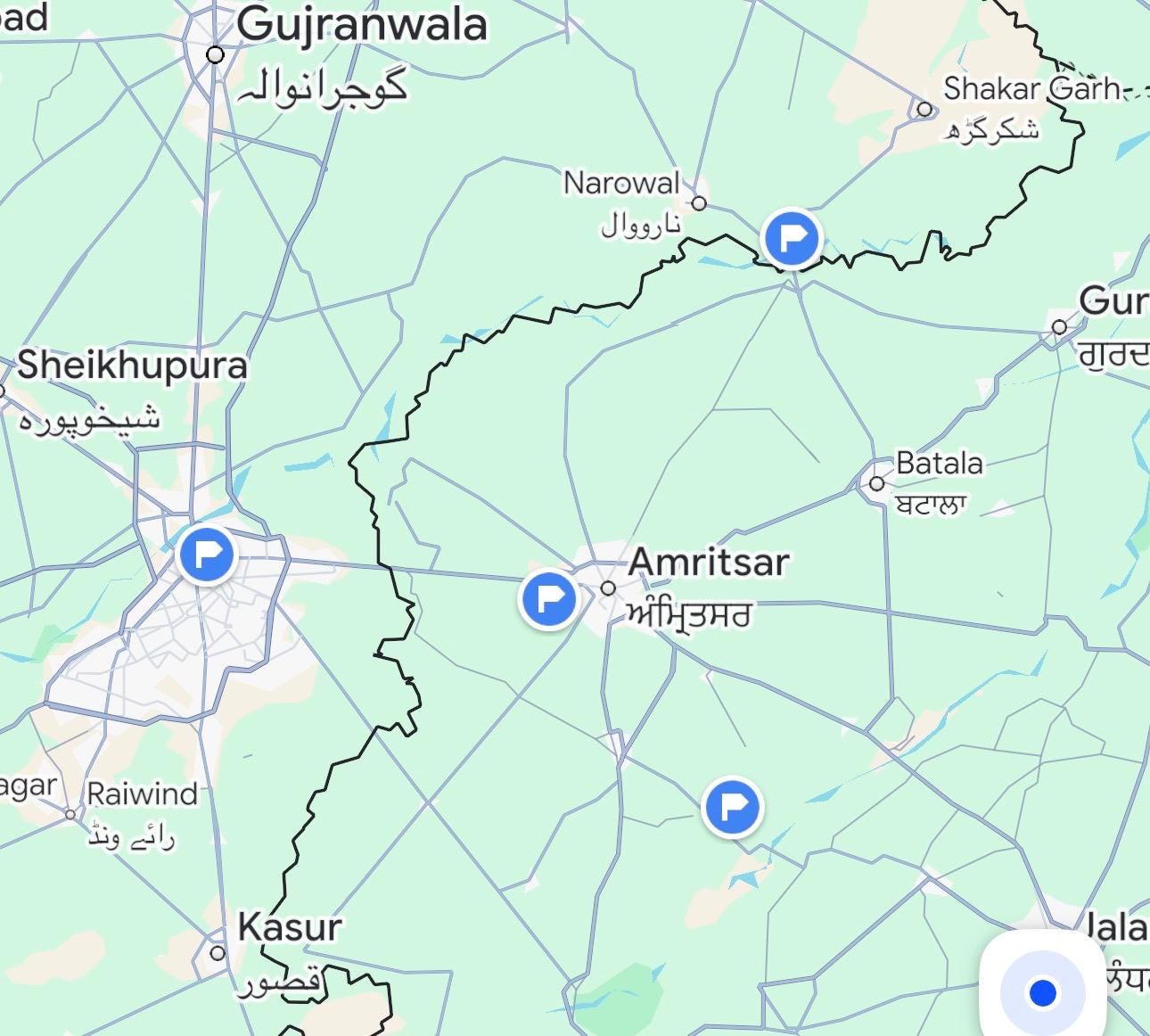
Many Sikhs are unaware that the first four Gurus were contemporaries, living simultaneously within the same general area for years. Yet, we have always been told that they largely were unaware of one another’s existence, despite Sri Guru Nanak Dev Ji’s widespread fame throughout that region - and despite the theological incoherence which this narrative has in the face of the Gurmat principle that all Gurus were predestined, perfect, and all-knowing from birth.

Yet, as this article will show, too many converging dates and coincidences bring the credibility of this narrative into question.
In earlier articles, we argued that the claim that the early Gurus were non-Sikh worshippers of gods and goddesses is irreconcilable with historical facts and Gurmat principles.
We had established that Sri Guru Nanak Dev Ji had historically stayed in the birth home of Sri Guru Angad Dev Ji, and that Sri Guru Amardas Ji’s household had already been occupied by Gursikhs even before Bibi Amro Ji moved in. Together with other evidence, these points indicate that the second and third Gurus were Sikhs from the outset. This is in principle alignment with the pattern of all later Gurus in the lineage, which raises a question: why would we accept a comparatively diminished reality for the second, third and fourth Gurus?

Read full story
It is clear that an entire reconstruction of the narrative is needed. And since the first four Gurus all lived simultaneously within the same region, a question we should ask ourselves is: is it possible that, rather than being totally unaware of one another, that the earliest Gurus actually actively collaborated with each other?
THE NARRATIVE, RECONSTRUCTED
Given Sri Guru Nanak Dev Ji’s well-documented closeness with the parents of Sri Guru Angad Dev Ji, it is reasonable to infer a sustained acquaintanceship with Sri Guru Angad Dev Ji extending back to his childhood.
I would argue that a similar relationship very likely connected Sri Guru Nanak Dev Ji with Sri Guru Amardas Ji and Sri Guru Ramdas Ji, both of whom were born at the exact time that Sri Guru Nanak Dev Ji was residing fairly close-by. By the time Sri Guru Ramdas Ji was born in 1534, all four Gurus were present in the world together.
Their overlapping lives and geographical proximity provided ample opportunities for contact. Considering the extent to which Sri Guru Nanak Dev Ji’s fame and parchar had already spread throughout the region, there is no logic to the claim that they would have been ignorant of his existence, even from a purely academic perspective.

As we see with both Sri Guru Angad Dev Ji and Sri Guru Amardas Ji, their families had established ties to Sri Guru Nanak Dev Ji well before traditional accounts allow. Sri Guru Angad Dev Ji’s parents hosted Sri Guru Nanak Dev Ji at their home in Matte De Sarai for six days, and Baba Pheru Mal had met him even earlier in Khadoor. They later moved into the household of Mata Bhirai Ji, a devout Sikh of Guru Nanak Dev Ji’s, where Sri Guru Nanak Dev Ji is recorded to have visited several times throughout his travels. On Sri Guru Amardas Ji’s side, Guru Sahib’s young nephew and household member, Bhai Jasoo, was a Sikh, as his marriage to the Gursikh Bibi Amro Ji attests. Such a match could not have been arranged without prior connections between the Bhalla family and Sri Guru Angad Dev Ji. Significantly, the marriage took place during Sri Guru Nanak Ji’s lifetime, and therefore under his authority. This points to a connection between the Bhalla family and Sri Guru Nanak Dev Ji extending even further back.
Logically, it follows that both Sri Guru Angad Dev Ji and Sri Guru Amardas Ji themselves were in close connection with Sri Guru Nanak Dev Ji from the onset. Furthermore, their later movements reveal a pattern that suggests they were operating under Sri Guru Nanak Dev Ji’s jurisdiction, with their relocations forming part of a deliberate strategy.
OBSERVATION OF COINCIDING DATES AND MOVEMENTS
Following Sri Guru Nanak Dev Ji’s departure from this world in 1539, a few important relocations took place that need attention here. Sri Guru Angad Dev Ji continued the work at Khadoor Sahib according to Guru Sahib’s instructions, while, almost immediately, Sri Guru Amardas Ji moved there from Basarke (in approx. 1540). That same year, Sri Guru Ramdas Ji came to reside at Basarke in Guru Amardas Ji’s place.

Why did Sri Guru Ramdas Ji leave Lahore immediately following Guru Nanak Dev Ji’s akal chalana? Traditional accounts attribute the move to the deaths of his parents, but we have little to confirm when they passed away. Incidentally, he settled in Basarke in the very year that Sri Guru Amardas Ji left it. Are we to believe that their timing was so providential that they just happened to miss one another?
Or, could it simply be that that the relocations were timed and coordinated in response to Sri Guru Nanak Dev Ji’s departure?
STRATEGIC PARCHAR AND COORDINATED MANEUVERING
All Sikhs accept that the later Gurus used organised systems to grow and manage the Sikh community (i.e. the manji system, piri system, masand system). Why, then, would we assume that Sri Guru Nanak Dev Ji did not also work strategically?
When we reconstruct history logically, the maneuvering of the Gurus look less coincidental and instead a more sound explanation emerges - which is that the Sri Guru Angad Dev Ji, Sri Guru Amardas Ji, and Sri Guru Ramdas Ji were all operating under the jurisdiction of Sri Guru Nanak Dev Ji in a collaborated and coordinated movement to further Sikhi parchar.
As we have seen, Sri Guru Nanak Dev Ji lived through the births of the next three Gurus in the surrounding region, and had long ties to their families. It therefore would make sense that he knew his successors from an early stage and even mentored them, and that these relationships helped sustain the community during his travels and after his worldly departure. When he did akal chalana in 1539, he would then have left instructions (hukam) to carry that momentum forward.
It is not unreasonable to suppose that Sri Guru Amardas Ji had been conducting parchar in Basarke for years before moving to Khadoor Sahib. This would explain why his nephew was already a Sikh. After all, Sri Guru Amardas Ji was within a decade of Sri Guru Nanak Dev Ji in age, and he lived through the entire emergence and growth of Sikhi in Punjab.
With this reading, it makes sense that some months after Guru Nanak Dev Ji’s departure, Sri Guru Ramdas Ji relocated to Basarke just as Sri Guru Amardas Ji left it for Khadoor Sahib. This exchange allowed the albeit young Sri Guru Ramdas Ji to continue to spiritually anchor and sustain the Sangat there in Sri Guru Amardas Ji’s absence. Although he was young, it should be kept in mind that it has not been unusual for our Gurus to take on such a responsibility as early as the age of 5.

This was while Sri Guru Angad Dev Ji was still very much present in the world. Are we to believe that Sri Guru Ramdas Ji had no knowledge of the second Guru? Why move to Goindwal Sahib - a barely built town at that time - rather than to Khadoor Sahib with the well-established Sangat there? The coherent explanation is that these movements were coordinated. The three Gurus-to-be were not unaware of one another. They collaboratively were stationed across the region to advance the propagation of Sikhi, and their relocations after Guru Nanak Dev Ji’s passing served a strategic purpose, most likely in keeping with instructions he left before his departure.
By settling in Basarke, the young Guru Ramdas Ji helped maintain and strengthen the Sikh presence in a town that was a Sikh stronghold in the region. This freed Sri Guru Amardas Ji to remain at Khadoor and devote himself to establishing Goindwal Sahib. Kavi Santokh Singh notes that Sri Guru Amardas Ji traveled back and forth daily between Goindwal and Khadoor while the work was underway, indicating that he was in Khadoor only as a temporary station from which to build Goindwal from.
It is relevant to note here Sri Guru Nanak Dev Ji had already visited and assessed the site, shortly after Sher Shah Suri had built a road opening access to the then-undeveloped land. Also, historical records prove that Sri Guru Amardas Ji purchased the land (rather than receiving it as a donation from Akbar, as popular retellings suggest), making it an intentional land acquisition in a long-planned expansion strategy.
Once housing was constructed, Sri Guru Ramdas Ji was then able to join Sri Guru Amardas Ji at Goindwal, and from there travel outward to establish another township: Guru ka Chakk. At the same time, Sri Guru Amardas Ji established manjis to support parchar and the growing Sikh centres in Punjab. This work had both spiritual and political dimensions, and was important in establishing Sikh power and presence in the region. New centres were established, the Sangat was supported and managed, and the foundations of a lasting Sikh presence were strengthened across the region.
CONCLUSION
The common folk version of our Gurus’ history maintains that the first Gurus lived unaware of one another until providence arranged a dramatic meeting. But when we place their timelines alongside one another, consider where they lived, and examine their geographical movements, it becomes clear that this version of events is an over simplification of the historical reality.
The historical evidence before us points towards long-standing planning and collaboration between all four Gurus. Rather than randomly bumping into one another, the Gurus delibaretly manoeuvred and relocated at coordinated times in order to maintain, manage, and expand the newfound Sikh community.
This gives us reason to reconsider the stories we have been told - and to ask whether their dramatic appeal has too often taken the place of historical reasoning and Gurmat grounding.
Yet, as this article will show, too many converging dates and coincidences bring the credibility of this narrative into question.
In earlier articles, we argued that the claim that the early Gurus were non-Sikh worshippers of gods and goddesses is irreconcilable with historical facts and Gurmat principles.
We had established that Sri Guru Nanak Dev Ji had historically stayed in the birth home of Sri Guru Angad Dev Ji, and that Sri Guru Amardas Ji’s household had already been occupied by Gursikhs even before Bibi Amro Ji moved in. Together with other evidence, these points indicate that the second and third Gurus were Sikhs from the outset. This is in principle alignment with the pattern of all later Gurus in the lineage, which raises a question: why would we accept a comparatively diminished reality for the second, third and fourth Gurus?
Read full story
It is clear that an entire reconstruction of the narrative is needed. And since the first four Gurus all lived simultaneously within the same region, a question we should ask ourselves is: is it possible that, rather than being totally unaware of one another, that the earliest Gurus actually actively collaborated with each other?
THE NARRATIVE, RECONSTRUCTED
Given Sri Guru Nanak Dev Ji’s well-documented closeness with the parents of Sri Guru Angad Dev Ji, it is reasonable to infer a sustained acquaintanceship with Sri Guru Angad Dev Ji extending back to his childhood.I would argue that a similar relationship very likely connected Sri Guru Nanak Dev Ji with Sri Guru Amardas Ji and Sri Guru Ramdas Ji, both of whom were born at the exact time that Sri Guru Nanak Dev Ji was residing fairly close-by. By the time Sri Guru Ramdas Ji was born in 1534, all four Gurus were present in the world together.
Their overlapping lives and geographical proximity provided ample opportunities for contact. Considering the extent to which Sri Guru Nanak Dev Ji’s fame and parchar had already spread throughout the region, there is no logic to the claim that they would have been ignorant of his existence, even from a purely academic perspective.
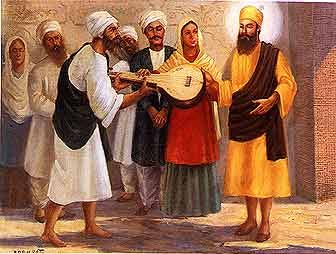
As we see with both Sri Guru Angad Dev Ji and Sri Guru Amardas Ji, their families had established ties to Sri Guru Nanak Dev Ji well before traditional accounts allow. Sri Guru Angad Dev Ji’s parents hosted Sri Guru Nanak Dev Ji at their home in Matte De Sarai for six days, and Baba Pheru Mal had met him even earlier in Khadoor. They later moved into the household of Mata Bhirai Ji, a devout Sikh of Guru Nanak Dev Ji’s, where Sri Guru Nanak Dev Ji is recorded to have visited several times throughout his travels. On Sri Guru Amardas Ji’s side, Guru Sahib’s young nephew and household member, Bhai Jasoo, was a Sikh, as his marriage to the Gursikh Bibi Amro Ji attests. Such a match could not have been arranged without prior connections between the Bhalla family and Sri Guru Angad Dev Ji. Significantly, the marriage took place during Sri Guru Nanak Ji’s lifetime, and therefore under his authority. This points to a connection between the Bhalla family and Sri Guru Nanak Dev Ji extending even further back.
Logically, it follows that both Sri Guru Angad Dev Ji and Sri Guru Amardas Ji themselves were in close connection with Sri Guru Nanak Dev Ji from the onset. Furthermore, their later movements reveal a pattern that suggests they were operating under Sri Guru Nanak Dev Ji’s jurisdiction, with their relocations forming part of a deliberate strategy.
OBSERVATION OF COINCIDING DATES AND MOVEMENTS
Following Sri Guru Nanak Dev Ji’s departure from this world in 1539, a few important relocations took place that need attention here. Sri Guru Angad Dev Ji continued the work at Khadoor Sahib according to Guru Sahib’s instructions, while, almost immediately, Sri Guru Amardas Ji moved there from Basarke (in approx. 1540). That same year, Sri Guru Ramdas Ji came to reside at Basarke in Guru Amardas Ji’s place.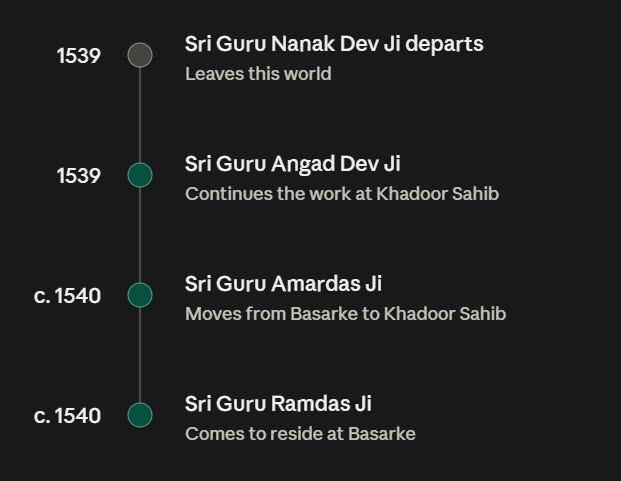
Why did Sri Guru Ramdas Ji leave Lahore immediately following Guru Nanak Dev Ji’s akal chalana? Traditional accounts attribute the move to the deaths of his parents, but we have little to confirm when they passed away. Incidentally, he settled in Basarke in the very year that Sri Guru Amardas Ji left it. Are we to believe that their timing was so providential that they just happened to miss one another?
Or, could it simply be that that the relocations were timed and coordinated in response to Sri Guru Nanak Dev Ji’s departure?
STRATEGIC PARCHAR AND COORDINATED MANEUVERING
All Sikhs accept that the later Gurus used organised systems to grow and manage the Sikh community (i.e. the manji system, piri system, masand system). Why, then, would we assume that Sri Guru Nanak Dev Ji did not also work strategically?When we reconstruct history logically, the maneuvering of the Gurus look less coincidental and instead a more sound explanation emerges - which is that the Sri Guru Angad Dev Ji, Sri Guru Amardas Ji, and Sri Guru Ramdas Ji were all operating under the jurisdiction of Sri Guru Nanak Dev Ji in a collaborated and coordinated movement to further Sikhi parchar.
As we have seen, Sri Guru Nanak Dev Ji lived through the births of the next three Gurus in the surrounding region, and had long ties to their families. It therefore would make sense that he knew his successors from an early stage and even mentored them, and that these relationships helped sustain the community during his travels and after his worldly departure. When he did akal chalana in 1539, he would then have left instructions (hukam) to carry that momentum forward.
It is not unreasonable to suppose that Sri Guru Amardas Ji had been conducting parchar in Basarke for years before moving to Khadoor Sahib. This would explain why his nephew was already a Sikh. After all, Sri Guru Amardas Ji was within a decade of Sri Guru Nanak Dev Ji in age, and he lived through the entire emergence and growth of Sikhi in Punjab.
With this reading, it makes sense that some months after Guru Nanak Dev Ji’s departure, Sri Guru Ramdas Ji relocated to Basarke just as Sri Guru Amardas Ji left it for Khadoor Sahib. This exchange allowed the albeit young Sri Guru Ramdas Ji to continue to spiritually anchor and sustain the Sangat there in Sri Guru Amardas Ji’s absence. Although he was young, it should be kept in mind that it has not been unusual for our Gurus to take on such a responsibility as early as the age of 5.
This was while Sri Guru Angad Dev Ji was still very much present in the world. Are we to believe that Sri Guru Ramdas Ji had no knowledge of the second Guru? Why move to Goindwal Sahib - a barely built town at that time - rather than to Khadoor Sahib with the well-established Sangat there? The coherent explanation is that these movements were coordinated. The three Gurus-to-be were not unaware of one another. They collaboratively were stationed across the region to advance the propagation of Sikhi, and their relocations after Guru Nanak Dev Ji’s passing served a strategic purpose, most likely in keeping with instructions he left before his departure.
By settling in Basarke, the young Guru Ramdas Ji helped maintain and strengthen the Sikh presence in a town that was a Sikh stronghold in the region. This freed Sri Guru Amardas Ji to remain at Khadoor and devote himself to establishing Goindwal Sahib. Kavi Santokh Singh notes that Sri Guru Amardas Ji traveled back and forth daily between Goindwal and Khadoor while the work was underway, indicating that he was in Khadoor only as a temporary station from which to build Goindwal from.
It is relevant to note here Sri Guru Nanak Dev Ji had already visited and assessed the site, shortly after Sher Shah Suri had built a road opening access to the then-undeveloped land. Also, historical records prove that Sri Guru Amardas Ji purchased the land (rather than receiving it as a donation from Akbar, as popular retellings suggest), making it an intentional land acquisition in a long-planned expansion strategy.
Once housing was constructed, Sri Guru Ramdas Ji was then able to join Sri Guru Amardas Ji at Goindwal, and from there travel outward to establish another township: Guru ka Chakk. At the same time, Sri Guru Amardas Ji established manjis to support parchar and the growing Sikh centres in Punjab. This work had both spiritual and political dimensions, and was important in establishing Sikh power and presence in the region. New centres were established, the Sangat was supported and managed, and the foundations of a lasting Sikh presence were strengthened across the region.
CONCLUSION
The common folk version of our Gurus’ history maintains that the first Gurus lived unaware of one another until providence arranged a dramatic meeting. But when we place their timelines alongside one another, consider where they lived, and examine their geographical movements, it becomes clear that this version of events is an over simplification of the historical reality.The historical evidence before us points towards long-standing planning and collaboration between all four Gurus. Rather than randomly bumping into one another, the Gurus delibaretly manoeuvred and relocated at coordinated times in order to maintain, manage, and expand the newfound Sikh community.
This gives us reason to reconsider the stories we have been told - and to ask whether their dramatic appeal has too often taken the place of historical reasoning and Gurmat grounding.

