Sangat ji, I have adapted the title to correct for the use of Diwali. In fact the entire story is about Sikh Gurus, and Guru Hargobind in particular. So Diwali is not the main idea of the article, even though the author begins on that premise. Bandi Chhor Diwas this year will occur on November 5, Friday, 2010.
And now this year, it happens again to be on November 5, 2013

Celebration
Aglow with divinity
Bandi Chhor Diwas
Most of us are aware of the fact that the Sikh community celebrates Diwali exuberantly, especially in the Golden Temple at Amritsar that happens to be a sacred shrine for people of all faiths.
For Sikhs especially, it is a centre of all divinity and on every Diwali , in addition to nagar keertan (a street procession during which hymns are sung) and an akhanda paath (a continuous reading of Guru Granth Sahib), Diwali is celebrated by a grand fireworks display. The Golden Temple as well as the whole complex is festooned with countless shimmering lights, creating a unique jewelbox effect.
We normally put down these celebrations, to the very close ties the Sikhs have with the Hindu community in Punjab. After all, as the saying goes, these two communities believe in the notion of “Roti and Beti,’’ which refers to a close relationship based on breaking bread together or eating together and sharing matrimonial ties. The relationship of Sikhs and Hindus is supposed to be as close as that of the nail with the skin. For many generations, many Hindu families converted one of their sons to Sikhism.
Till extremism sneaked into the state, a few decades ago, the interpersonal ties were even closer and it was a matter of time for the two communities to grow close again after the demon of mistrust withered away.
But the historical relevance of Diwali in Sikh lore is not known so well. There are five important reasons for the Sikhs to celebrate Diwali. It was on Diwali day in 1577, that the Sikh Guru Ramdas started the construction of the Golden Temple at Amritsar.
Then later Sikh Guru Amar Das institutionalised Diwali as the sacred day when all Sikhs would gather to receive the Guru’s blessings, by incorporating two festivals, Baisakhi (at the time of the spring harvest) and Diwali (at the fall harvest), into the religious calendar. Then the festival of Diwali became the second most important day after the Baisakhi, when the Khalsa was formally established by Guru Gobind Singh in 1699.
The Sikh rebellion against the Mughal atrocities intensified in the 18th century and many events came to be centred around this day. After the execution of Banda Bahadur in 1716, who had led the agrarian uprising in Punjab, the Sikhs started the tradition of deciding matters concerning the community at the biennial meetings which took place at Amritsar on the first of Baisakh and at Diwali. These assemblies were known as the Sarbat Khalsa and a resolution passed by it became a Gurmata (decree of the Guru).
Then Diwali in October, 1619 happened to mark the end of the imprisonment of Guru Hargobind Singh by the Mughal emperor Jehangir. The Guru had been kept in prison, in the fortress of Gwalior by the emperor, and was later released as when he was convinced of the piety of the Guru.
But when Wazir Khan the Governor of Gwalior Fort informed the Guru of his release, the Guru, (who had lived among the other prisoners for an year and knew that many of them were innocent, especially the 52 Hindu princes imprisoned over a trivial matter), requested Jehangir to release all the princes with him.
The emperor first refused, but finally agreed. But not really wanting to free the prisoners, the emperor cleverly added the following condition: “whoever can hold on to the Guru’s cloak would be released.”
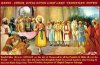
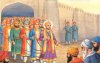
But to circumvent this, Guru Hargobind Singh asked his devotees to make a cloak made with 52 tassels and the dress was soon delivered. So, as the Guru walked out of the gate of the fort, the 52 princes trailed behind, each holding on to his own tassel of the Guru’s special cloak. The Guru’s cleverness had trumped Jahangir’s deviousness and liberated the 52 princes. This humane act of the Guru is termed in Sikh history as Bandi Chhor Divas (the day of freedom), for his co -prisoners.
Guru Hargobind Singh arrived at Amritsar on Diwali day in 1619 and the Har Mandir (now known as the Golden Temple) was lit with countless lamps and he was accorded a grand welcome. Every Diwali, hence is the day to recall that moment of joy and to celebrate it again.
On the occasion of Bandi Chorrh Divas every year, (Diwali day), Sikhs observe a one-day celebration in the Gurdwaras. In the evening, illumination is achieved by displaying earthen oil lamps.
Candles are lit and fireworks can be seen creating a wonderful atmosphere of joy. Such celebrations are held both in the Gurdwaras and in homes. Then came a sad episode in Sikh history in 1737 when Bhai Mani Singh, a Sikh saint, took charge of Harmandir Sahib’s management.
In 1737, invitations were sent to the Sikhs all over north India to join that year’s Bandi Chhorh Diwas celebrations at Harmandir Sahib. A large amount of money had to be paid as tax or bribe to the Mughal governor of Punjab so that the celebrations could go on without any problems.
But the governor of Lahore, Zakariya Khan had other nefarious plans. As Bhai Mani Singh later discovered, the secret plan of Zakariya Khan was to kill all the Sikhs during the gathering. Bhai Mani Singh immediately sent a message to all the Sikhs to not turn up for celebrations.
Zakariya Khan was not happy about the Sikh devotees escaping his clutches and he ordered Bhai Mani Singh’s assassination at Lahore by ruthlessly cutting him limb-by-limb to death. Ever since, in Sikh history, the great sacrifice and devotion of Bhai Mani Singh is remembered on the Bandi Chhorh Diwas on Diwali day.
Thus for the Sikhs, Diwali commemorates many important dates and events in Sikh history. In fact during Diwali, Sikhs rejoice in their religious freedom, which was won against so many odds and we find them celebrating Diwali as their own festival of light.
And now this year, it happens again to be on November 5, 2013
Celebration
Aglow with divinity
Bandi Chhor Diwas
Most of us are aware of the fact that the Sikh community celebrates Diwali exuberantly, especially in the Golden Temple at Amritsar that happens to be a sacred shrine for people of all faiths.
For Sikhs especially, it is a centre of all divinity and on every Diwali , in addition to nagar keertan (a street procession during which hymns are sung) and an akhanda paath (a continuous reading of Guru Granth Sahib), Diwali is celebrated by a grand fireworks display. The Golden Temple as well as the whole complex is festooned with countless shimmering lights, creating a unique jewelbox effect.
We normally put down these celebrations, to the very close ties the Sikhs have with the Hindu community in Punjab. After all, as the saying goes, these two communities believe in the notion of “Roti and Beti,’’ which refers to a close relationship based on breaking bread together or eating together and sharing matrimonial ties. The relationship of Sikhs and Hindus is supposed to be as close as that of the nail with the skin. For many generations, many Hindu families converted one of their sons to Sikhism.
Till extremism sneaked into the state, a few decades ago, the interpersonal ties were even closer and it was a matter of time for the two communities to grow close again after the demon of mistrust withered away.
But the historical relevance of Diwali in Sikh lore is not known so well. There are five important reasons for the Sikhs to celebrate Diwali. It was on Diwali day in 1577, that the Sikh Guru Ramdas started the construction of the Golden Temple at Amritsar.
Then later Sikh Guru Amar Das institutionalised Diwali as the sacred day when all Sikhs would gather to receive the Guru’s blessings, by incorporating two festivals, Baisakhi (at the time of the spring harvest) and Diwali (at the fall harvest), into the religious calendar. Then the festival of Diwali became the second most important day after the Baisakhi, when the Khalsa was formally established by Guru Gobind Singh in 1699.
The Sikh rebellion against the Mughal atrocities intensified in the 18th century and many events came to be centred around this day. After the execution of Banda Bahadur in 1716, who had led the agrarian uprising in Punjab, the Sikhs started the tradition of deciding matters concerning the community at the biennial meetings which took place at Amritsar on the first of Baisakh and at Diwali. These assemblies were known as the Sarbat Khalsa and a resolution passed by it became a Gurmata (decree of the Guru).
Then Diwali in October, 1619 happened to mark the end of the imprisonment of Guru Hargobind Singh by the Mughal emperor Jehangir. The Guru had been kept in prison, in the fortress of Gwalior by the emperor, and was later released as when he was convinced of the piety of the Guru.
But when Wazir Khan the Governor of Gwalior Fort informed the Guru of his release, the Guru, (who had lived among the other prisoners for an year and knew that many of them were innocent, especially the 52 Hindu princes imprisoned over a trivial matter), requested Jehangir to release all the princes with him.
The emperor first refused, but finally agreed. But not really wanting to free the prisoners, the emperor cleverly added the following condition: “whoever can hold on to the Guru’s cloak would be released.”
But to circumvent this, Guru Hargobind Singh asked his devotees to make a cloak made with 52 tassels and the dress was soon delivered. So, as the Guru walked out of the gate of the fort, the 52 princes trailed behind, each holding on to his own tassel of the Guru’s special cloak. The Guru’s cleverness had trumped Jahangir’s deviousness and liberated the 52 princes. This humane act of the Guru is termed in Sikh history as Bandi Chhor Divas (the day of freedom), for his co -prisoners.
Guru Hargobind Singh arrived at Amritsar on Diwali day in 1619 and the Har Mandir (now known as the Golden Temple) was lit with countless lamps and he was accorded a grand welcome. Every Diwali, hence is the day to recall that moment of joy and to celebrate it again.
On the occasion of Bandi Chorrh Divas every year, (Diwali day), Sikhs observe a one-day celebration in the Gurdwaras. In the evening, illumination is achieved by displaying earthen oil lamps.
Candles are lit and fireworks can be seen creating a wonderful atmosphere of joy. Such celebrations are held both in the Gurdwaras and in homes. Then came a sad episode in Sikh history in 1737 when Bhai Mani Singh, a Sikh saint, took charge of Harmandir Sahib’s management.
In 1737, invitations were sent to the Sikhs all over north India to join that year’s Bandi Chhorh Diwas celebrations at Harmandir Sahib. A large amount of money had to be paid as tax or bribe to the Mughal governor of Punjab so that the celebrations could go on without any problems.
But the governor of Lahore, Zakariya Khan had other nefarious plans. As Bhai Mani Singh later discovered, the secret plan of Zakariya Khan was to kill all the Sikhs during the gathering. Bhai Mani Singh immediately sent a message to all the Sikhs to not turn up for celebrations.
Zakariya Khan was not happy about the Sikh devotees escaping his clutches and he ordered Bhai Mani Singh’s assassination at Lahore by ruthlessly cutting him limb-by-limb to death. Ever since, in Sikh history, the great sacrifice and devotion of Bhai Mani Singh is remembered on the Bandi Chhorh Diwas on Diwali day.
Thus for the Sikhs, Diwali commemorates many important dates and events in Sikh history. In fact during Diwali, Sikhs rejoice in their religious freedom, which was won against so many odds and we find them celebrating Diwali as their own festival of light.
Attachments
Last edited: