Oldest Sikh temple on continent ' deserves to be celebrated'
Kevin Mills
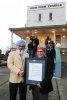
A ceremony set for city hall on Monday will declare 2011 as the year of the Gur Sikh Temple. The national historic site, on South Fraser Way, is celebrating its 100th anniversary.
Calling it a “tremendous historical occasion,” Mayor George Peary said the oldest temple in North America deserves to be recognized and celebrated.
“It is an opportunity for the entire community to congratulate the Sikh community.”
In addition to Monday’s proclamation, the lobby of city hall is home to an exhibition of historic photos, including the gurdwara. The exhibit runs until Jan. 14 from 8:30 a.m. to 4:30 p.m.
This is the first in a series of events planned to celebrate the centenary.
The University of the Fraser Valley has teamed with Abbotsford’s Khalsa Diwan Society and the Reach Gallery Museum to help organize celebrations.
“A century ago, determined pioneers from Punjab, India came together to build one of the first Sikh gurdwaras in North America,” said Satwinder Bains, director of the Centre for Indo-Canadian Studies at UFV.
“The lumber for the gurdwara was donated by the owners of a sawmill where many of the Sikh pioneer immigrants worked. They carried the lumber on their backs to the hilltop where they built the gurdwara, which was officially opened in 1911. Today, the gurdwara reminds us all of the hard work, dedication, and devotion of these pioneers.”
The gurdwara, took on a simple form to suit the pioneers of the day; it’s a wood-frame building with a false front and a gabled roof and is similar to many buildings constructed in Canadian frontier towns.
The gurdwara was the first Sikh temple to be constructed in North America and the temple was designated as a National Historic Site by the Canadian government in 2007. It remains the only gurdwara in the Americas to be bestowed with this honour.
Other events include Eat Ethnic in February and the UFV-sponsored South Asian Readers’ and Writers’ Festival that takes place Tuesday, March 29. The headliner for the evening will be Anosh Irani, who will discuss and read from his latest book Dahanu Road. Other writers at the festival include Tariq Malik and Gurjinder Basran.
April will mark the opening of a heritage exhibit at the Reach Gallery and in May, UFV’s Centre for Indo-Canadian Studies will host the Transnational Punjabis in the 21st Century Conference. The conference will conclude with the Virasat pioneer gala hosted by the Fraser Valley Indo-Canadian Business Association.
The full event program can be viewed at www.ufv.ca/cics/centennial.
Kevin Mills
A ceremony set for city hall on Monday will declare 2011 as the year of the Gur Sikh Temple. The national historic site, on South Fraser Way, is celebrating its 100th anniversary.
Calling it a “tremendous historical occasion,” Mayor George Peary said the oldest temple in North America deserves to be recognized and celebrated.
“It is an opportunity for the entire community to congratulate the Sikh community.”
In addition to Monday’s proclamation, the lobby of city hall is home to an exhibition of historic photos, including the gurdwara. The exhibit runs until Jan. 14 from 8:30 a.m. to 4:30 p.m.
This is the first in a series of events planned to celebrate the centenary.
The University of the Fraser Valley has teamed with Abbotsford’s Khalsa Diwan Society and the Reach Gallery Museum to help organize celebrations.
“A century ago, determined pioneers from Punjab, India came together to build one of the first Sikh gurdwaras in North America,” said Satwinder Bains, director of the Centre for Indo-Canadian Studies at UFV.
“The lumber for the gurdwara was donated by the owners of a sawmill where many of the Sikh pioneer immigrants worked. They carried the lumber on their backs to the hilltop where they built the gurdwara, which was officially opened in 1911. Today, the gurdwara reminds us all of the hard work, dedication, and devotion of these pioneers.”
The gurdwara, took on a simple form to suit the pioneers of the day; it’s a wood-frame building with a false front and a gabled roof and is similar to many buildings constructed in Canadian frontier towns.
The gurdwara was the first Sikh temple to be constructed in North America and the temple was designated as a National Historic Site by the Canadian government in 2007. It remains the only gurdwara in the Americas to be bestowed with this honour.
Other events include Eat Ethnic in February and the UFV-sponsored South Asian Readers’ and Writers’ Festival that takes place Tuesday, March 29. The headliner for the evening will be Anosh Irani, who will discuss and read from his latest book Dahanu Road. Other writers at the festival include Tariq Malik and Gurjinder Basran.
April will mark the opening of a heritage exhibit at the Reach Gallery and in May, UFV’s Centre for Indo-Canadian Studies will host the Transnational Punjabis in the 21st Century Conference. The conference will conclude with the Virasat pioneer gala hosted by the Fraser Valley Indo-Canadian Business Association.
The full event program can be viewed at www.ufv.ca/cics/centennial.